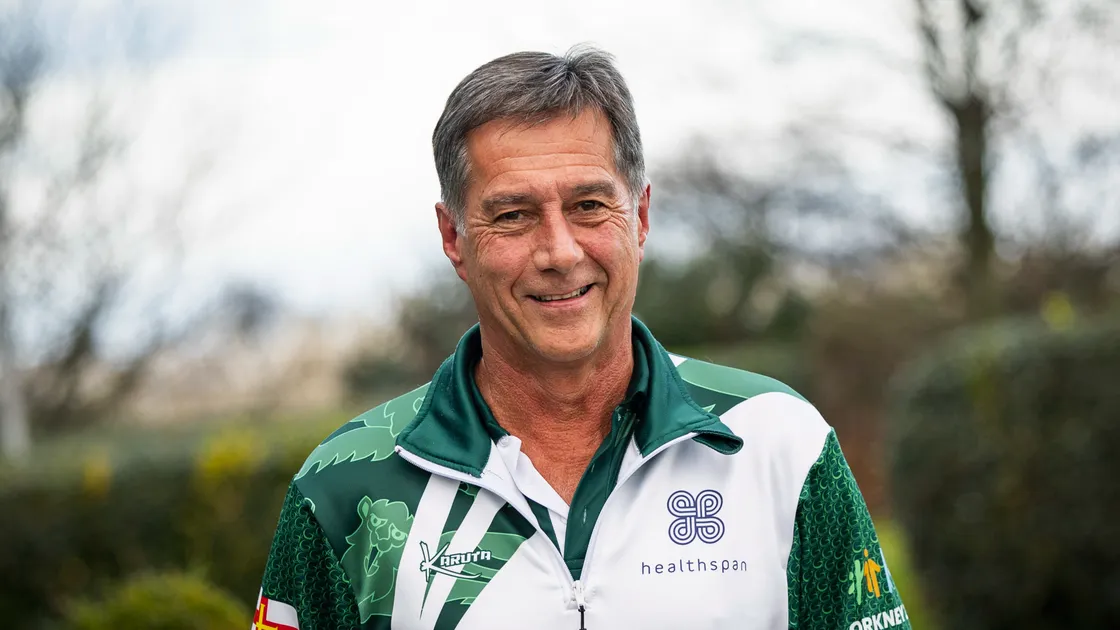
You will never hear Chris Jackson bragging about his Island Games career as a competitor.
He raced on the track at Guernsey 1987 before returning as a shooter three decades later at Gotland 2017. Yet when asked about his own achievements, he replies bashfully: ‘Absolutely none.'
But his new role of Guernsey Island Games Association chairman nevertheless gives him great stature in the biennial sporting spectacle, capitalising on his wide-ranging interest, be it competitor, helper, administrator or fan.
‘I’ve got a keen interest in all sports,’ Jackson said.
‘I follow sport whatever it may be.’
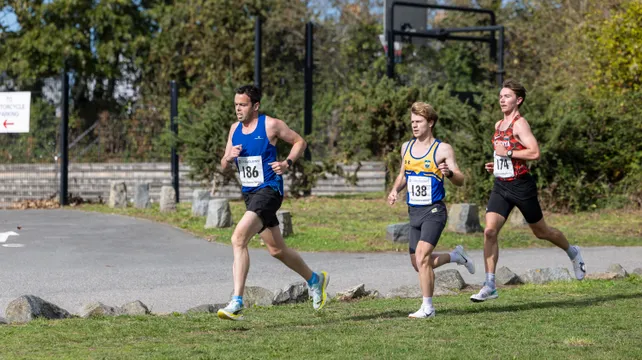
On his Games bow, Jackson ran in the relays and placed fifth individually over 110m hurdles at Footes Lane, which looked very different to today.
There was no grandstand and the cinder track became a mudbath due to persistent rain, paling to today’s blue all-weather beauty.
‘I reached the final of the 110m hurdles – that was it, really,’ goes his account of those Games.
His athletics career continued into longer, slower races, including completing the 2002 London Marathon.
Jackson also helped secure Healthspan’s long-term sponsorship of the annual Guernsey Half Marathon and recalls being ‘obliged’ to take part for more than a decade.
But shooting is his long-term sporting passion, having taken up air rifle as a teenager before volunteering at Guernsey 2003 – and beyond.
His love of shooting paved the way for team manager duties at Jersey 2015 and then a one-off competitive outing at Gotland 2017, going in the air rifle events.
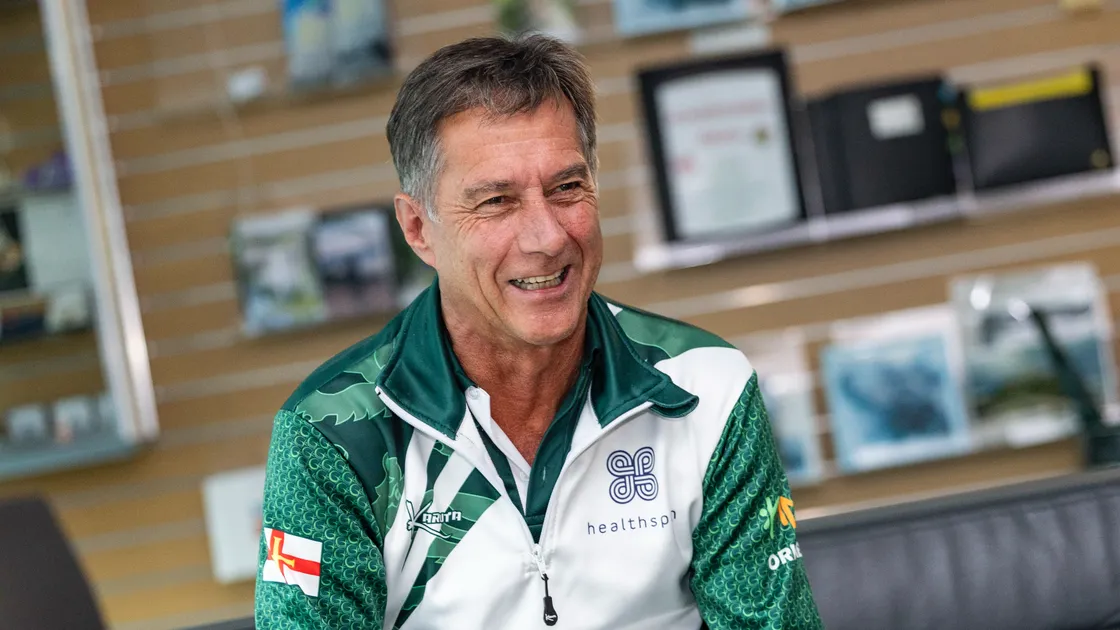
Jackson is similarly modest about his own achievements in Gotland.
He did not make the individual final, though he did join Paul Guillou for a respectable seventh-place finish in the pairs.
‘Shooting-wise, I haven’t done anything as such because there’s better shooters – and we always try and take the best shooters wherever possible.
‘Shooting has always been a strong sport throughout the Games.’
After managing his first Commonwealths shooting team in 2018 and joining the Giga board in 2019 as secretary, he saw the Covid pandemic come and go – with the island erupting into multi-sporting glory at Guernsey 2023. The home shooters did not miss a beat.
‘Back in 2023 here, shooting was the top sport for Guernsey and beat swimming and athletics, which was surprising, I suppose, bearing in mind the number of medals available over the other two sports.’
And his Giga duties had him experiencing the Games from a different angle in Orkney last summer, trading long hours stuck at the range for a full exploration of the sporting menu.
The shining week of sport in glorious, sunny weather went down a treat.
‘I was able to be on every course, every start/finish line and around the circuit, wherever it was.
‘It was great. And obviously the weather was fantastic – it was absolutely tremendous that we could have that.’
It would require another mini-miracle for Orkney’s wonderful weather to be repeated at the Faroe Islands 2027, with the hosts situated another 200 miles north and notoriously blighted by July fog.
Considering such difficulties, Jackson and co are already hard at work planning for the big week in just over 18 months’ time.
‘First week of July, it could be bad weather.
‘Faroes is going to be a challenge because it’s further north.
‘Orkney in itself was a challenge to get to because as you know we had to fly, then we had to boat, then we had to coach to get to our accommodation.
‘For Faroes similarly, the flights are very, very difficult.’
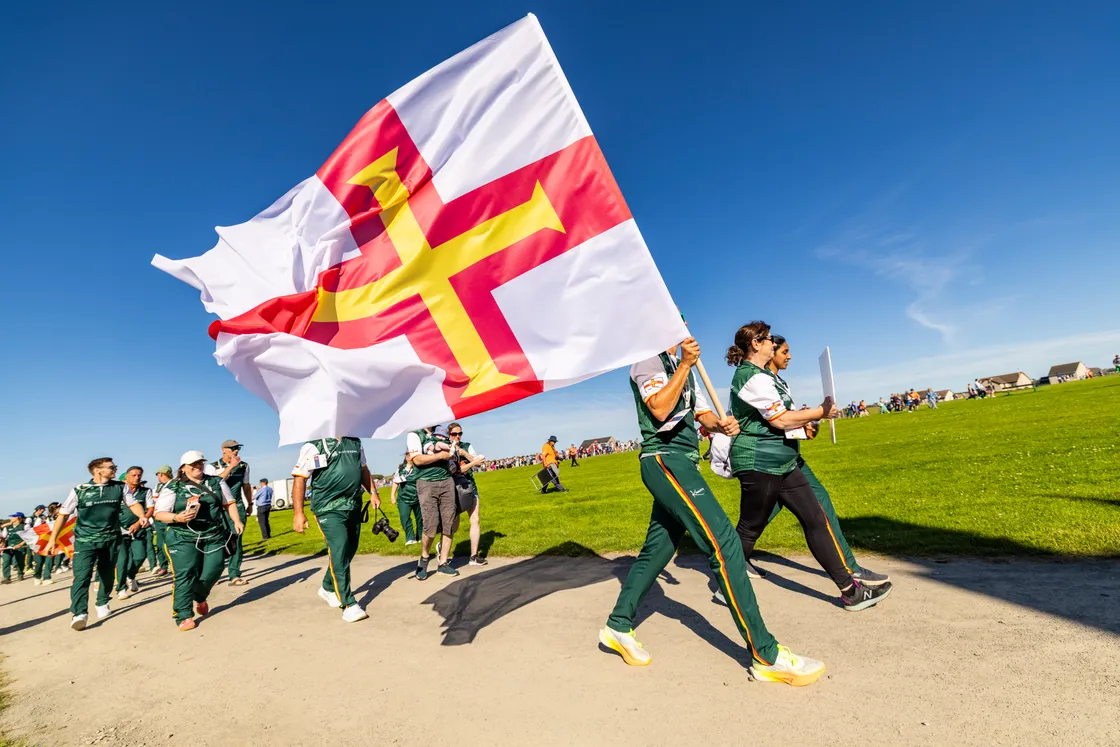
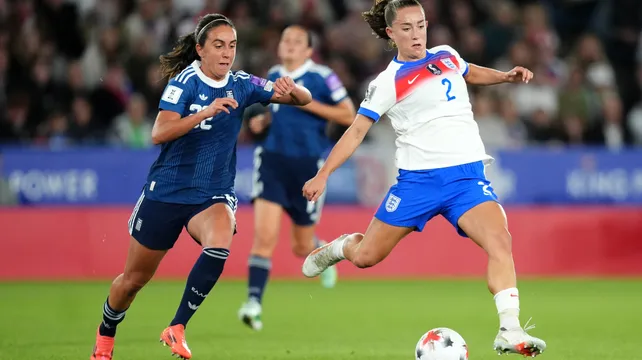
The Faroes promise a larger-scale Games for Guernsey given the return of certain big team sports like basketball and volleyball, which were absent this summer, together with renewed hopes of competing in football after the island withdrew from Orkney.
Table and lawn tennis, judo, shooting and triathlon are also returning as part of an expanded programme featuring 14 total sports.
The vast majority of these will be hosted within the capital of Torshavn.
This marks a return to a hub-based Games, unlike the more spread-out edition in Orkney.
‘What we try to do is have a central Team Guernsey hub, where everyone can get together before and after events.
‘They can mix with each other within the hotel and talk about different sports, rather than being isolated in one area and one location.
‘That’s really part and parcel of the Team Guernsey event – which does work well.’
But there will be outliers, especially with the football tournament spanning multiple islands.
Although many such islands are connected by tunnels and bridges, group-stage matches will also be hosted on the distant Suduroy – a two-hour ferry journey south from the capital.
The scale of these Games has made it all the more important to get ahead with planning flights.
‘Our team is going to be literally twice the size of what it was for Orkney – we’re approaching 300 people in total with the team managers and everything else.’
Alongside the reminder that they are stretched thin with only seven members on the Giga board, he added: ‘There’s nothing else in Guernsey where a team comprising of up to 300 competitors and athletes ever travels.
‘It’s a mammoth logistical task to get the travel, the accommodation, getting everyone to their location on time and to give them the best opportunity to compete as best they can.’
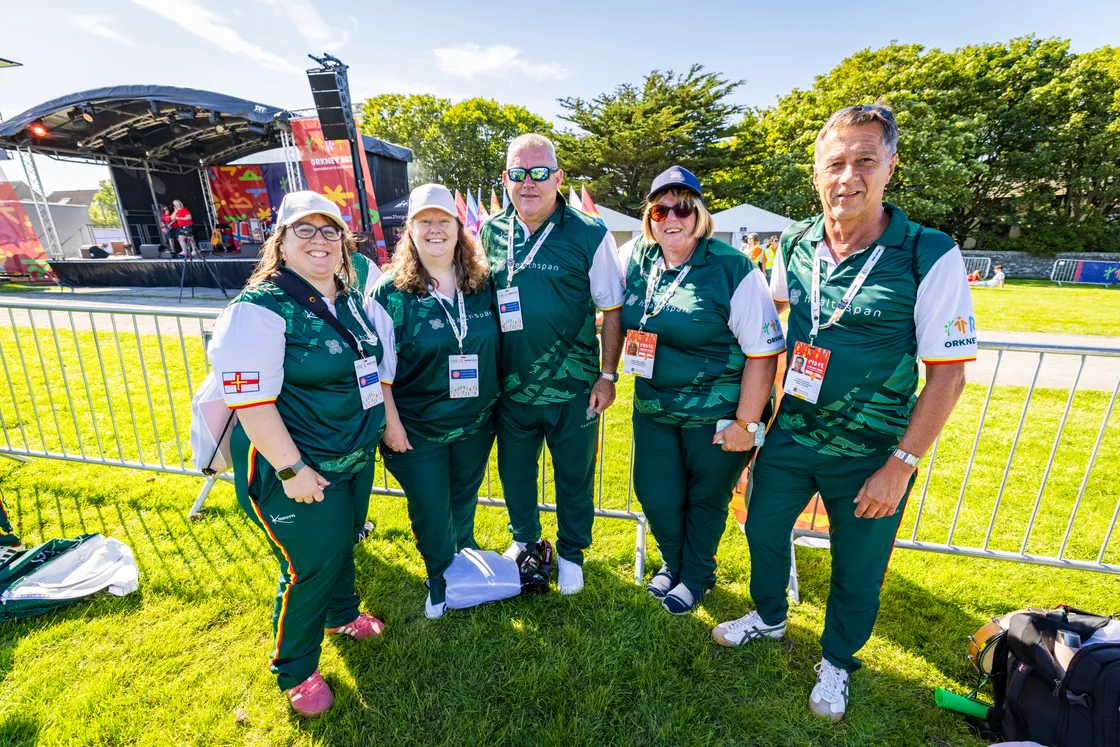
The Faroes promise to be another expensive Games, too, given the flight distance and primarily hotel-based accommodation.
And then there are additional sport-specific challenges like getting weapons and bikes over to the Danish archipelago.
Yet Jackson is quite excited to be taking up the ever-important role.
‘I’m looking forward to the challenge of it really, because it is something new.
‘I’m in a position where I can give more time to it as well now.’
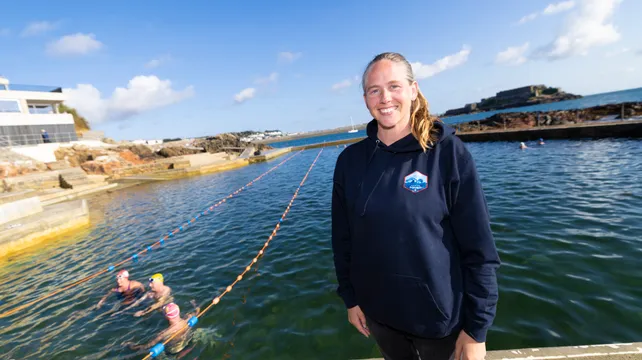
It is also far from a solo mission. Jackson has credited the wider Giga board, highlighting in particular the sporting experience of new recruits Ross Yeates (swimming) and Emma Webb (basketball).
‘Both of them bring a wealth of experience from a competitive point of view.
‘They can give their views on what works and doesn’t work in terms of accommodation, travel, logistics and facilities.
‘We can take all that on board, because they are very relevant in their sports.
‘I think they will bring a good deal of commitment as well, which is exactly what you need – people’s willingness to help and get involved in things.
‘So then that puts us in good stead for the future as well, because none of us are getting any younger.’
Guernsey 2023 was the swansong of many a Sarnian sporting career, that opportunity to go out on a high in front of a home crowd.
And Orkney 2025 was seen as a transitional, lower-key affair and a stepping stone to bigger things, even if it ended up being surprisingly successful.
‘It was quite a transitional team [in Orkney], where some of the sports were sending people there with no expectations of medals but to get the performance in, do their PBs, and get used to it so they’re in better place for two years’ time.
‘I think that worked really well and the fact that we still ended up third in the table, it was great.
‘That probably exceeded our expectations, just because we believed it was a transitional team as such.’
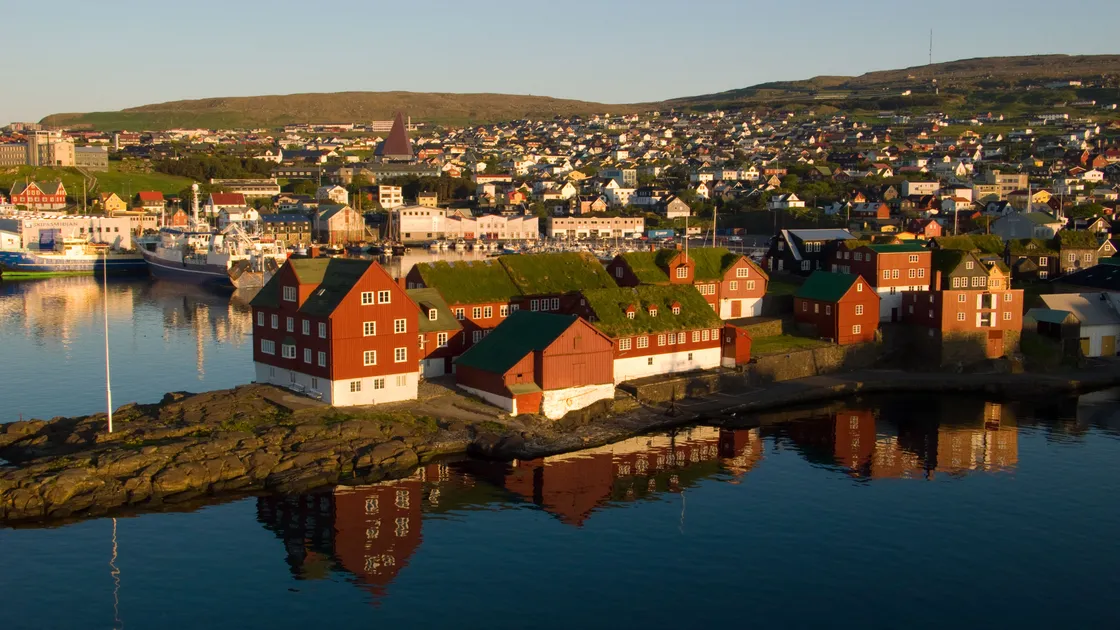
The Faroe Islands 2027 may be what these up-and-coming sportspeople are stepping towards.
‘We have a whole bigger team going and we know that those people who were in Orkney are going to have two years’ more experience by then.
‘It just puts them in much better stead and a better place. They won’t be in awe of it.’
On that note, he refers to the gymnastics in Orkney, where Guernsey sent a particularly young squad of debuting girls and coaches who found the level ‘eye-opening’.
‘They came away really excited and in awe of what they saw.
‘But then in two years’ time, it’s there again in Faroes... they’re going to get a wealth of experience between now and then and that just puts them in a far better place for 2027.’
The Faroes’ dominance in gymnastics gave them a leg up en route to topping the overall medal table in Orkney, amassing 41 golds over the week.
This glut of golds could certainly be seen as a sign of their passion for the Games.
With just over 18 months now remaining, Jackson is already confident in their abilities as hosts.
‘Between the islands they’ve got underwater tunnels and literally somewhere in the middle of that is an underwater roundabout where traffic flows.
‘So yeah, I think the infrastructure will be very good, and the accommodation and the facilities will be excellent.
‘They’re very passionate about their sport and they’re very pro-thinking in terms of sport as well – they will want to be seen to be able to offer the best that they can.’