
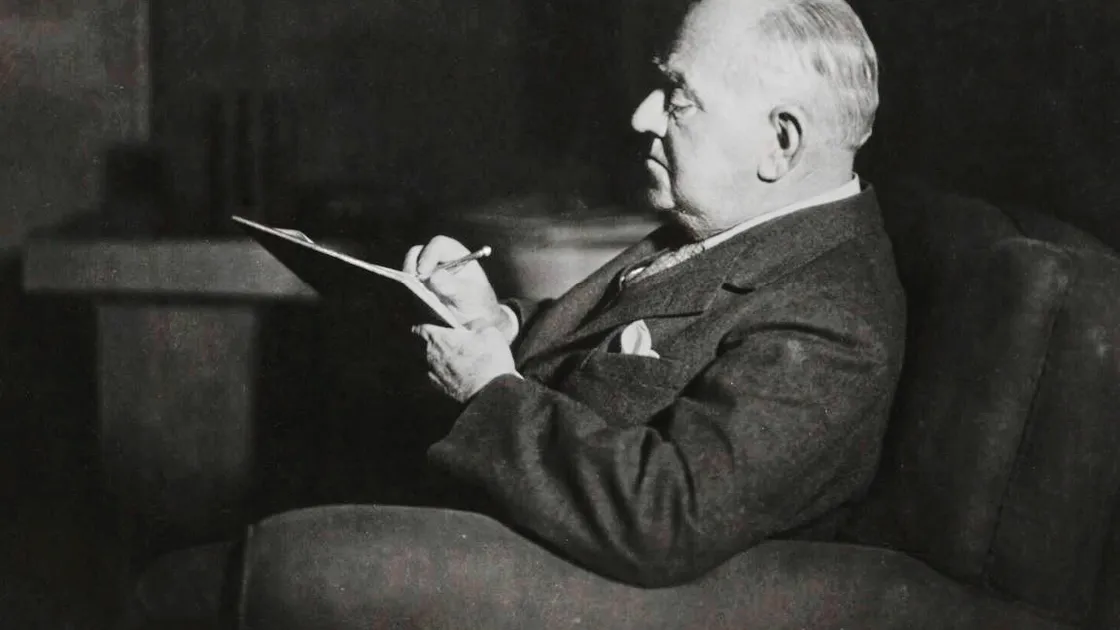
If you were to be asked who was the most successful literary figure to be associated with Guernsey, you would probably say Victor Hugo. Or maybe Roger Hargreaves with his Mr Men books. If you heard the name Edward Phillips Oppenheim, your response would most likely be ‘Who?’ In the early part of the 20th century he was a hugely successful writer of novels and short stories, many of which were produced as films, and he lived for a while in Guernsey.
Edward Phillips Oppenheim (EPO) was born in London on 2 October 1866, the son of Edward John Oppenheim and Henrietta Susannah Budd. The father was a leather merchant in Leicester, the city where his son was educated.
EPO attended Wyggeston Grammar School in Leicester, where he excelled at cricket and football. According to his headmaster, apart from English literature, he didn’t really get on with any academic subjects, especially maths.
In his memoir, written in 1942, he describes a meeting with Reverend Dent, the headmaster, when he explained that he needed to leave school at the age of 16 because his father was having financial problems, and he was required to work in the family business.
However, even at this age he was writing, and within a short time of leaving school he completed his first novel, Expiation. Even though the book was not particularly successful, it was dramatised by a Leicester theatre owner and the subsequent play enjoyed some success. Consequently, EPO was invited to meet with the chairman of the Sheffield Weekly Telegraph and he was given a contract to write six novels.
Over the next few years, he worked with his father in the leather business and wrote novels in his spare time.
In 1892, his father sent him on a business trip to America. While there, he met and fell in love with Elsie Hopkins. After a whirlwind romance, they married and Elsie went back to England with Edward.
They bought a small country house eight miles from Leicester and EPO travelled in to the factory every day except Sunday when he served as a sideman in the church and played cricket for the village team. Throughout this time he continued to write and had several novels published.
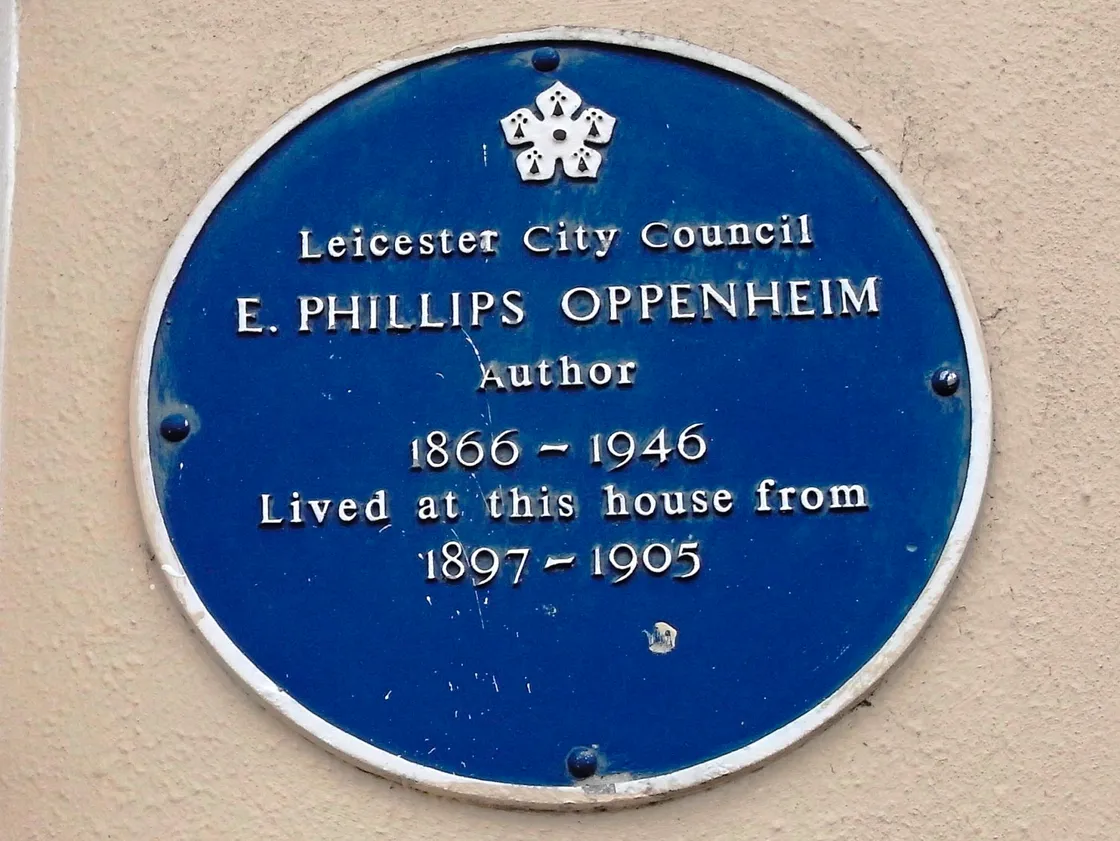
The country house is now The Cedars pub and has a blue plaque in Oppenheim’s honour.
In 1895 his father died and EPO took over the running of the family firm. However, he was never really happy in the leather trade and much preferred writing. In 1906 he was able to sell the company to an American firm and he then became a full-time writer.
He proved to be hugely successful, having 160 novels published, 38 collections of short stories and hundreds of stories published in magazines. There were also 36 films made based on his novels.
During the First World War he worked for the Ministry of Information and after the war he moved to live in Norfolk and then to a villa between Cannes and Nice on the Riviera. It was here that he met several other writers, including PG Wodehouse, Edgar Wallace, Somerset Maugham and Arthur Conan Doyle.
In 1934 EPO and Elsie moved to Guernsey. He claimed it was for the benefit of his health, but he was always complaining about the tax system in France, and their high death duties, so maybe that was the real reason. He chose Guernsey on the recommendation of a former Riviera homeowner, a Mr Langley, a friend of PG Wodehouse. He had moved to Guernsey and spoke of it in glowing terms.
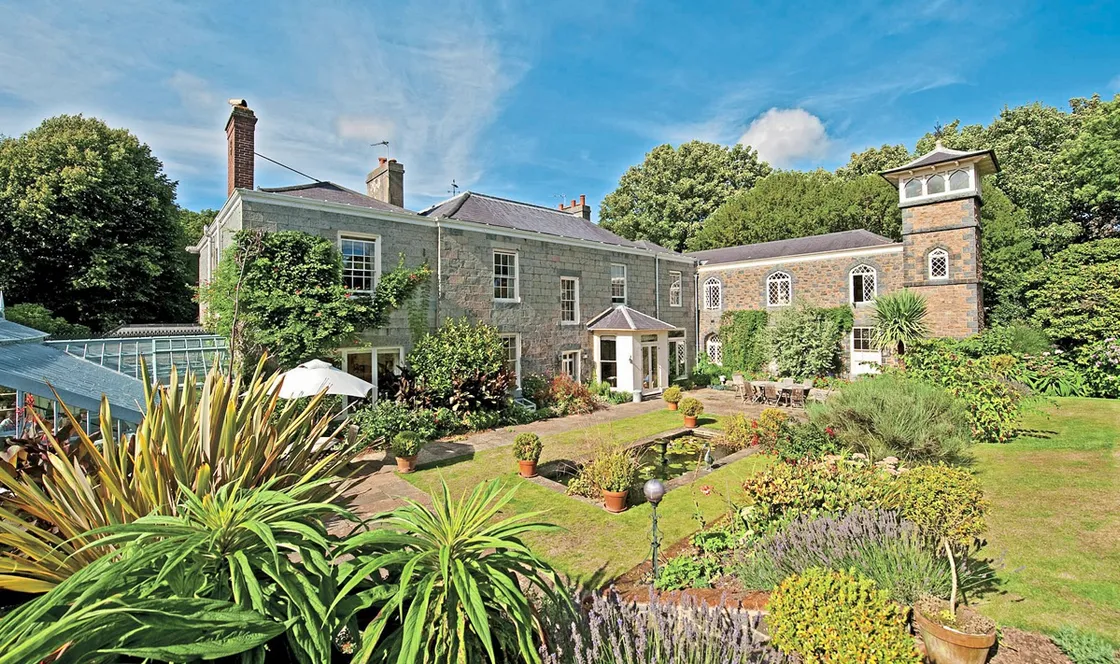
Edward and Elsie initially stayed at the Old Government House Hotel while they looked for a suitable property to buy. After a short time, they bought Le Vauquiedor Manor, which EPO describes in his memoir as a ‘stiff Cromwellian-looking building with a certain austere dignity of its own’. He thought the gardens were ‘pleasant and prolific’ but he regretted the lack of a ‘tennis lawn’. He joined the golf club, but described the clubhouse as ‘a very poor sort of affair’.
As a glamorous, internationally-famous figure, he was immediately welcomed by Guernsey ‘society’ and very quickly became part of ‘the scene’.
He wrote: ‘In Guernsey everyone owns a boat, goes to the cinema at least once a week and to church on Sunday. Everyone, too, within a certain circle of friends, gives two cocktail parties a summer, at which you meet the same people, varying in numbers from forty to 150. No bars or public houses are open on the Sabbath, which accounts, I suppose, for the large number of loungers about the harbour and on the sea wall during that day.’
While living in France, he bought a boat, which he named Echo after Elsie’s full name: Elsie Clara Hopkins Oppenheim. When he came to Guernsey he bought another boat, which was named Echo II, and he spent many hours fishing and travelling between the islands. He hired a local fisherman, Roberts, to sail the boat.
He especially enjoyed Sark and he wrote: ‘I have been known to stay out for several days on my mooring close to Sark harbour, fishing and bathing for a shorter period during the day and dictating to my secretary the rest of the time. Fifteen or 20 of my recent novels I can remember which owe their existence to the long dreamy hours I spent in this fashion. The atmosphere was always inspiring round Sark – a wonderfully picturesque island, a dark and scowling mass of sinister rock one day, a gay, colourful, flowery paradise when the sun shone. In those more solitary periods during the intervals of fishing and receiving with my wife a few casual guests who came aboard, I completed during that first summer in Guernsey an entire novel and six short stories.’
While in Sark he became friendly with the Dame of Sark. ‘We used sometimes to lunch or dine when we were lying in the harbour with that very delightful lady, the Dame of Sark, who has lately made quite a name for herself with her lectures and writing on the island over which she exercises a beneficent rule. Sometimes she and her American husband, a very charming person with the easy manners and good-humour of his race, returned our visits and coupled with them a fishing excursion. On such occasions our picnics on board were very pleasant festivals.’
He also became friendly with the then Lt-Governor, Sir Edward Broadbent, who he describes as ‘a very agreeable personage from whom we received much hospitality on shore’.
His life in Guernsey seemed to fall into a pattern of golf in the mornings, bridge in the afternoons and occasional cocktail parties and dinners in the evening. Somehow, in spite of all this activity, he still found time to write numerous novels and short stories.
In 1939, after the declaration of war, Edward decided to go to their holiday house in France. He described this as ‘the greatest mistake of my life’. He had volunteered to help out at the Ministry of Information again, but his offer was declined since he was too old. This had offended him and may have been a factor in his decision to go to France.
He and Elsie, along with their Guernsey chauffeur, Mr Hill, and their maid, moved to the Riviera where life was peaceful at first, but in May 1940 the German army broke through from the Low Countries, leading to the fall of France.
At this point, the English residents began to flee the country, many of them, including Somerset Maugham, on two small boats, which had been carrying coal. EPO got his driver to take him to the quayside at Cannes, took one look at the boats, and ordered the driver to turn round.
He stayed on for a few months and was eventually able to escape by train, through Spain and into Portugal, where he and Elsie took a flight to London. This was the first and only flight he took.
As soon as the war ended, EPO wanted to return to Guernsey immediately. However, he was told that the authorities were not yet ready to accommodate any more people and some months would have to elapse before he could return.
Ignoring the authorities, he travelled to the Hamble where he found some exiled Guernsey yachtsmen. He persuaded one to set sail and take him and Elsie back to St Peter Port, landing on the White Rock in September 1945, presenting the authorities with a fait accompli.
The military were occupying Le Vauquiedor but EPO made such a nuisance of himself that the military authorities returned the house very quickly.
In an interview with the Guernsey Star on 11 September 1945, he was quoted as saying: ‘I am overjoyed I am here once again and I intend to remain here’.
EPO’s intention was to travel to France when it was safe but he was taken ill and died on 3 February 1946. He was buried in St Martin’s cemetery. Elsie died just a few months later.
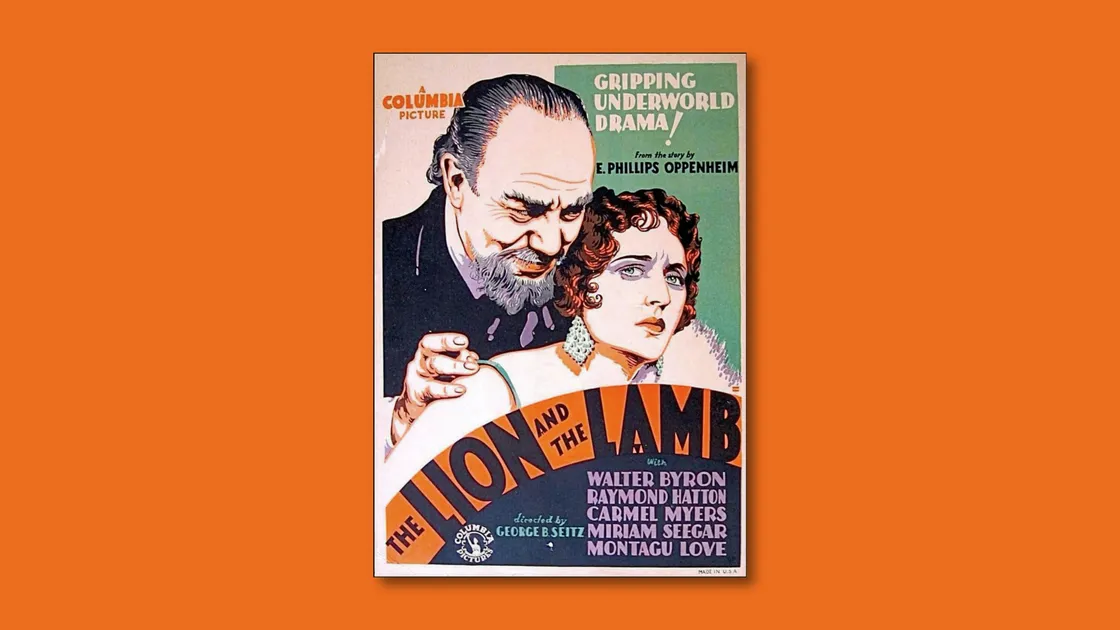
During his time in Guernsey he completed over 30 novels as well as several short stories and numerous magazine articles. During the same time, four film adaptations were released.
He was internationally renowned. In 1927, a review in the New York Times said he ‘numbers his admirers in the hundreds of thousands and has one or more of his books on a prominent shelf in almost every home one enters’.
Also in 1927, his photograph appeared on the cover of Time Magazine.
He was known as ‘The Prince Of Storytellers’.
In 1937, Wills Tobacco Company produced a series of cigarette cards entitled ‘Great Novelists of the World’. EPO was featured as part of this set and the image used, along with other portraits, is in the collection of the National Portrait Gallery.
He was the earliest writer of spy fiction as understood today and invented the ‘Rogue Male’ school of adventure thrillers that was later exploited by John Buchan, who, in 1913, described EPO as his greatest influence and, ‘the greatest Jewish writer since Isaiah’.
He said that he wrote to entertain, rather than to educate, and his novels are pure escapism, peopled with sophisticated heroes, adventurous spies and dashing noblemen.
His books were famous around the world, being translated into French, German, Dutch, Norwegian, Swedish, Danish, Spanish, Portuguese, Polish, Hungarian, Czech Esperanto and Russian.
Yet, in spite of his huge success, now he is almost forgotten.
Edward and Elsie had a daughter, Geraldine Elsie, born in 1897. She married and became Geraldine Downes and had a son, John.
John died in 1968 and Geraldine died the following year. Under the terms of her will she established a trust named in memory of her father and her son.
The Oppenheim-John Downes Memorial Trust provides small scale grants to British artists, designers, writers and performers over the age of 30 who are experiencing financial difficulties in the pursuit of their careers. The copyright of Oppenheim’s novels are lodged with the trust.
For anyone wishing to learn more about this fascinating character, there is a biography, The Prince of Storytellers, by Robert Standish and Oppenheim himself wrote a memoir, The Pool of Memory.




You need to be logged in to comment.