

The film
Set in 1989, this 25-minute short film directed by Guernsey’s Brandon Ashplant tells the story of 20-year-old Chris Gueffroy (Cameron Ashplant), the last person to be shot and killed while attempting to escape over the Berlin Wall.
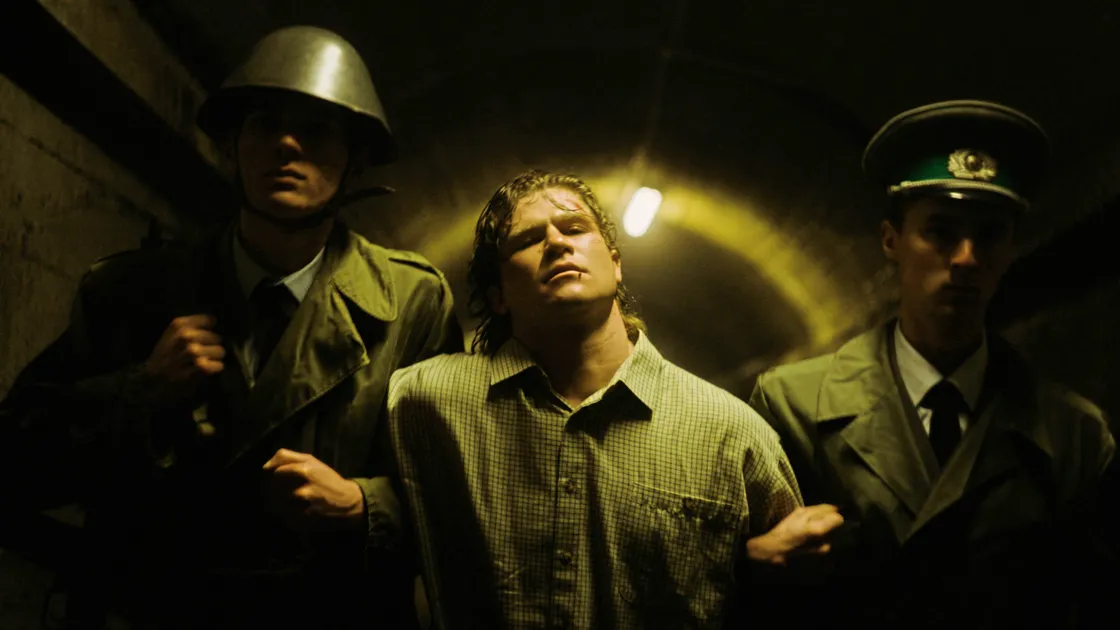
The subject matter is, necessarily, sobering, and the sepia-tinted greyness of the picture only adds to the feeling of melancholy and hopelessness felt by the characters.
Brandon and his crew captured the mood of the era, while the authenticity of the props and costumes helped create a depth that spoke of the resources of the German Democratic Republic (GDR) at the time. Filmed across several locations, including Guernsey (the escape attempt was recreated at the King’s Mills Water Treatment Works) and Berlin, he captured the look and feel of the era. The haunting sound of the guard dogs barking in the background also added to the chilling atmosphere.
It’s fair to say that the film is intense, with a narrative that is both intimate (focusing on Chris’s story and his interaction with family and friends) and expansive (highlighting the broader historical context).
Much has to be portrayed in the short time frame, and it is to Brandon’s credit that he gets the most out of his actors. Sometimes just a look or an action portrayed the claustrophobia of the limited life that Chris lived. Cameron excelled in the role, nailing the feeling of frustration and restlessness that Chris obviously felt. He – and the rest of the crew – also nailed the accent. In one scene, he removes a spider by trapping it with a glass – the symbolism of the wall trapping him was not lost on any of the audience.
He was ably supported by Darragh Cowley as his friend Christian Gaudian, who was also shot in the attempted escape but survived, and Wendy Makkena (best known for playing Sister Mary Robert in the Sister Act films) as his mother, Karin Gueffroy.
Any mother watching the film could empathise with her conflict – of understanding that her son wanted more from life, that at some point our children have to fly the nest, counter-balanced with the knowledge and the fear of what could happen to him if he did. Her view was that she had a job, a roof over her head, that the state looked after her, and that she should be grateful. It was a view that Chris obviously struggled with.
I found the scenes between them very powerful; and the tension when she is lying in bed on the night of the attempted escape captured every mother’s worry about her offspring.
Other scenes that added to the understanding of why Chris would risk escaping included those at the restaurant where he worked. The interactions with the officers and the constant surveillance helped to exacerbate his feelings of restlessness. Brandon wove in some interesting yet necessarily short scenes, including one where Chris interacts with a fellow waiter from Cuba, highlighting the shared struggles the young men lived under.
The tension in the film grew and rose towards the inevitable ending. Chris had told his friend Christian that he believed the shoot-to-kill order had ceased, hence why the attempted escape took place. This information was incorrect and was likely to have been believed because of the changing political atmosphere in East Germany at the time.
The poignancy of the moment when freedom is but a moment away and then lost as shots ring out (again, with the haunting sound of barking guard dogs in the background) is portrayed with superb emotional depth from the young director and actors. The music throughout the film is as haunting as the visual elements, creating an experience that is both a journey of hope (as Chris’s enthusiasm for life as an actor in the bigger world is palpable) but also one of desperation and, in the end, death.
While 25 minutes may seem short, Brandon Ashplant manages to portray an entire era, a relationship between a mother and son, and the frustration and impatience of life that young people often feel. A sobering yet reflective film, and one that all who contributed to can be proud of.
The premiere
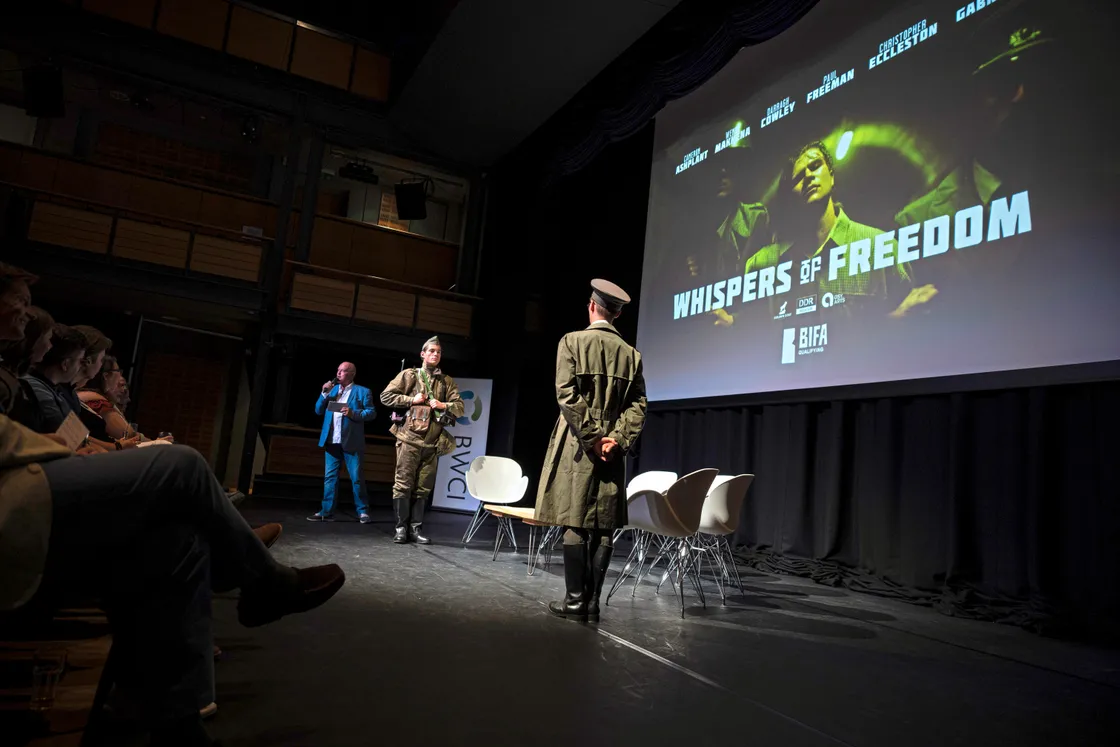
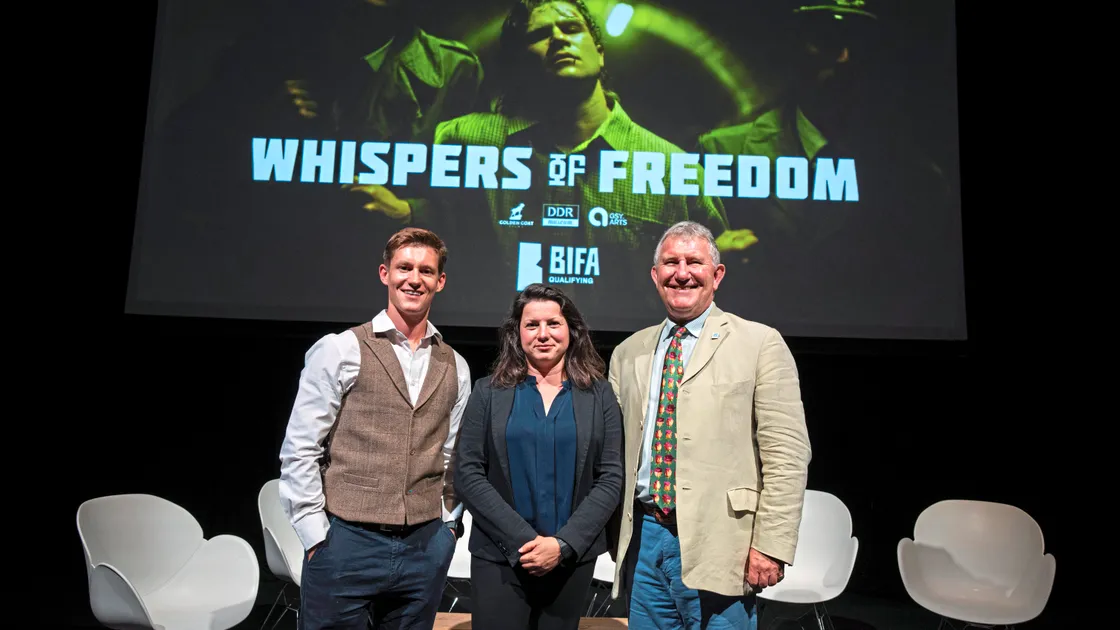
Held at the Princess Royal Centre for Performing Arts, the premiere of Whispers of Freedom was watched by a full house, including some of the local cast, the director Brandon Ashplant, Policy & Resources Committee president Deputy Lindsay de Sausmarez, and Lt-Governor Lt General Sir Richard Cripwell.
The evening started with a drinks reception, sponsored by BWCI, before the audience filtered through to the auditorium, where two statuesque East German soldiers stood to attention on stage. It was a fantastic vibe to introduce the film.
Compere for the evening was Jim Delbridge, who lived in Berlin for a time and so had a personal connection to the film.
The Lt-Governor also had experience of Berlin. ‘I was part of the allied forces in the western sector, whose job was to act as a small road hump in the way of the Soviet advance through Germany,' he said.
‘Of course, we didn’t call it East Berlin. It was the Soviet sector, and our job was to be present in the Soviet sector, physically present, to the point that we were routinely given tickets to the ballet and the opera and other things to go over in uniform, so that people in the Soviet sector would see that the British and the Americans and the French were present there. They looked at us. We looked at them.
‘I patrolled the inner German border between the East and the West, and militarily we knew exactly what our job was. We rehearsed it, we practised. What we had absolutely no idea about, and frankly no interest in, was the social situation, both in the Soviet sector and East Germany.’
He said that it was a time of change almost everywhere in the world, except in the Soviet sector and East Germany.
On why the film is so important and worth seeing, he said: ‘First, I think, is the emphasis that Brandon and the crew have played on, pushed onto authenticity. There may well be elements of Guernsey reflected in East Berlin here, but I think that the trouble that they’ve gone to merely adds to the credibility of the film.
‘Secondly, I think that it is important that we learn and understand about events like this. We should be curious about times that for many of us are still memory rather than history. We should seek to understand how a place like East Germany could possibly have existed and what it was really like, rather than simply reading billboards or propaganda. And I think one of the strengths of the film is that one of the advisers on it is Katja Hoyer, who wrote a book some years ago called Beyond the Wall, which is an exceptional work that really does take you into the reality of life in this journey.
‘And I think lastly, this film is a celebration of the arts in Guernsey. This is being created by local people as it’s been set around places that we all know. It’s been produced by Golden Goat films – nothing could be more Guernsey.’
The director
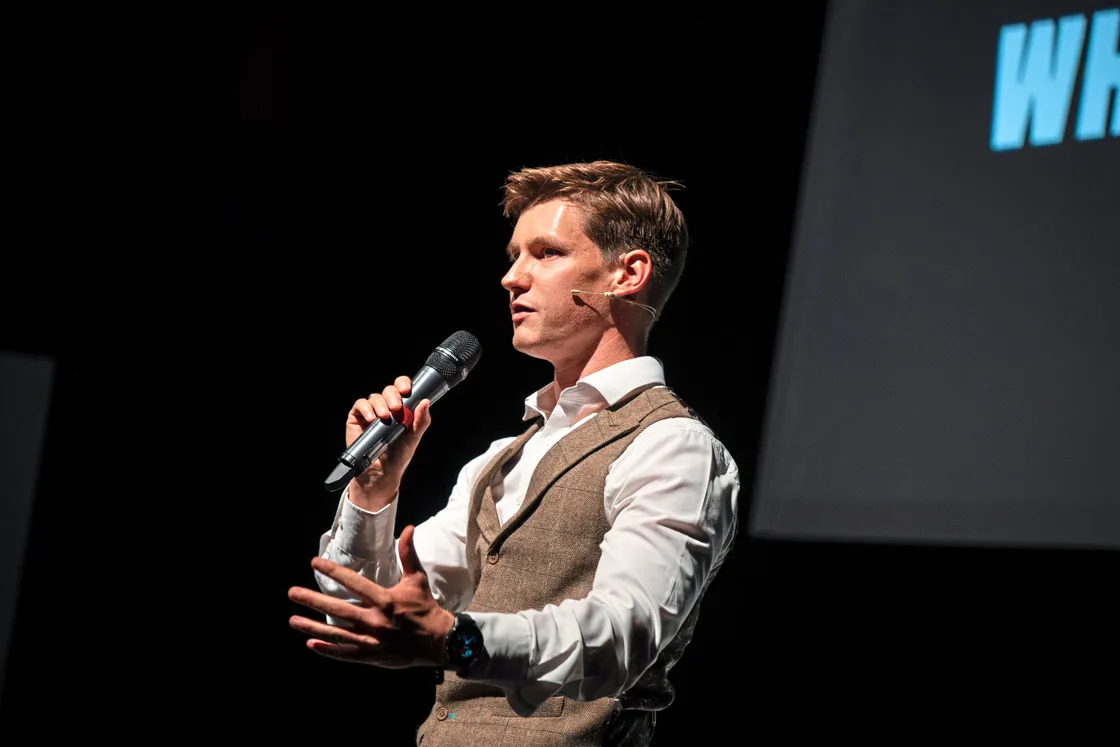
Brandon Ashplant had a long list of names to thank, including all his crew, plus Guernsey Arts for their contribution.
‘This film is Chris’s story,' he said.
'It’s the story of a young man who, barely 20 years old, tragically lost his life on the death strip of the Berlin Wall.
‘For people of my generation (I was born in the 1990s), this period is too often viewed as ancient history. It’s not – it was only 35-40 years ago, and the fact that this was happening in the heart of Europe is absolutely tragic.
‘Hearing some of the stories, doing some of the research into this project (with thanks to the DDR Museum among others), the more you delve into it, the real tragedy is that, while there are estimates of the number of people killed, in reality, the true number is unknown.
‘The Stasi made a concerted effort to cover up and ensure there was no clear public knowledge – certainly in the East – of what had happened.
'It's incredibly important that these stories are revived and retold and remembered.
‘Thanks to the buzzing art scene we have on the island, we have the ability to tell these stories.’


You need to be logged in to comment.