

On Guy Fawkes Night of 2005, if you weren’t already planning to burn the effigy of a Catholic criminal or watch a few thousand pounds’ worth of fireworks explode over you, there were other more melodic entertainment options around the island. The Iron Babies were playing at the Golden Lion, there was a disco at the Apartment Bar and there was funky house on offer at the Albion Sports Bar, courtesy of DJs Dom Bacon and Oli Bolger.
Or, at the refurbished church of St James-the-Less, you could have gone to see a brand new musical outfit calling itself the Guernsey Symphonic Winds, which was taking to the stage for the first time.
It was the brainchild of music teacher Alan Gough, who has remained the conductor and leader right up until the present day, as the ensemble approaches its 20th anniversary.
‘I’d already done 20 years working for the Schools Music Service and then I left the island for three years and went to live in Bahrain,’ he said.
‘Then when I came back I was working for myself as a private teacher and I just kept bumping into people who’d gone through the music service set-up who were no longer playing their instruments because there was nothing to play in.’
Alan decided something had to be done, as there was ‘so much for the kids to be involved in, so there had to be something more for the adults’.
He spoke to friends and those friends spoke to their friends and soon, purely by word of mouth, they had enough interested musicians to start thinking about holding a rehearsal.
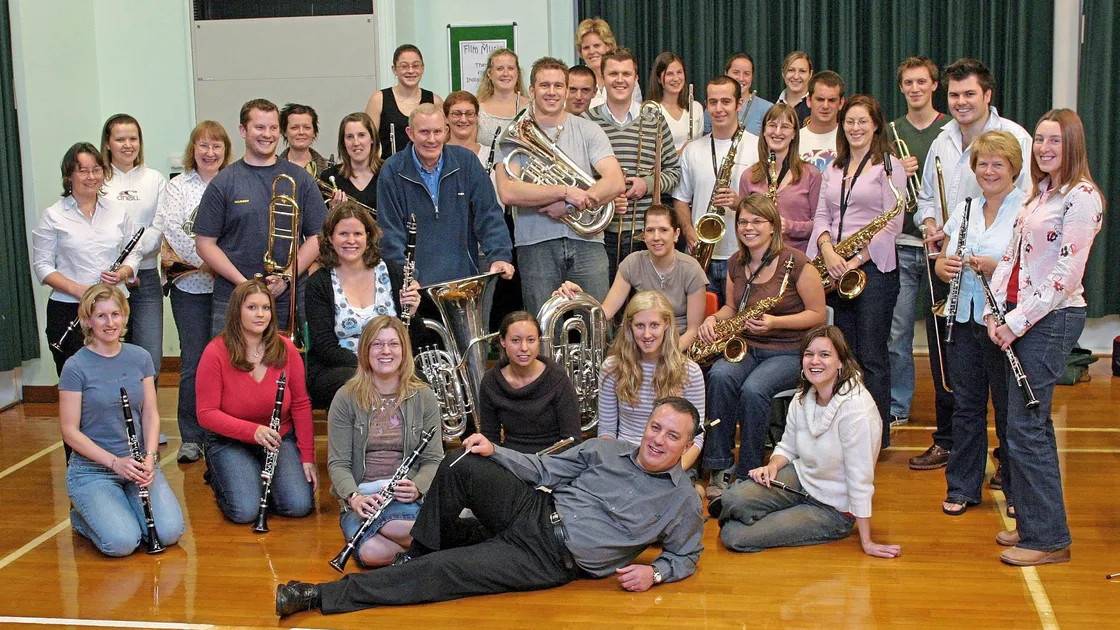
This took place at St Stephen’s Church Hall in April 2005, with 23 players turning up.
‘It was like a Year 6 disco,’ Alan recalls, ‘where everybody turns up and stands around the edges of the room because they hadn’t seen each other for 10 or 15 years and they’d probably forgotten what they looked like.’
Happily, the assembled musicians soon began to remember their fellow music-service band mates and the ice thawed.
‘It went from there and it was wonderful,’ said Alan. ‘It was like having a school reunion once a week. Some of them hadn’t touched their instruments for 10 years but they got them out of the cupboard and turned up and their enthusiasm ensured it all progressed well.’
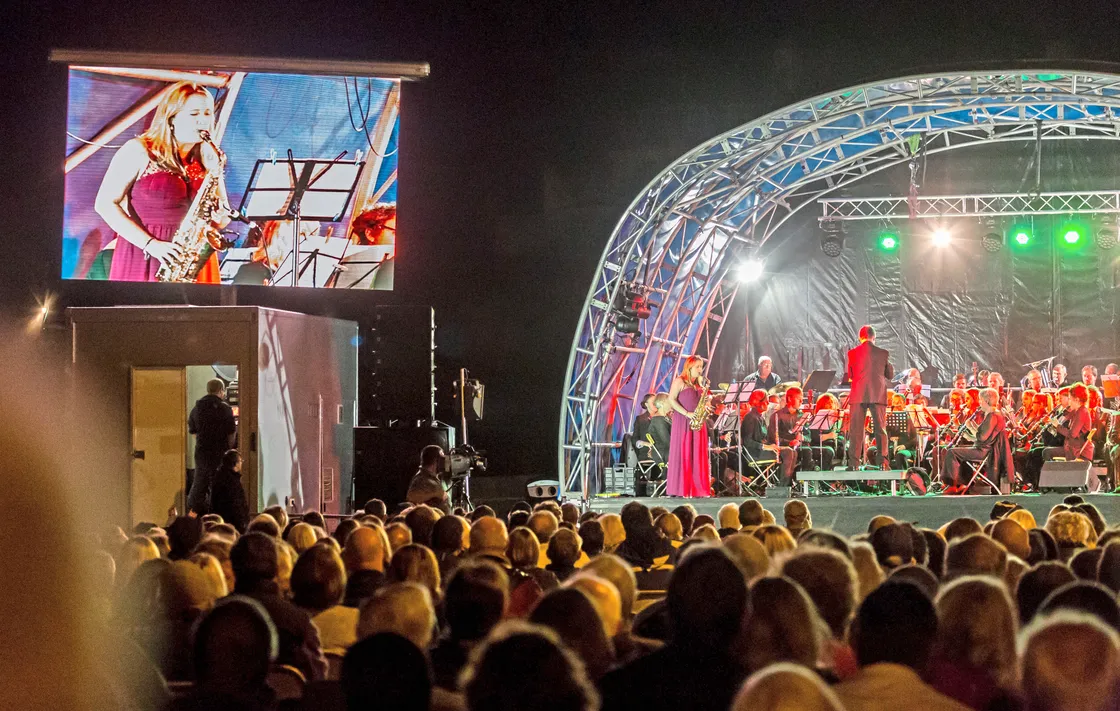
The aim was to put on a concert, if things went well. Seven months on from that first rehearsal, more than 30 players gathered at St James to perform on 5 November. The programme included Slipstream by Philip Sparke, Sinfonietta For Wind Orchestra by Stuart Johnson, the Second Suite In F For Military Band by Holst and – appropriately for the date – Hamilton Harty’s arrangement of Handel’s Suite for the Royal Fireworks.
Our enthused reviewer Deborah Soper wrote, the following week, that ‘even though – practically for the first time in the evening – the fireworks outside had ceased, there were plenty in the hall’.
That phenomenon of people hoicking out their cases and music stands from the back of a cupboard or attic and rediscovering their love of playing has sustained Alan during two decades' hard organisational graft.
‘That’s been the rewarding part of it for me,’ he said, ‘to see the ones who used to play and had stopped, who are then coming back to it in later life and have absolutely loved it. And it’s constantly changing – some disappear because they leave the island or start having families but new ones come along because either they’ve come out of the music service or they’ve just heard about it or their kids have grown up. It’s like a big family – a happy bunch. They’re great to work with.’
So what sort of instruments are we talking about? How does Guernsey make winds symphonic?
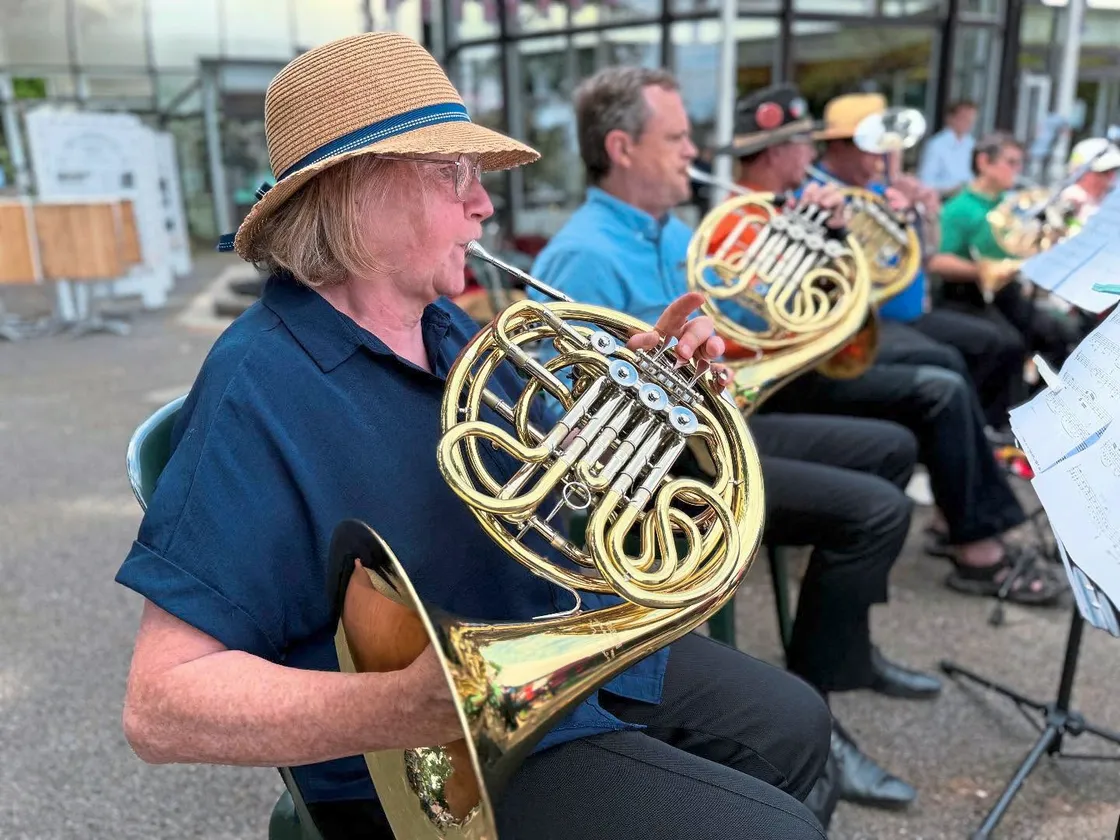
‘It’s very much like a military band line-up – a full woodwind section of flutes, oboes, clarinets, saxophones and bassoons and then a full brass section of trumpets and horns, trombones, euphoniums and tubas, and at the back you have a percussion section of drums, timpani and bits and pieces that you hit and make a noise,’ said Alan, considerately talking at my level.
‘The good thing about that is that there are so many different styles of music that you can play because lots of music has been written or arranged for that type of ensemble.’
This eclecticism has kept the punters coming.
‘There’s always something in the programme that somebody’s going to like. We might include film music or musical theatre music and a couple of pop tunes, as well as a classical standard that’s been arranged for military band or concert wind band that was originally written for orchestra.’
Over the years, GSW members have dressed up for Disney-themed concerts, children’s film music and musical theatre shows, performing at St James about three times a year – to coincide with the end of each school term – and in the summer, at venues like the KGV, Candie Gardens and Saumarez Park.
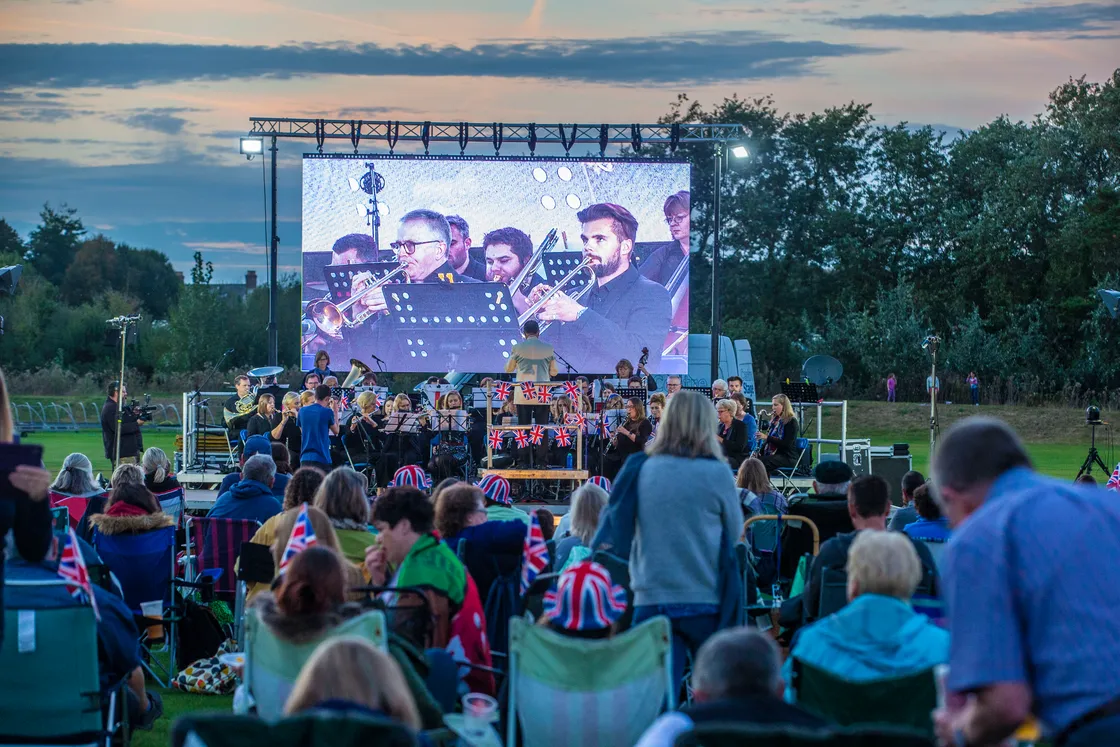
Some performances have featured as many as 45 players.
‘We’re struggling to get into St James sometimes,’ Alan chuckled. ‘Eventually we’ll have to put the band where the audience sits and put the audience on the stage.’
That growth in numbers comes despite there being a reasonably high bar for membership.
‘Members need to know their way around an instrument,’ Alan says.
‘They need to be around grade six-ish to be able to cope with what we play. But there’s a lot of very good musicians in there. Sometimes I can just put a piece of music out there and they’ll sight-read it and it’s not far off performance standard on the first run-through. Mind you, I do stretch them now and again. When I’m choosing the music, yes you want to entertain the audience but you’ve also got to look after the people who are going to play it and give them an element of challenge.’
The GSW is self-sustaining insofar as ticket sales largely cover the cost of hiring rehearsal space – typically at The Ladies’ College – and buying the music, which Alan explains can sometimes cost £100 for a piece lasting five minutes.
However, they do also welcome sponsorship, such as the arrangement that has led to Sarnia Hotels supporting next week’s anniversary concert. The first half will feature a wide variety of pieces and styles, while the second half of the concert will reflect the theme of remembrance. The hotel group will take along guests who are coming to the island for Remembrance Sunday the following day, and money will be raised for the Royal British Legion’s Poppy Appeal.
Other charities to benefit from GSW concerts in the past have included the Saumarez Park children’s playground appeal and Clic Sergeant.
Having turned 50 the year before founding the GSW, Alan is conscious that if it’s to keep going for another 20 years and beyond, it’s time for a bit of succession planning.
‘I’m getting to the stage in my life now where I can see that at some point I’ll have to say I can’t do this anymore,’ he said.
‘The amount of work involved is astronomical, really and I’ve finally got round to thinking that I need a hand now. The GSW is too good and too important for it to just stop if I stop.’
Alan is planning to have a committee set up by January and already has a treasurer, secretary and librarian in mind.
‘My job now is to teach them all what’s gone on, how everything ticks, where the music’s kept, what needs paying when and all the contacts.’
Alan’s contacts list is substantial, having been intimately involved in the local music scene since the moment he first set foot in the island in 1981. I ask him to take me back to those first days.
‘I’d done three years as a peripatetic music teacher just north of Liverpool and I saw a job advertised in the Times Educational Supplement for head of woodwind at the new Schools Music Service in Guernsey. I didn’t know where it was – I had to go to the library to look it up.’
He was the first woodwind teacher on the staff but others followed as it flourished. Alan may have left the service the best part of a quarter of a century ago but he is aware that without it, there never could have been a GSW and he remains a committed advocate of the service’s ongoing work.
‘When I was growing up in Shropshire, it was a long trek to get from where I lived into the centre of Shrewsbury to play in the local schools symphony orchestra but here, it’s on your doorstep and you’re playing with people that you see regularly during the week as well,’ he says.
‘It’s amazing the numbers who have gone through the system. The good that’s been done by the Schools Music Service is incredible. It’s got to keep going.’
But why wouldn’t it? What needs to be done to ensure its continuation? I get an animated response.
‘It’s got to have the belief from a lot of people,’ Alan said.
‘The politicians have got to see the good it does. If they just look at the finances, you get people saying “Well, that’s got to be the first to go because it’s not as important as that”, but really it is. What it does for people – it changes them. You’re playing as part of a team, you’re meeting new people, you’re learning a really important skill that’s good for your brain. It can only have a good knock-on effect, which you take into the rest of your life.’
Guernsey Symphonic Winds celebrate 20 years with a concert at St James on Saturday 8 November, including light classics, film, musical theatre and concert works. The evening will include a special military tribute and a donation from the proceeds will be given to the Poppy Appeal. Doors open 7pm, for an 8pm start.



You need to be logged in to comment.