
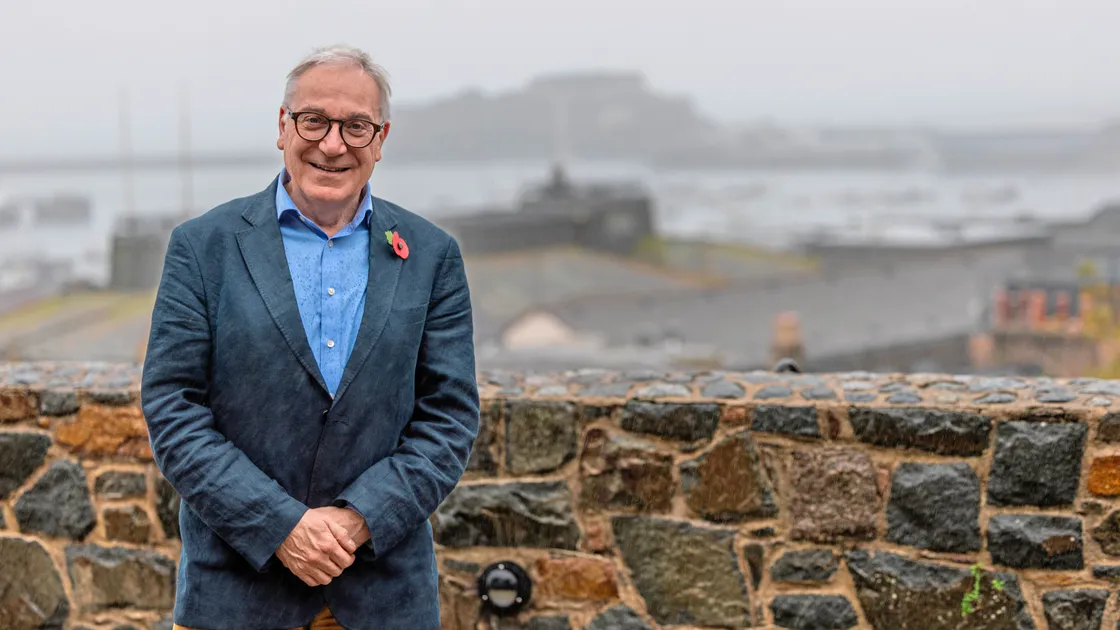
A medical research charity seeking to revolutionise the treatment of scars has visited the island to raise awareness of the work it does and the impact of scarring.
The Scar Free Foundation carries out cutting-edge research to prevent or reduce life-altering scarring and its associated complications. The idea for the organisation began in the wake of the 1987 King’s Cross fire, which killed 31 people and left many survivors with serious burns.
Today, the foundation works with people with all forms of scarring – from the military to civilians, who may have developed scarring following accidents, terrorist incidents or conflict wounds.
Retired Lt General Richard Nugee, CBE, now chief executive of the foundation, has a long-lived friendship with Lt-Governor Sir Richard Cripwell, who encouraged him to visit the island and raise awareness of the foundation’s work.
‘We have a pretty good idea of how the body scars. What we’re now doing is trying to do the medical research to try and reduce scarring, and find the “switch” – and there is a switch, because pre-natal babies don’t scar. If we can find that switch, then we can turn scarring into healing completely perfectly,’ Mr Nugee said.
A key area of research involves the zebrafish, a three-inch-long animal native to South Asia that does not scar at all, and identifying a shared gene between them and humans that stops scarring.
‘We found a gene in a human that meant that they didn’t scar in certain circumstances. We found that gene in the zebrafish. So we’re now looking at that gene very closely.’
The foundation is also looking into human stem cells as a way to regenerate skin. Ten years ago, they established the world’s largest database and bio-bank of those born with a cleft lip or palate to study how and why they form.
‘This medical research offers the opportunity to save and improve life over time. It’ll take time, because medical research does,’ he said.
He estimated that the zebrafish medical trials on humans have cost £1m. The charity has raised more than £50m. over its 25 years in existence, and the expensive nature of its work makes fundraising difficult, which can be partly attributed to their relative lack of profile.
‘We’ve done some brilliant research, but nobody really knows about it, apart from the real academics,’ Mr Nugee said.
From 2016 to 2020, he held the position of Chief of Defence People in the British Armed Forces, where he was responsible for all policy relating to wounded, injured or sick military personnel and veterans.
As a military man, he has witnessed both the physical and psychological impact that scarring can have on people’s lives.
‘Scars from various wounds, whether it’s an explosion, such as the Manchester Arena bombing, or conflict wounds, eventually what happens is they tighten and tighten and cause massive problems. People have numerous operations to try and relieve the tension of scars,’ he said.
One of the most distressing impacts he described were of young men in the military in Afghanistan or Iraq who had stepped on a mine, which resulted in them losing parts of their genitals and legs.
‘We found that they were not making any relationships at all, because they said “what’s the point?”,’ Mr Nugee said.
‘We’re doing a study into the psychology of that and how we can help them rebuild the confidence in having a relationship with people. What often happens with these individuals is that they’ve turned completely inwards, regardless of what their character was before, but it’s all because they’re embarrassed.’
He noted that many assume military people are more robust in their attitude towards their scars, but said research has shown this not to be the case.
‘The initial reaction is one of pure anger that it happens to you. “Why now? Why me?” That’s whether it’s on the battlefield or the result of a terrorist attack or car crash,’’ he said.
‘You live your whole life, particularly as a soldier, thinking, “Oh, well it won’t happen to me,” or “I’m the lucky one” and it’s how you cope. “It’ll happen to somebody else. I’m okay, I’m good enough for it not to happen to me.” And so when it does happen to you, you’re incredibly angry, and that side of it is no different to a civilian accident.
‘That anger breeds insularity. It breeds a lack of trust. It breeds frustration. If you can let it go, and my goodness that’s difficult, you’ve got much more chance of a better outcome.’
Mr Nugee also noted the personal importance heaped upon people’s visual appearances, and highlighted a big change in society’s attitude.
‘I think there has genuinely been a revolution in the last 10 to 15 years of people being proud of their image, regardless of what that image is. They used to shy away from it – it could be someone with one leg and a prosthetic, and they’ll walk around in shorts. They don’t try and cover it up,’ he said.
He believes that the Paralympic and Invictus Games have played a significant factor in bringing this change about, for providing an opportunity for both civilians and veterans to be proud of themselves, their lives and embrace purpose in society.
‘They are amazing people. I have absolutely no doubt that they have really dark days, but actually being proud and making something of it becomes so important.’




You need to be logged in to comment.