
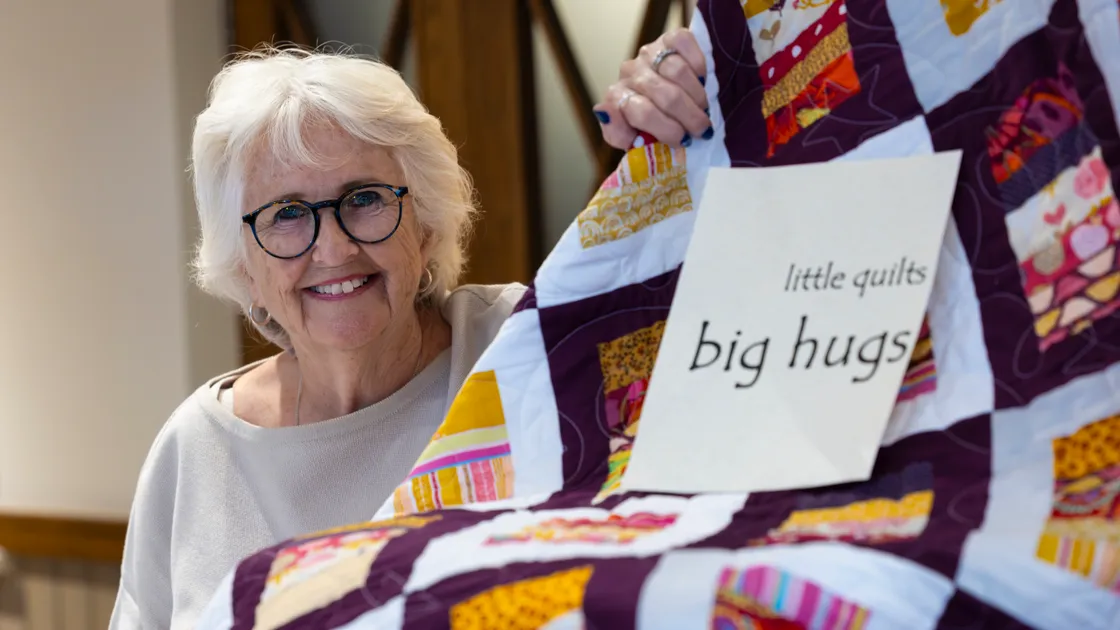
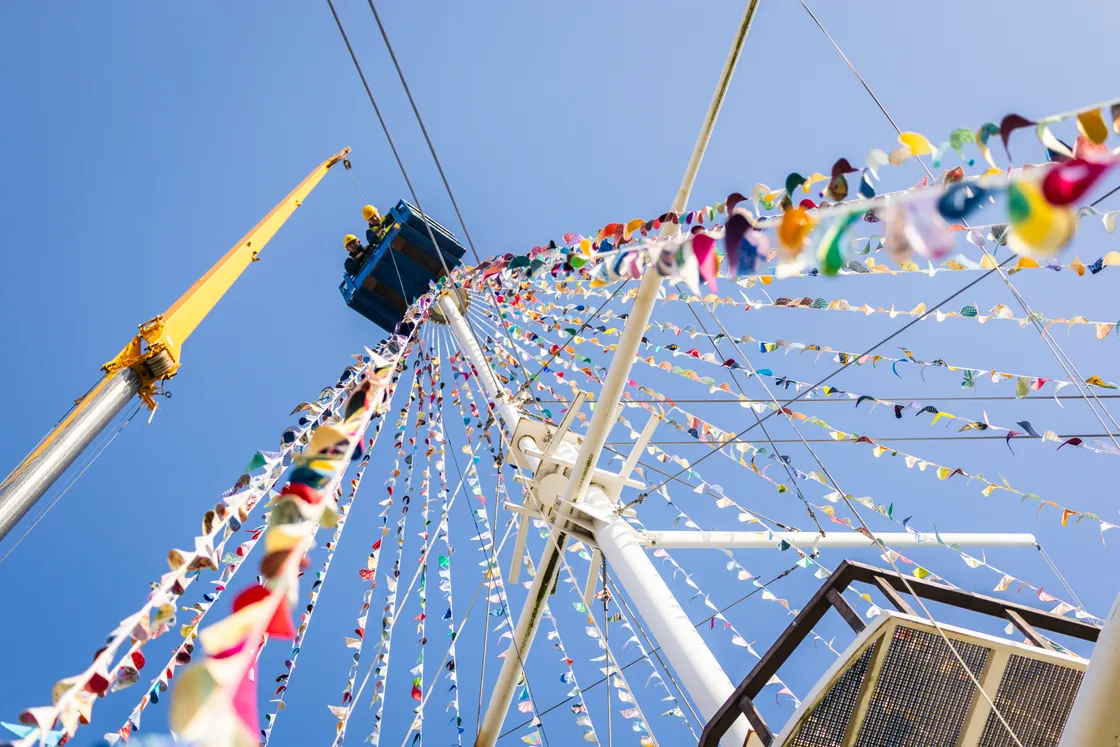
Megs Bailey likes to keep busy. No sooner had the bunting which festooned the town seafront this summer for royal visits and 80th anniversary Liberation celebrations finally come down, she was moving on to her next project.
She and her friend, ‘avid quilter’ Priscilla Seymour, have teamed up with the Priaulx Premature Baby Foundation and Les Bourgs Hospice for another community project.
Megs is best known for her coordination of a Bailiwick-wide community art project for the 80th anniversary of Liberation Day, pulling together more than three kilometres of homemade bunting from more than 170 contributors in nine months to decorate St Peter Port.
‘I think it was a fantastic way for people to come together’ she said, reflecting on the project’s end.
‘So many people felt that they were giving something back to the island, and wanted to be involved with some of the planning for Liberation Day, and really felt more part of it all. It’s touched so many people – it’s helped with mental health issues, people have got together in groups, they’ve been socialising more and been having fun together.’
Before the dust had settled on the first project, the next was already taking shape.
‘It is really on the back of the bunting. So many people involved had asked me if I was ever doing another project, and could they be involved. I started thinking “what should we do next?” And so I had a little think.’
Megs had previously been involved with the Guernsey branch of an American initiative called Project Linus. This aims to bring homemade crochet blankets and quilts to children who are experiencing difficulties – whether it be their parents going through a divorce, or if they are experiencing an illness.
Megs and Priscilla put a local twist to it as they launched the ‘Little Quilts, Big Hugs’ project. They got in contact with the Priaulx Premature Baby Foundation and Les Bourgs Hospice as potential benefactors.
‘The idea is to get people together on the island who are interested in making quilts – some experts, some competent quilters and some total beginners to all come together and try to make some quilts to donate to these charities. People will sign up to different quilting groups, and hopefully the more proficient will help those who are learning.
‘So it’s going to be much more of a community thing where, say, on a Tuesday, I’ve got room for five people at my house. They can come in, do a bit of quilting, get on to the next stage, and then go away and get their next stage ready for coming back to me again to go further with their quilt. It’s that sort of idea. It’s a bit free.’
The PPBF entered Megs’ mind upon thinking of how when critically ill children go to the UK for treatment, their siblings will be brought along while the family temporarily relocates.
‘I felt that maybe some of the siblings of the children who are sick might feel a bit left out, or feel as though they need a bit of extra support. When I approached the foundation, they were delighted. They sent me a “yes please”, and said they would also welcome premature baby quilts, because those are put over the incubators to defuse the bright lights in the hospital,’ she said.
Les Bourgs entered the conversation upon the suggestion from a friend, and is hoping to have some quilts in time for the run-up to Christmas.
‘There are many children who go through bereavement with family members, but we’re making lap quilts for adults as well.
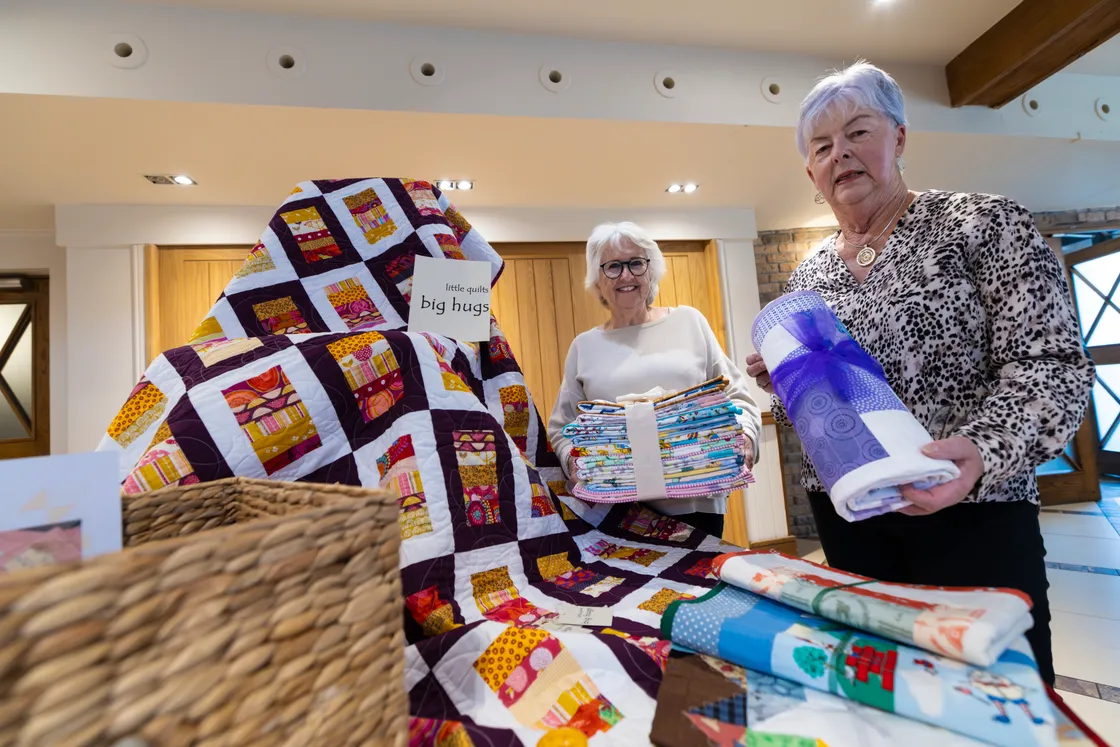
‘If they’re sitting in a wheelchair, a bed or a chair, they can just put the quilt over their knees. I was surprised and quite saddened to hear that sometimes when people go into the hospice at the end of their life, and they’re asked to take in some things to put in their room and make it a bit more homely, some people have nothing.’
To add a personal touch, the makers intend to sign their name on a tag on the back of the quilt, so the receivers know who made it – either by their full name, or initials.
People are keen to get involved, with Megs saying she had counted more than 90 people already signed up before the project launched in late October. Unlike the Liberation bunting, there is no time constraint on the project, and organisers encourage people to take their time to ensure the quilt is well made.
It is intended to be an indefinitely ongoing initiative, with people making their quilts in their own time and meeting up with other members of the project if they wish to.
A key challenge facing the project is thought to be the cost of fabric, which people will need to pay for themselves.
Megs wishes only to make the quilts and donate them, stressing that the project was not a charity and would not raise funds itself.
‘We have to use new, unused cotton, so we won’t be asking for a general fabric donation like we did for bunting, because that was based on the idea of “make do and mend”,’ she said.
‘It had just been anything people had lying around – an old duvet cover or curtains.’
Polyester or poplin fabrics are not suitable materials to make the quilts, particularly minky fabrics, because they shed micro-fibres and can cause breathing problems for small babies and asthmatic children.
The project has arranged for ways to alleviate the cost, with material donation baskets set up at Craftwise and Creasey’s. Islanders who do not wish to quilt themselves but want to help the project can buy a quarter-metre of fabric, a little bit of wadding or a roll of thread.
To get involved, e-mail littlequiltsgsy@yahoo.com. For further information, visit the Little Quilts, Big Hugs Facebook page.

You need to be logged in to comment.