The Concise Oxford English Dictionary defines hinterland as: 1. the remote areas of a country away from the coast or the banks of major rivers; the area around or beyond a major town or port. 2. an area lying beyond what is visible or known.
‘It’s a bit of both,’ said Fiona Richmond, explaining the title of her and Aaron Yeandle’s joint exhibition. ‘Definitely the edgelands. A sense of the known and unknown within a landscape.’
‘I’ve been working on this project for four or five years and last year Fiona and I were talking about how you don’t see many painter and photographer collaborations,’ said Aaron.
As artists ‘recognising both the beautiful and sublime in our local habitats’ and ‘something at first unsettling and dystopian which transforms the subject matter from the ordinary and everyday’ they decided to join forces.
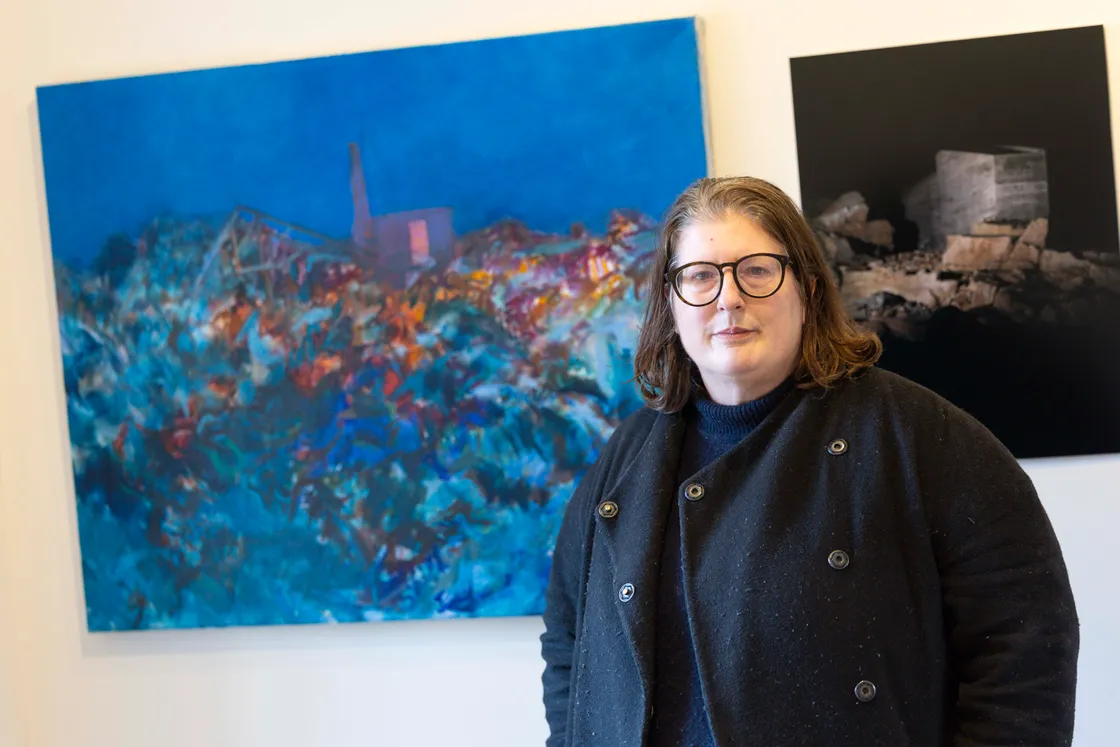
Sometimes they worked together in shared locations but often ventured solo into their own chosen domains.
The site of the former Kenilworth Vinery in St Sampson’s was one such location.
‘I live nearby and Saltpans is somewhere that continually fascinates me,’ explained Fiona. ‘I go there quite a bit. It’s been so many things over the years, a salt-gathering place, then horticultural and in the future, housing. With all the pampas grass it’s like being in some wild Argentinian landscape. Or something close to apocalyptic.
‘Both Aaron and I are drawn to these bleak, out-of-the-way sites.’
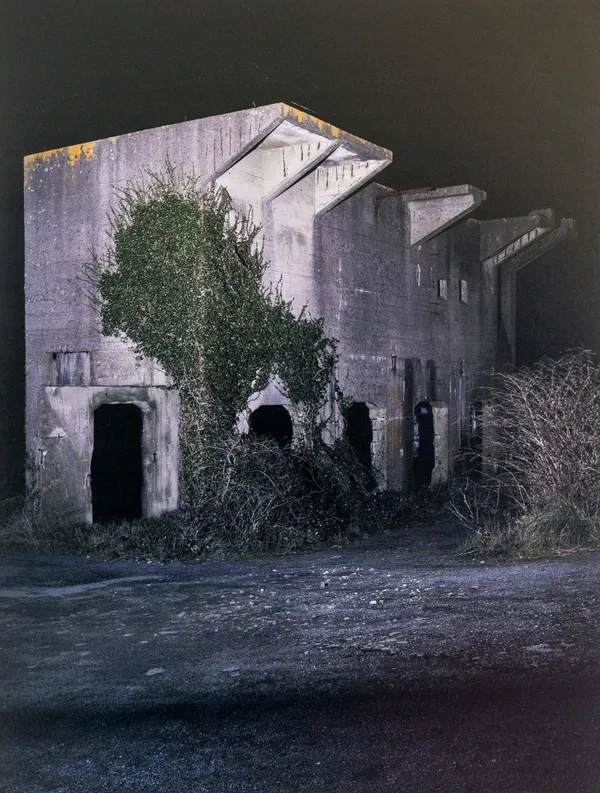
Fiona visited the Mont Herault Watch House in St Peter’s and industrial places like the German stone-crusher at Les Vardes Quarry.
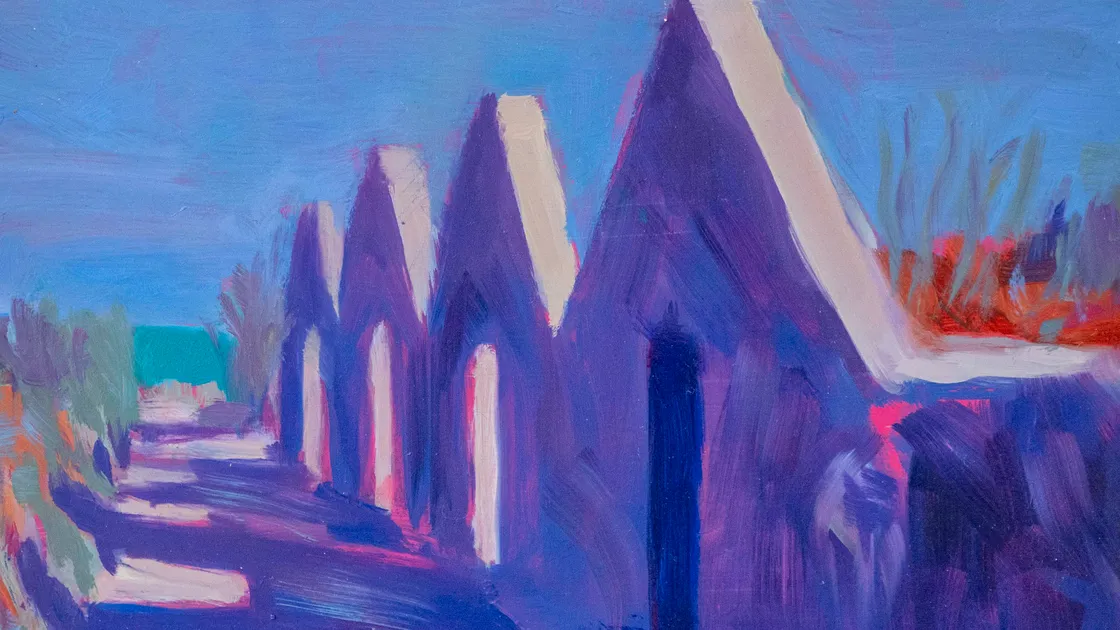
‘I also painted the cottage on Church Lane on the Bridge and the granite ends of greenhouses [Les Croutes, Vale], which were more rural.
She goes out into the landscape to work as much as possible.
‘I like working big, but they tend to blow away, so I work small then go back into the studio and use those as a reference.’
While working on this project, Aaron said he’s been ‘everywhere’.
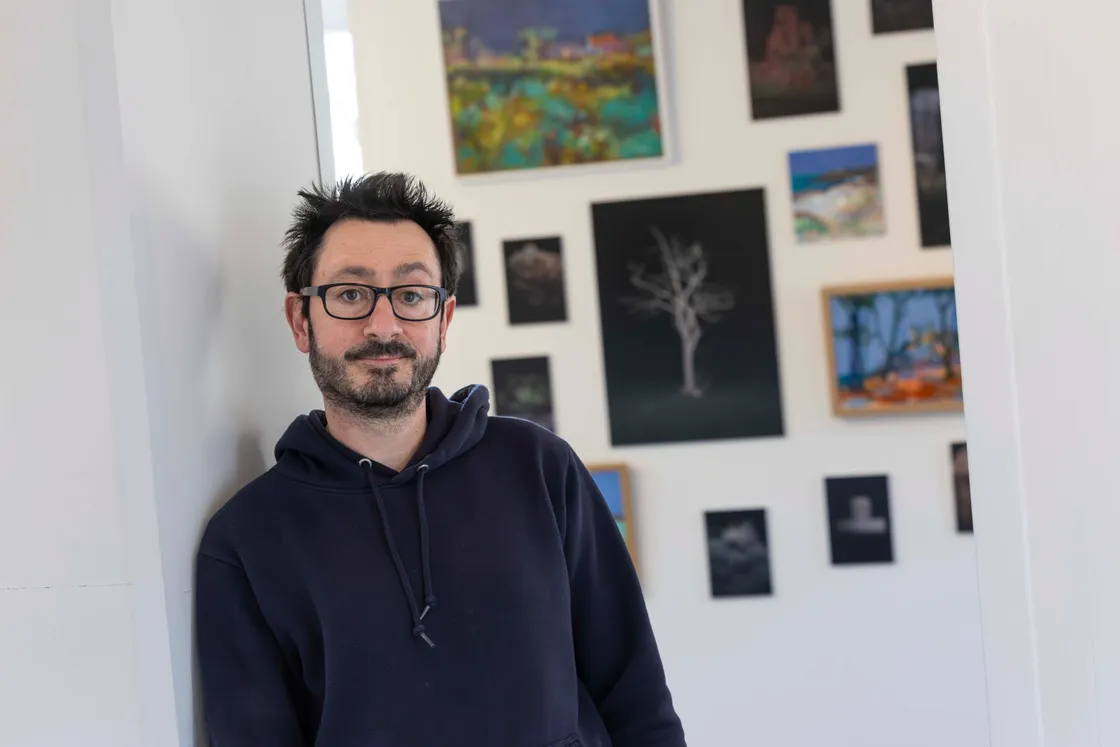
‘I’ve been all over the island. Torteval, Mont Herault – that was quite a challenge in the dark because of the potholes. One trip and you’re over the cliff.’
Over the five years he’s been doing this project he’s seen a shift in the landscape.
‘When I first came to Guernsey 12 years ago I said to myself that I’m not going to photograph the landscape. But I’m really glad I did.
‘So many of the locations I’ve photographed have gone, especially the trees. Things have changed.
‘It started off being cathartic as my documentary projects had been dying off but it has turned into my favourite project. There’s so many myths and legends I sort of pick up when I’m out there. Weird remnants of Guernsey’s history. The island is a very special place to photograph.’
Fiona agreed.
‘Even when I was a kid and first into art the landscape drew me in. Guernsey is amazing.’
They have both enjoyed collaborating on Hinterlands.
‘We’ve had some great chats and dinners together,’ said Fiona.
‘There’s been no “prima donna-ness”, no disagreements. We’ve just been on the same path of making something special.’
‘That’s what we value in the arts community, we support each other, give encouragement,’ said Fiona.
Adam Stephens, director of The Gate House Gallery, said that landscape has the power to change people’s lives in many different ways.
‘It connects us to our past, grounds us in the present and encourages us to look ahead to the future,’ he said. ‘The exhibition asks us to pay attention to those sites we may not notice – and in doing so to foster attention and care for the world.’
I’ve never seen The Gate House Gallery so full of work. And brilliant work at that. From Fiona’s powerful, highly expressionistic and colourful pampas-strewn fallowlands, abandoned cottages and storm-wrenched trees to Aaron’s uncanny monochromes of eerily-lit concrete water towers, lone tree ‘portraits’ and ghostly carved menhirs, Hinterlands acts as an insight into the hearts, minds and passions of two artists who are redefining how we ourselves see and feel this island and its diverse spaces around us – even if we don’t know they are there.
Hinterlands, supported by Guernsey Arts, opens at The Gate House Gallery, Elizabeth College, on Friday 27 March from 6 until 9pm. All are welcome. The exhibition will be open daily from 10am to 4pm throughout the Easter holidays until Saturday 18 April.