Today, thousands of people will venture out from their Guernsey homes to visit official States sites in order to place a single mark on a piece of paper, all in aid of choosing who should join the team that leads us. They’re calling it a by-election.
Exactly 25 years ago, thousands of people remained in their Guernsey homes to fill in the pages of official States forms with information about themselves, their families and guests, all in aid of figuring out who needed to be led. We used to call that a census. Remember them?
The last traditional census to take place here was on 29 April 2001, and it’s safe to say that quite a lot has changed in that quarter of a century. A majority of households (73%) had just one bathroom back then, and only 41% had ‘a home computer with access to the internet’.
Well, I say that ‘it’s safe to say that quite a lot has changed since then’ but of course, we don’t know by how much, as we haven’t had a census since.
The decision was made on 28 July 2010 – by a States vote of 25 to 21 – to replace traditional censuses with a ‘rolling electronic census’ compiled from information held in social insurance and education records. The interim 2006 census had already been scrapped while the new technology was tested and established. Thus the 2011 census was also shelved and questions about ethnicity, nationality, languages spoken, religion/beliefs and qualifications were consigned to a notional waste-paper basket.
It was a cost cutting measure which won great acclaim – not to mention awards – for its effectiveness. In November 2015, we brought you news that the Rolling Electronic Census Project was the winner of the Next Generation Digital Challenge Open Data Award. That’s a lot of capital letters. Guernsey was the envy of other jurisdictions for its ‘unparalleled frequency and turnaround time’ and lower costs.
A couple of months later, we carried a story about the census project team being nominated for the Awards for Achievement, which was big of us, considering we were also nominated. (We were both pipped at the post by Avenue Clinic.) We had become ‘a world-leader for population information’, the team was able to boast, while the judges said it was ‘particularly impressive that it has been developed from within the civil service together with bespoke software sourced locally’.

In more recent times, the dependence of the rolling census on fully operable computing systems has seen it grind to an embarrassing and policy-affecting halt. For now, anyway.
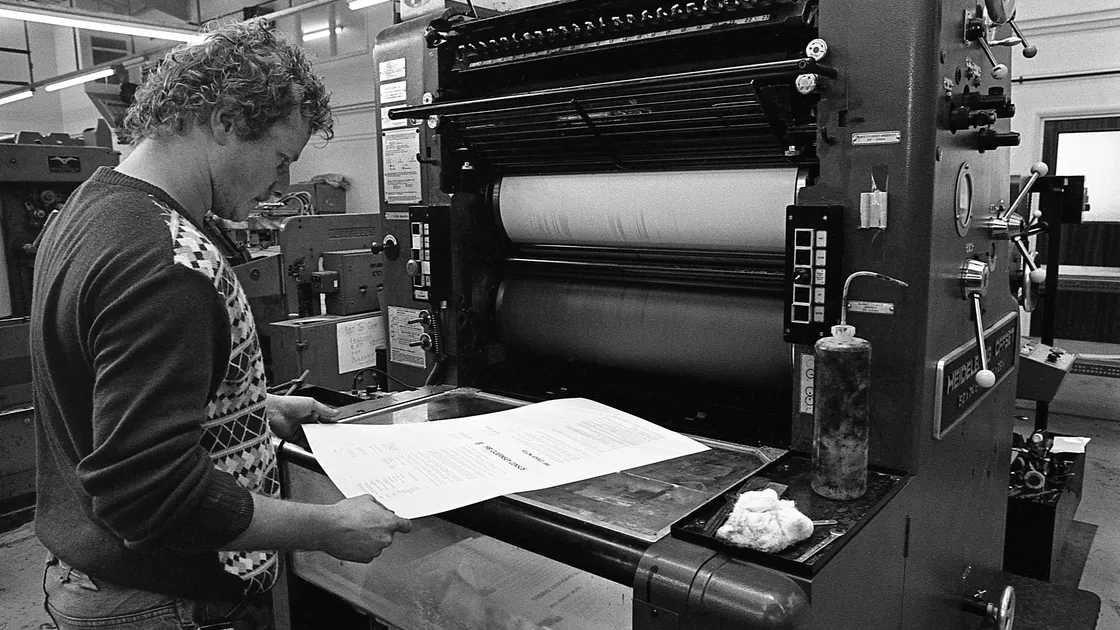
I have to concede that it isn’t cheap to send a phalanx of clipboard-wielding stat-gatherers to each and every household in the 10 parishes plus Herm and Jethou. In 2001, the island was divided into 106 ‘enumeration districts’, each containing an average of 250 households. Three census officers, 10 supervisors and 106 census enumerators were employed to go and establish all the facts deemed pertinent.
(As an aside, one of these facts – which I find myself repeating to unsuspecting cruise-ship passengers every season – is that 1,327 people spoke Guernsey Norman French fluently, of whom 70% were over 64 years of age. I have to admit to these visitors that the statistic is one generation out of date. I wonder what it is now?)
Even on the day itself – a Sunday – enumerators were still delivering forms to the more than 20,000 households taking part, while chief enumerator Ross Weston manned the temporary office at Rosaire Avenue, which was open all weekend to ensure any snags could be unsnagged.
He also urged islanders not to fill in the form until the allotted evening.
‘The problem with that is that people’s circumstances could change,’ he said – a very polite way of telling people not to count their genealogical chickens, I suppose.
The resulting census report was hailed as ‘the most important single source of information about the size and characteristics of the island’s population’, which provided ‘an authoritative statistical foundation for policy formulation and planning throughout all areas of island life’.
At the forefront of that list of areas was ‘the provision of housing’. Plus ça change.
By common consent, we are in the midst of a housing emergency. At last week’s Guernsey Press by-election hustings, we were told that we’d had 20 years’ worth of population growth in the space of two years. Our population is growing rapidly, urged on by meristic policy choices that aim to solve one problem with little cognisance of the next. And because of the unique way the States is confounded, we’re driving blind.
As part of the huge fallout from the MyGov and general IT debacle recently reported upon by the chief executive, the rolling census has stopped rolling.
Policy & Resources president Lindsay de Sausmarez told us, when she last popped in for a podcast in October, that she was a ‘data geek’ and therefore particularly keen to resolve this.
‘I think it’s really important that we do have as up-to-date data as possible,’ she said.
‘It would be unfair to present this as all our data being out of date. That’s absolutely not the case. Some issues have been identified and we’re working on them.’
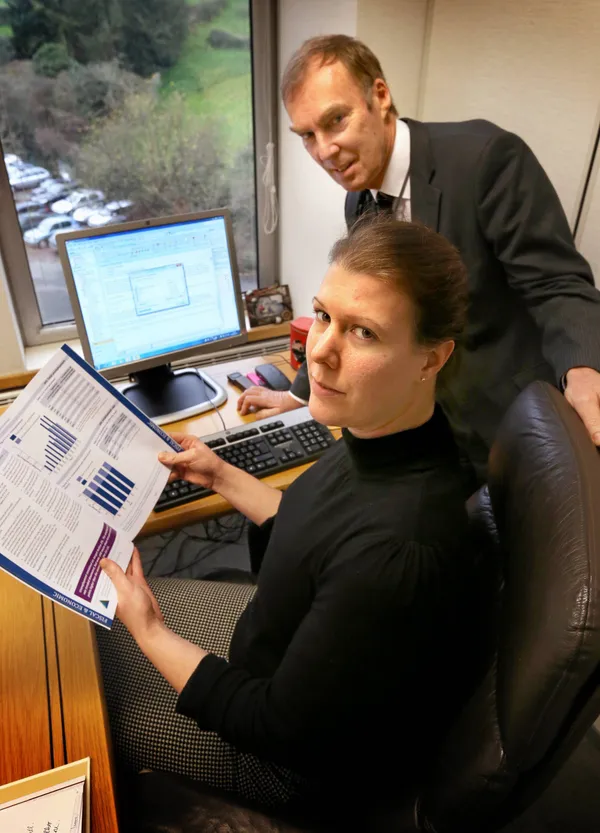
Earlier that same month, we reported that Employment & Social Security’s calculations for 2026 benefit rates had been ‘complicated by an ongoing problem with the States’ rolling electronic census, which is outside its control and has left politicians reliant on outdated information about earnings, population figures, productivity and a range of other data’.
If you visit gov.gg/population you will be reassured that ‘on this page you can download the latest information on population, employment, unemployment and earnings’, only to discover that ‘the latest information indicates that the population was 64,781 on 31st December 2023’.
That’s almost 28 months ago. That’s not rolling, that’s gathering moss.
We are assured that additional resources have been allocated to getting things rolling again, but whatever money and staff time has been thrown at it, we’re still awaiting the next bulletin.
So, I found myself thinking, could we do with having another traditional census?
As I mentioned, it’s not cheap. But if sorting out the States’ IT problems is going to take some time – and who would be surprised if it did? – and if the chief executive’s warnings on Monday that it’ll take several months to get anywhere near his vision of the Revenue Service becoming a ‘model of excellence’ come true, then how else are our politicians going to see ahead? They’re driving a metaphorical S-type Jag up the Grange with their heads out of the driver’s side window and hitting the kerb with regularity.
Even if these IT issues are solved in short order, a comparison of results achieved through contrasting methods old and new could prove useful.
And it could help in another way, too. There is, globally, a growing discourse of discomfort around immigration, and in particular, ethnic immigration. On our candidate interviews ahead of this by-election, one candidate asked ‘How long before Guernsey becomes 30% English?’ Rather than being concerned that too many English people were displacing Guerns, he was actually counting Guerns as English and speculating that we were in danger of being displaced by other cultures, with Muslims at the forefront of his fears, as evidenced by his reference to ‘knocking churches down and building mosques’ in claiming that ‘our culture is under threat’.
You don’t often hear these views expressed in the States chamber, where one expects discrimination to wither under the harsh light of statistical evidence. But whither the withering evidence?
The 30% statistic would appear to be a reference to the 2021 UK census, which had 36.8% of Londoners as ‘White British’, along with 17% as ‘White other’, 20.7% Asian and 13.5% Black. The national figure for White British across England and Wales was 74.4%.
As far as I know, there is no plan to establish equivalent figures here. But I feel they might bring factual evidence to conversations that rely on the anecdotal, and thereby bring rationality to arguments that quickly become emotional.
Jersey’s 2021 census included self-identification questions about cultural and ethnic identity, long term illnesses, sexual orientation, gender identity and educational qualifications which provided data that ‘would not be reliably available for Jersey if we were to adopt an administrative-based census’, according to their chief statistician Ian Cope, who was formerly the director of operations for the 2011 Census in England and Wales.
‘A further risk of relying on administrative data for population and census estimates is the loss of key data sources,’ he told me.
‘This can prevent the production of key population estimates.’
He also said the UK, Australia and Canada were making more use of administrative data but were planning to continue with a traditional census.
I don’t imagine there’s much political appetite for returning to a traditional census here, but I was curious enough about the possibility to approach Guernsey’s head of data and analysis who, to her eternal credit, gave fulsome answers to every question I put to her on the subject.
My interview with Helen Walton accompanies this rant and can boast considerably more coherence and expertise. Looking at her answers in black and white, I get the impression – and she couldn’t possibly comment, I know – that she must be as frustrated as anyone that the dependable douit of data has been blocked upstream by the fallen foliage of failing IT.
‘It would likely be challenging to undertake another traditional census in Guernsey’
Helen Walton has been in the data and analysis game for two decades, helping to design, initiate and develop the award-winning rolling census which put Guernsey squarely on the ‘data geek’ map.
I began by asking her what the principle differences were between traditional and rolling versions.
‘The rolling census includes much more frequent updates, plus topics not covered by the traditional census, such as earnings from employment, household incomes, property and vehicle ownership,’ she said.
‘The traditional census includes some topics that are not possible via the rolling census (due to the data not being collected by the States of Guernsey for all/most of the population, rather than a technical limitation). These include ethnicity, nationality, languages spoken, religion/beliefs and qualifications.’
Helen explained that with a sort of prototype in place from 2006 and with the full version in place by 2015 (for 2014 data), the rolling census adapted over the next decade to accommodate the change from Housing Control to Population Management, to incorporate Cadastre data re: property ownership, and to add new data being provided by employers via the compensation of employees (CoE) return, along with considerations of changing OAP ages and school catchment areas.
Referring back to those claims of our rolling census being the envy of other jurisdictions, I asked whether any of them had emulated it, and Ms Walton was able to tell me that ‘Jersey has done something similar in recent years in order to produce annual population and migration estimates’.
Her account of the IT troubles of the last couple of years was as follows.
‘Data sourced from the social insurance records and income tax systems has been interrupted since early 2025. This includes information that is core to the rolling census, such as who has arrived and left, plus other important information like economic status (employed/self-employed/non-employed), earnings from employment, and incomes from other sources. There has also been an interruption to the supply of related information that is used in the calculation of GDP and GVA (specifically the compensation of employees and mixed income components). This interruption has been caused by changes to the IT infrastructure within the Revenue Service.’
She described the transition to the new IT systems developed for the Revenue Service as ‘extremely challenging’, and referred me to Policy & Resources vice-president Gavin St Pier’s statement in which he called it ‘a shocking waste of public money’.
‘The migration has taken significantly longer than anticipated, which has impacted on reporting capabilities,’ Helen said.
‘The Data and Analysis Service is currently unable to provide some of its regular publications to customers. As a result, those that use the information in those publications are currently using less up-to-date information than normal and/or forecasts/projections.’

So how are those issues being resolved?
‘Steps are methodically being taken towards completing the technical transformation in the Revenue Service and restoring statistical publications,’ she said.
‘Each step is carefully tested before being deployed and the steps are sequenced in a priority order. The Data and Analysis Service is assisting with the testing.’
And so, finally, to the question I was working towards all along. Is a traditional census ever likely to be deemed useful again?
‘Given the costs of a traditional census are estimated at over £600,000 per census, a team of about 100 people are needed to run a census and it usually takes a couple of years to turn around the results, it would likely be challenging to make a compelling financial case to undertake another traditional census in Guernsey,’ Helen said.
‘The rolling census costs more like £20,000 per “census”, involves only two people and results are processed and published within two weeks, although we don’t start the analysis of results until nine months after the snapshot date, to allow for all the relevant data to arrive.’
She said it was important to note that a traditional census would not provide quarterly employment and earnings data nor compensation of employees and mixed income figures for GVA and GDP, as those have been based on administrative data since the 1990s or earlier in Guernsey, collected in parallel with census data.
‘There is a limit to the number and type of questions that can be included in a traditional census, since the forms cannot be too burdensome or intrusive for people to complete. Whereas, the eCensus IT system is happy to process as much data as we send it and can be adapted to incorporate new sources of data as required. There are challenges in dealing with traditional census non-respondents similar to gaps in rolling census data.’
She said the rolling census approach, through automation and machine learning, made it possible for a small team to provide frequent statistics on the whole population.
‘It also enables us to better understand the sources of changes in the population, since it is continuous, whereas each traditional census is stand-alone. This includes enabling us to be transparent when administrative corrections have been made. Surveys can be undertaken to provide supplementary data on topics not covered by the rolling census.’