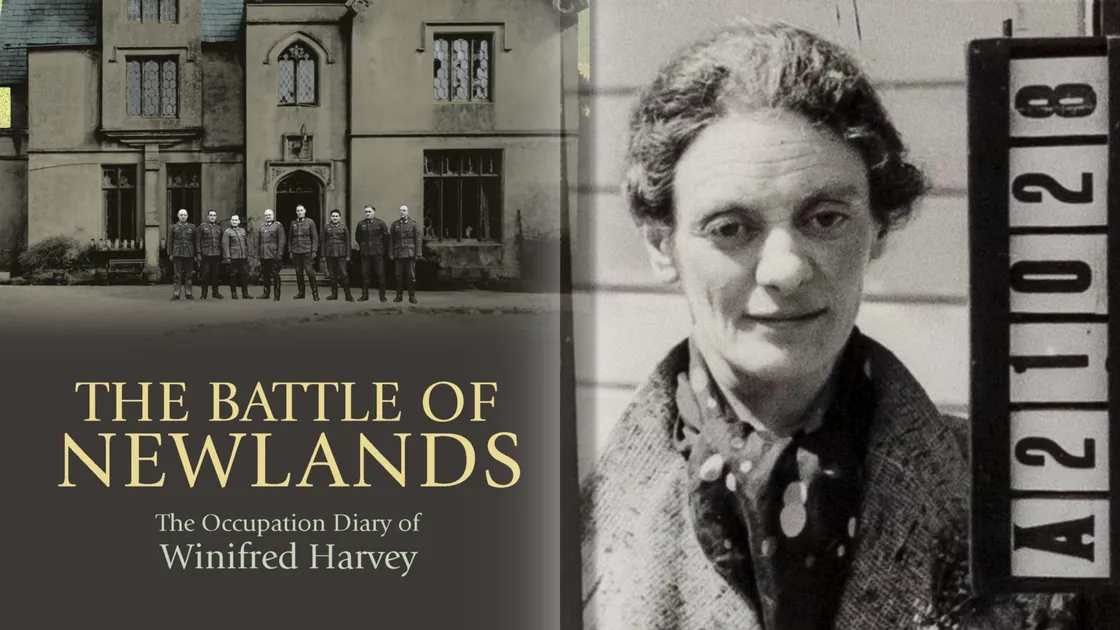
Forget that the newly-published Blue Ormer production is a reprint of a poorly produced book initially published 31 years ago, as this is how Winifred Harvey’s story of life under the Germans surely deserves to look for ease of eye, understanding of who’s who in the world of Newlands owner Winifred Harvey MBE, but also posterity.
This was a very determined woman, never afraid to challenge, even those in a Nazi uniform.
Her story is detailed and always informative of an island under siege, while she is semi-turfed out of her fine family home at the top of Prince Albert Road.
Miss Harvey had lived at Newlands for 37 years after her father inherited the property in 1903.
She created a fine garden and enjoyed a notable group of close friends, mostly from the upper classes.
But, like so many island houses, the Germans saw Newlands as a place to comfortably accommodate one of their top brass and in this case Captain Seelig (initially) and later Captain Bessenrodt.
While forced to move into rented accommodation in the Grange, Miss Harvey, somewhat remarkably, managed to negotiate continued access to her beloved gardens, which not only allowed her to keep an eye on proceedings at the circa 1848 Tudor-Gothic revival villa, but also grow her own food supplies and give her succour.
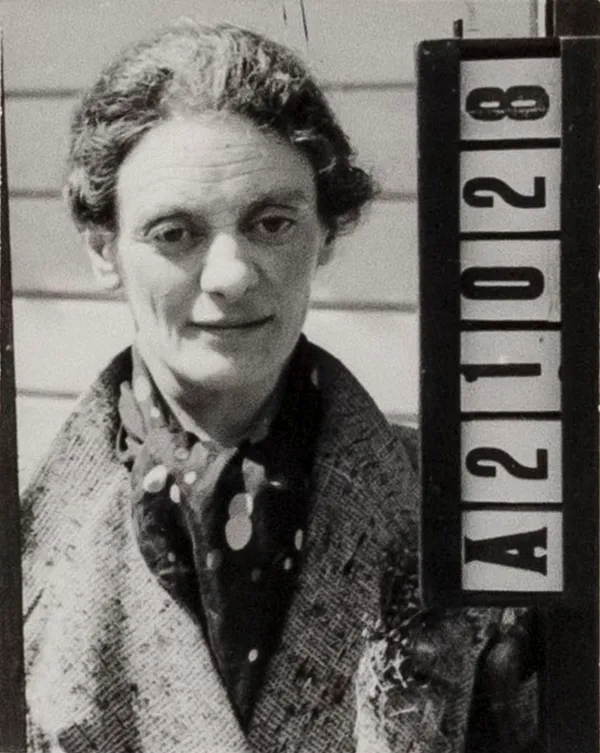
A welcome addition to the original publication is a ‘dramatis personae’ which before Miss Harvey’s story begins, offers the 21st-century reader a guide and background into all the trapped islanders she has cause to mention.
Theirs is a story in itself, people such as Xavier de Guillebon, the Port Soif grower convicted of a very public ‘V’ sign campaign around Cobo and imprisoned in France for a while; George Fisher, the stonemason accidentally shot and killed at his Collings Road home by a German soldier celebrating New Year’s Eve; Ken Gartell, the Press editor dismissed following complaints by the German censor; Bertie Jehan, shot dead in August 1944 while guarding his potato patch; John Mahy, the fruit grower robbed at gunpoint by masked soldiers; Billy Prout, the town character and mobile fish seller; and George Robins, the poultry farmer murdered in the last month of the Occupation with his wife Lily at their Ruette Braye home. Their Red Cross parcels had been stolen and while Germans were suspected of the crimes nobody was brought to trial.
Winifred diced with an element of danger herself, by standing up to the occupiers over the treatment of her home and possessions.
But she was clever and the ability to speak a modicum of German helped her cause around Newlands.
Another welcome addition to the original book, is the addition of some of Winifred’s wartime correspondence, including the letter to the GP editor on the subject of her great-aunt, Marguerite Neve, the lady who lived to the grand old age of very nearly 111.
After a semi-anonymous reader’s letter suggests Miss Neve spent part of her 100th birthday pegging down a cow in one of her Rouge Rue fields and was unaware of her momentous birthday, Winifred responds quickly to refute such a suggestion.
‘As my family also made a great deal of her birthdays and at the age of 100 was in full possession of her faculties, it is most improbable that she did not know it was her 100th birthday as your correspondent states. I regret that such unfounded stories about my great-aunt should appear in print.’
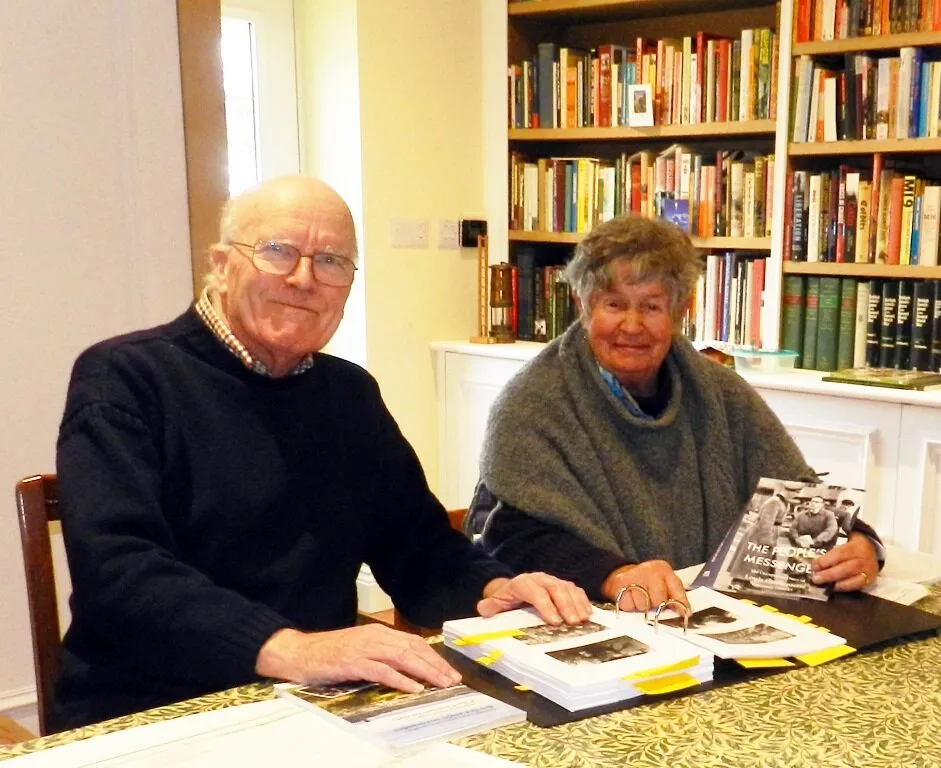
With his skilful edit and addendums such as the aforementioned dramatis personae and a number of Occupation ID card reproductions, Ken Tough has performed minor wonders in lifting Miss Harvey’s printed diaries to something enjoyably readable.
For the record, Winifred was following family tradition in keeping her Occupation diaries.
It appears that via the paternal side of her family, the Harveys had kept detailed records since at least the mid-19th century.
Here she begins writing almost two months into the Occupation and often made entries weeks after the events and discussions described, but you would never have guessed the time lapse because she kept informal notes which she discarded when writing up the diary proper.
All the while – and as Ken Tough tells us – she is kept well-informed through her wide circle of contacts, especially through the Girl Guides, the church, music, Town Hospital Board and Red Cross bureau.
Finally, Ken notes that on the day of Liberation, Captain Bessenrodt tells Winifred that he had written a book about Guernsey and its people and he would send her a copy.
She replies along the lines of ‘I, too, have written one. I call my book The Battle Of Newlands. And the Battle of Newlands finishes tomorrow when you leave my house.’
Nice.
Born in Guernsey in 1888 to Lieutenant Colonel Henry Harvey and his wife Beatrice, the eldest of three children.
Her father inherited Newlands in 1903 and Winifred would live there for the next 72 years when infirmity pushed her into a residential home at the age of 86.
She would die a year later.
Winifred was awarded her MBE for her public service during the First World War and in 1939 was appointed island commissioner for the Girl Guides.
On her death she bequeathed her Occupation diaries to her old school, The Ladies’ College.
The diaries came in the form of six exercise books.
Rosemary Booth, the then Ladies’ College history teacher, studied them and concluded that they deserved a wider audience and be published.
Rosemary started to transcribe them and very nearly two decades later the first Battle Of Newlands was published.
In 2016, Jose Day – a driving force in this new enterprise – and Richard Heaume were invited to give a talk to the Channel Islands Society about Miss Harvey and her diary.
With the kind permission of the new Newlands owners, Jon and Jackie Ravenscroft, the talk was delivered in their garden, following which the Ravenscrofts offered their support for this new edition.