There is an age-old debate about what prison is for. Should it be mainly about punishment? Or is the rehabilitation of offenders its prime purpose? The answer, of course, is that it needs to be about both. While society rightly expects those who break the law to pay for their crimes, that same society also has a huge interest in ensuring those coming out of jail are less likely to reoffend.
How to do that? One of the key tools in achieving such rehabilitation, and reducing recidivism, is the educational service provided within a prison. Those offerings can vary widely from jail to jail, but Guernsey prison’s education service is genuinely impressive, with a large number of different opportunities available. These range from classroom learning and online courses, to practical skills, such as carpentry, plumbing, horticulture and cooking.
How has Les Nicolles managed to achieve such a wide offering despite a strictly limited budget? In no small part that is down to the support its education service receives from a local charity, set up 13 years ago, called Creative Learning in Prison – or Clip. Through a mixture of fundraising and bequests the charity has been able provide the prison with the buildings and equipment it needed to really expand and improve its offering. That charitable giving is in turn bolstered by the money the prison receives from the sale of the goods coming out of the various training programmes.
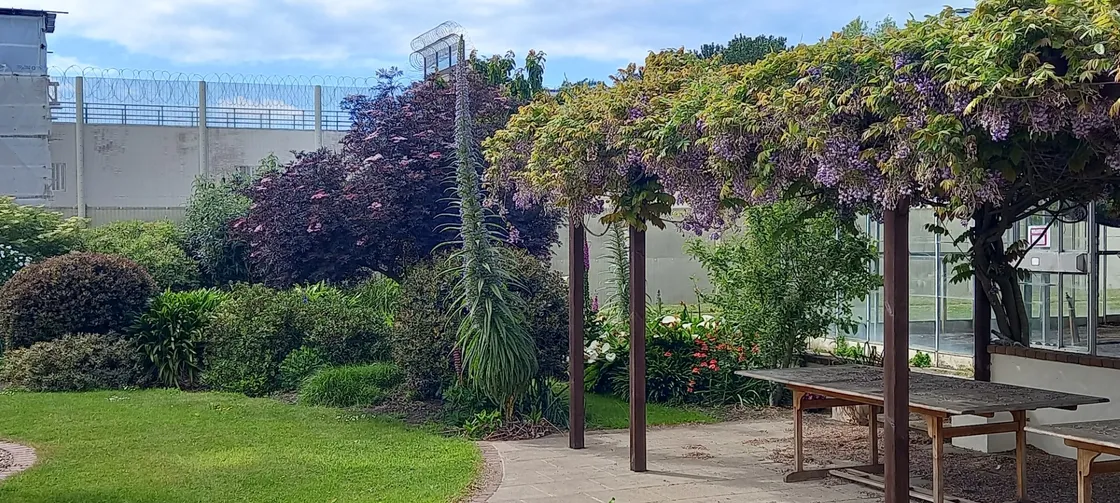
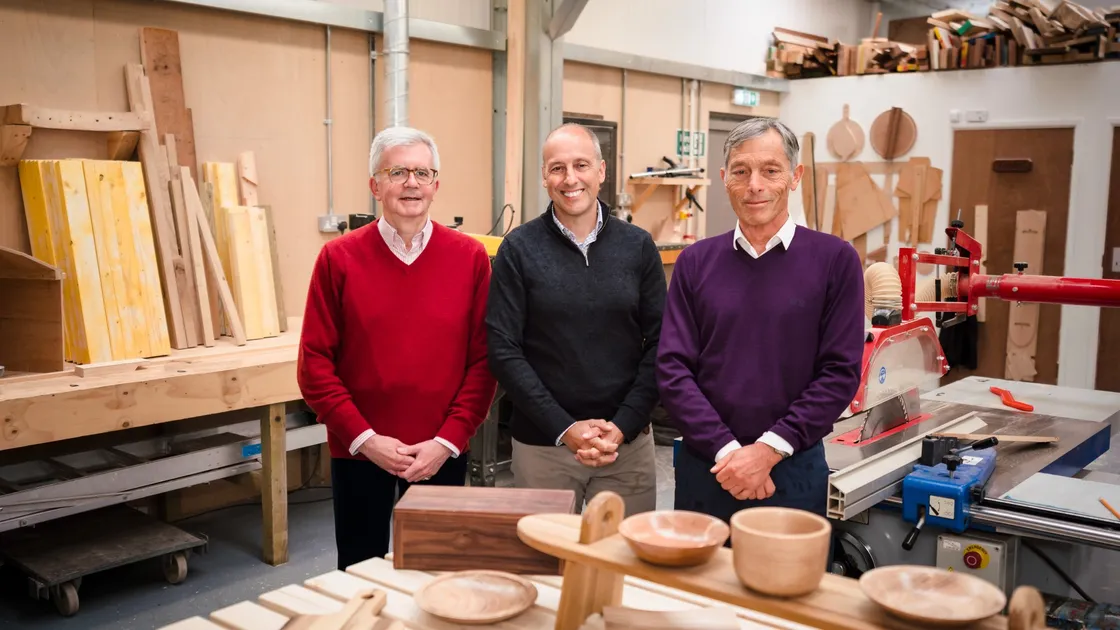
I walked around the various workspaces within Les Nicolles with the head of its educational service, Dave Le Feuvre, and Andrew Ozanne from Clip. I have to say that I was blown away both by what was on offer, and the obvious passion and commitment to the service from both prison officers and other employees. From what I could see there was also an impressive, and perhaps surprising, level of engagement from many of the inmates engaged in training and education.
The reason for my visit was to see a new £55,000 storage facility, which has been funded by Clip thanks to a recent bequest. Dave says this new building will enable the carpentry training programme to change the whole way it operates.
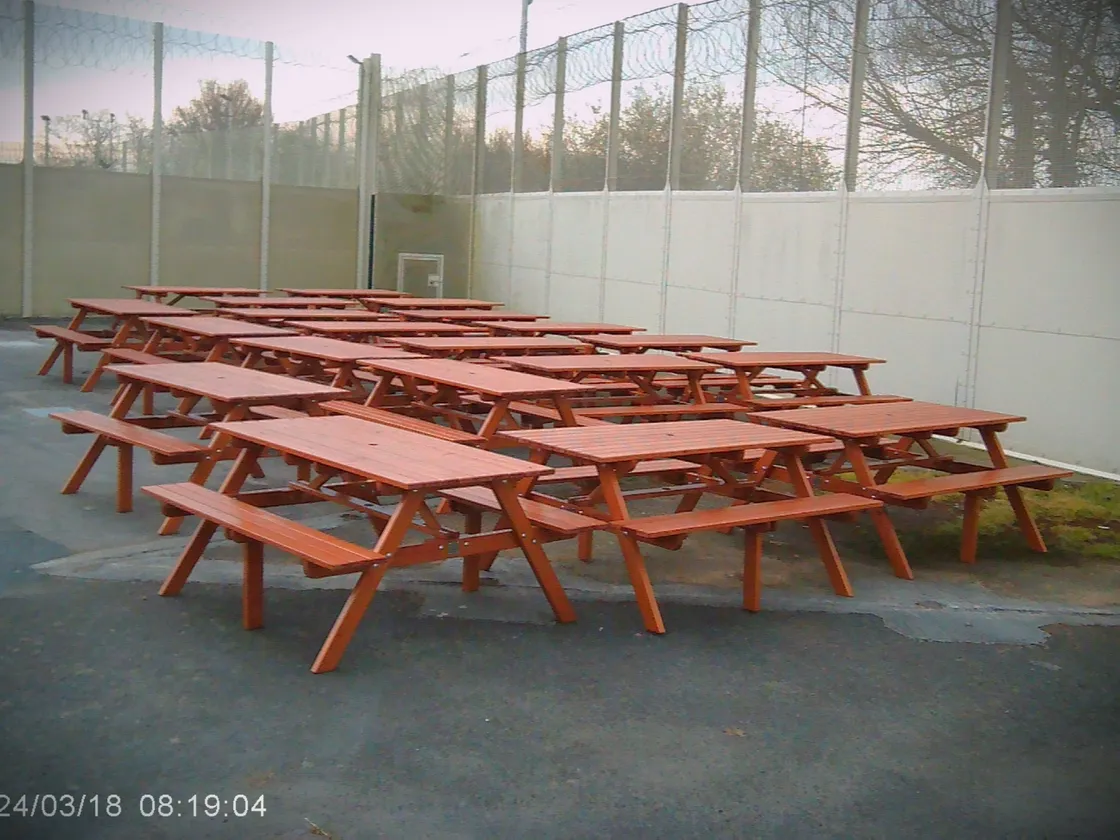
‘The new warehouse is really designed to act as the next stage on from the carpentry workshop, where most of the sawing, planing and actual construction goes on. We needed a separate area where the benches could be assembled and stored. We have very little storage. So because of the demand for a lot of the products, which we were doing as the orders came in, we thought it would be helpful to build up stock in advance, to cater for that demand, and to expand a little bit. And ultimately if we can expand our operation, that means we can get more income for Clip, and we can provide more opportunities for the prisoners. Hopefully that will stop people coming back in here, which is the ultimate aim of all we are trying to do.’
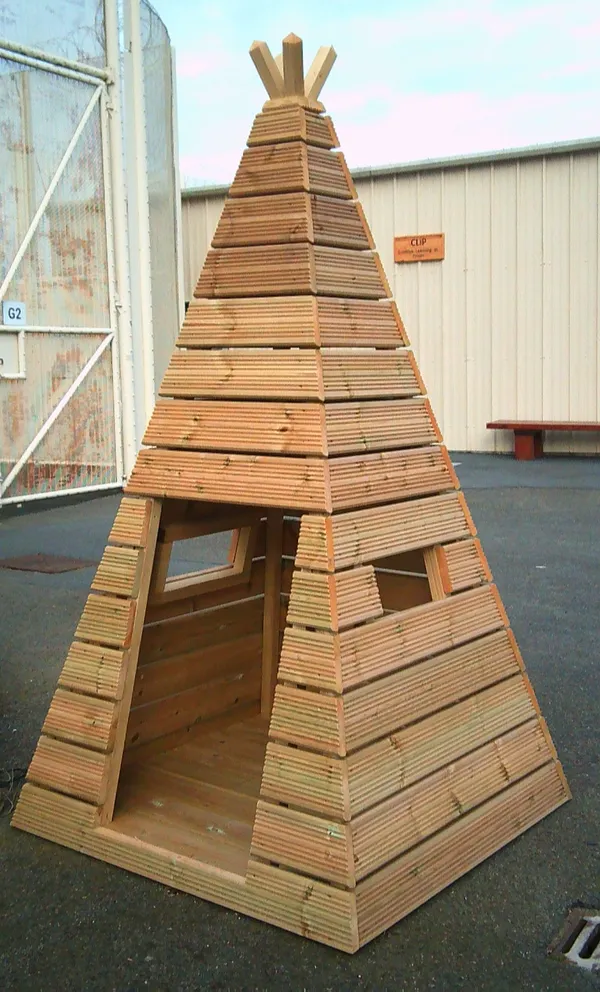
Clip was born when Andrew Ozanne was confined to a wheelchair for four months and needed a project to keep him occupied. As a long-term non-States member of the Home Committee, he’d been delegated special responsibility for the prison. So he spent his time out of circulation researching the sort of practical steps which could be taken in prison to help reduce reoffending. He then met up with Dave Le Feuvre, and the rest of the prison education team, to work through what options they could practically implement. The charity received corporate support from private equity firm Terra Firma, and soon after its formation it was surprised to be left a very significant legacy from well-known islander Liz Head.
That allowed the charity to hit the ground running by building a carpentry workshop, which has upskilled many convicts over the last decade or so.
Andrew says it is always satisfying to see the pride the inmates take in their work, both when they are serving their sentences, and afterwards. ‘I still meet prisoners now in the community who always go back to what they achieved in the workshop. There was one prisoner who actually came to see me a while ago. He was still on probation but he was out, and said how proud he was of seeing some of the things he had done.’
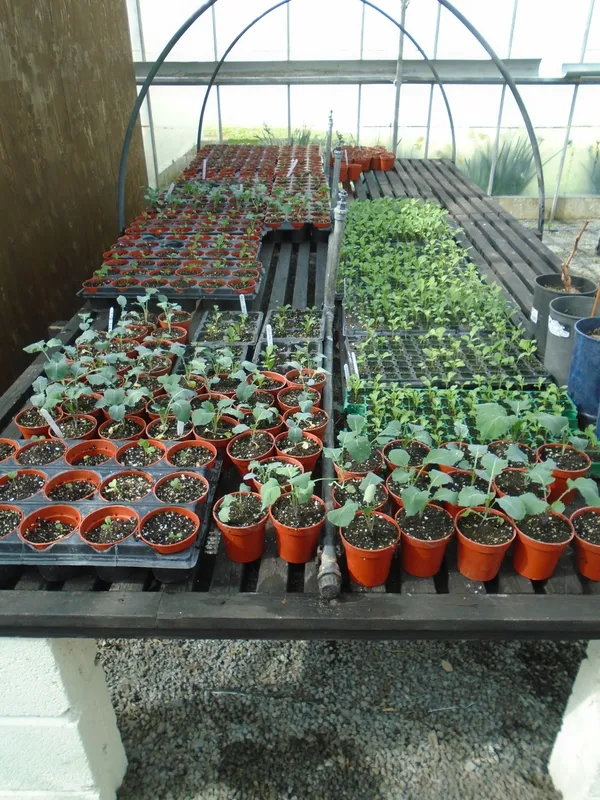
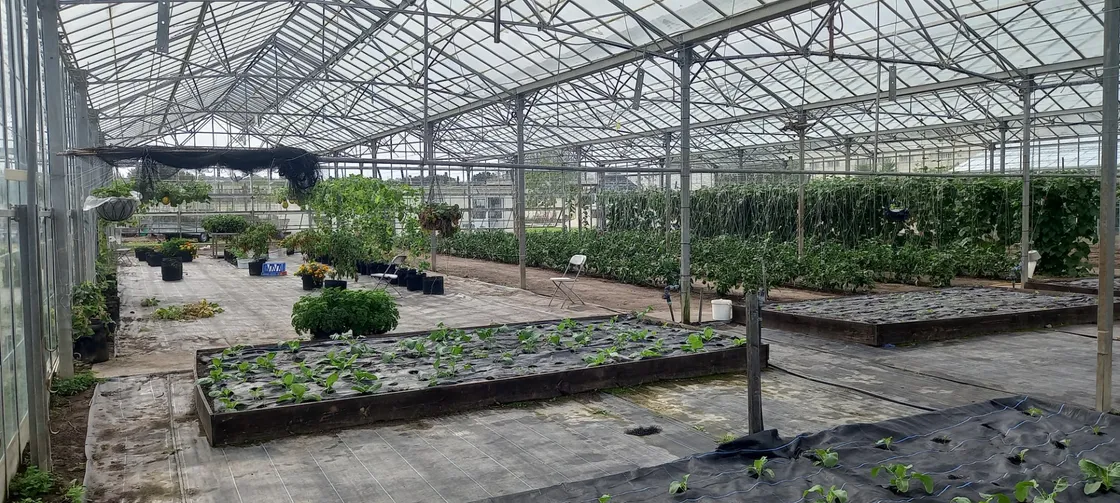
It may have started with carpentry but now Clip supports training in everything from plumbing to bicycle mechanics. But perhaps the most visually impressive feature of the training facilities is the horticultural area. A bewildering range of fruit and vegetables are produced which not only allows horticultural skills to be taught to the prisoners, but also supplies the prison kitchen – another training area – with fresh produce, thus saving money and ensuring a healthy menu. But while most of the horticultural area is given over to food production there is also room for some spectacular floral areas outside of the greenhouses.
It’s not only practical skills which are taught in prison. Many of the inmates never really engaged in formal education when they were at school. While serving their sentences they get a second chance.
In recent years the range of classroom and online courses on offer has expanded from basically maths and English to embrace a huge range of subjects. Some are taught in the prison and others via third parties, such as the Open University. Dave says some of the more exotic courses can serve to engage prisoners with bad memories of formal education.
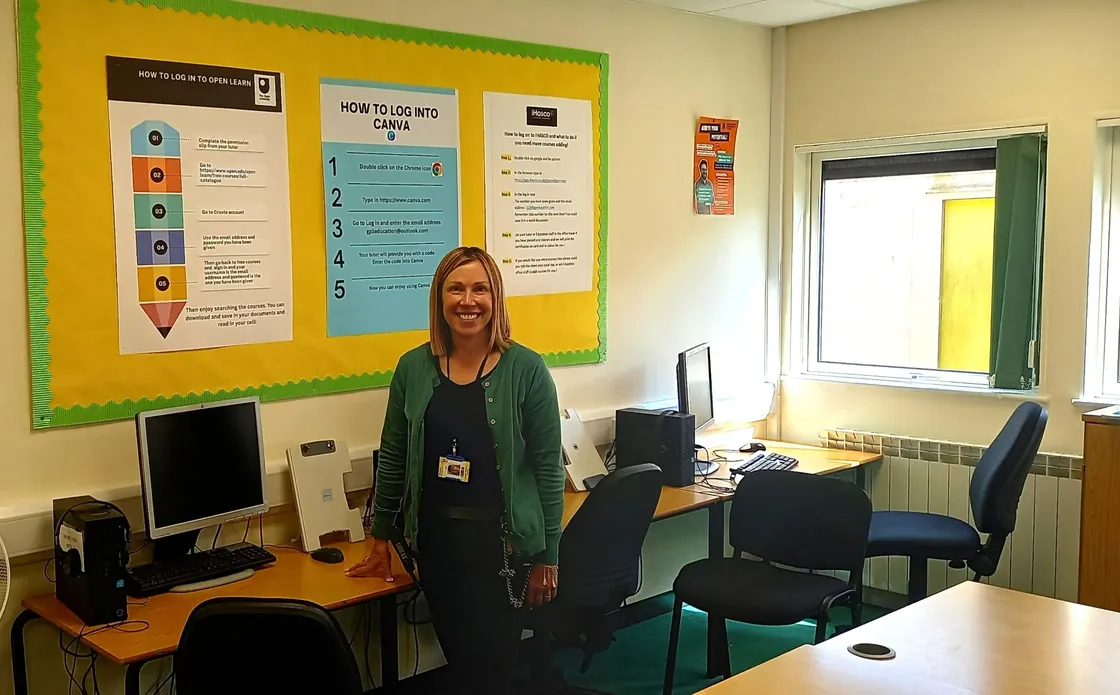
‘We run things like yoga courses, and cookery classes, that are funded by Clip. And some people say to me “Why are you providing things like that?” But I describe them as “hook activities”. They are really important in engaging people who have not had the most positive experience of education in the past. Something positive they can use, and hopefully encourage them to get involved in more academic maths, or English, or Open University courses. We’ve got people doing Open University degrees. At the other end of the spectrum there are people who can’t read or write, and we use those who are more academic to then mentor those people through a programme called the Shannon Trust, where they are actually paired up and teach each other to read and write. Clip contributing to that is just invaluable.’
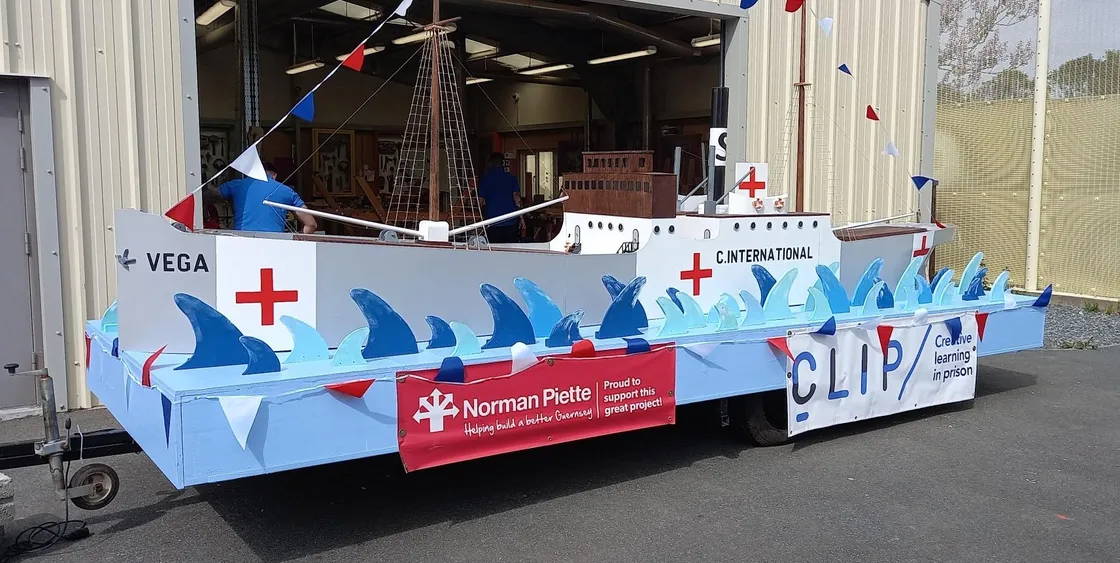
As I finished my visit I found myself reflecting that the educational work going on in the prison was far more impressive than I had been expecting. Both Dave and Andrew stress that is largely down to the commitment and passion for the programme from a few key prison officers and other instructors. But it was clear the cash that had been provided by Clip, not only for the buildings but for equipment too, had also played a crucial role in the development and expansion of the educational offer. It was clear to see that the last 13 years has been a story of constant expansion and improvement, but it is not always easy for Clip to attract funds. There is a lot of competition for philanthropic giving in Guernsey and a charity supporting prisoners isn’t always at the top of people’s list. Andrew says that is particularly true now, after some high-profile convictions for sexual offences. But he points out they are a minority of prisoners and the training programme is still very much needed to help improve the employability of those coming out of jail.
What’s next for Clip? I asked at the end of our tour. Andrew was clear what it wanted to do but wasn’t sure when or how it could go about it because it is likely to cost about £1m. It is to replace what it calls the family centre which is currently housed in an old portacabin which is coming to the end of its useful life.
‘The family centre is where prisoners’ families can come in and visit in a more sociable space, and try to reduce some of the austerity for children coming to visit a family member in the visitor centre.
‘I would say the visitor centre is quite intimidating for a young person, so we provide a space where children can be more relaxed and have some entertainment while the parents have discussions. That helps prepare prisoners for when they come out into a different world than when they started their sentence, it’s about equipping them to go back into their relationships, and avoiding the trap of falling back into the same peer group they were in which caused them to come into prison in the first place.’
While Clip is very keen on the family centre project, it is nervous about launching any fundraising initiative which may end up not reaching its target. Although the charity didn’t ask me to say so, it was clear from our conversation that if there was a philanthropist out there who could set them on the path to raising the required £1m. pounds, with some seed funding, it would love to hear from them.