As the ambassador extraordinary and plenipotentiary of Costa Rica to the United Kingdom of Great Britain and Northern Ireland, Rafael Ortiz Fabrega has the power to bind his country into international treaties without further approval from San Jose.
Shortly before he took on the role in October 2018, he was president of the Costa Rican Legislative Assembly and before that, he spent 20 years as the general counsel of the Central America and Caribbean Division of Coca-Cola, during which time he was also the president of Liga Deportiva Alajualense, one of Costa Rica’s big three football clubs.
So it would be easy to imagine that trotting up a narrow pathway through a fancy London cemetery in order to say a few words in front of an old seafarer’s restored headstone would be just another appointment in his diary.
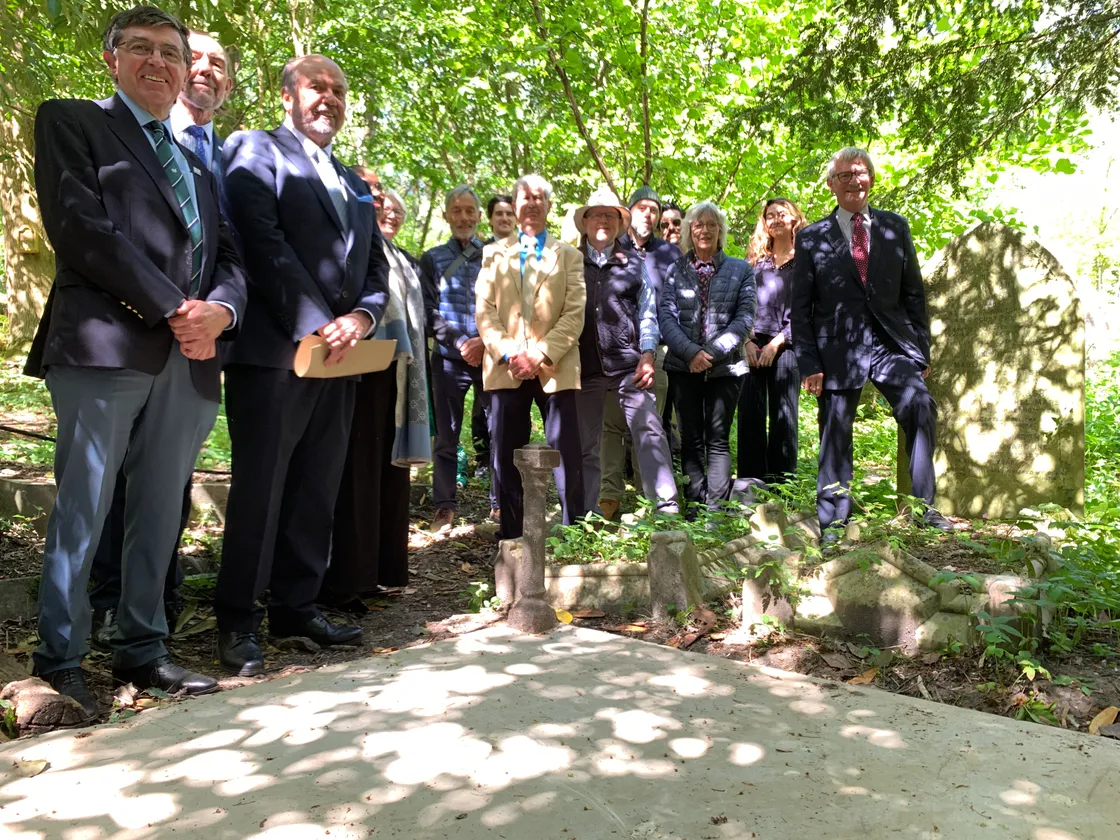
Yet the small gathering at Highgate which assembled, on a spring day earlier this year, to view the freshened-up burial site of Guernsey’s Captain William Le Lacheur was left in no doubt as to the huge significance which the event held for the 72-year-old diplomat.
‘Even from a young age, I had heard of the legend,’ he told me, after a speech in which he had outlined Le Lacheur’s remarkable role in securing Costa Rican sovereignty.
‘Maybe at that age, you don’t grasp all the implications but I knew from our Uncle George that was married to a great-aunt of ours. At the bank in the centre of San Jose, he had some pictures of the captain and of the ships, so that was something that really impressed me when my grandfather sent me there on an errand. As I grew older, I learned much more about Costa Rica’s development and about the captain.’
That Le Lacheur took the very first shipment of coffee from Costa Rica to London – and that he persuaded individual farmers to trust him to pay them back on his return – is becoming better known here in Guernsey, in Costa Rica and in London, in no small part due to Mr Fabrega’s efforts. The trade that grew from that starting point involved the transport of young Costa Rican men to England for training and education, the import into Costa Rica of essential weaponry to defend the nascent nation from Confederate marauders from the north and the introduction of a Protestant influence which Mr Fabrega believes has encouraged a multi-faith national ethos. Those returning young men even brought back a few football kits, balls and rule books which inspired the country to adopt the sport as a national passion.
So many influences then, but it all started with coffee. Mr Fabrega’s speech to those assembled amid the low-hanging, leafy branches around his hero’s grave told a story which began 185 years ago, with a chap from the Forest rounding Cape Horn in a ship called The Monarch.
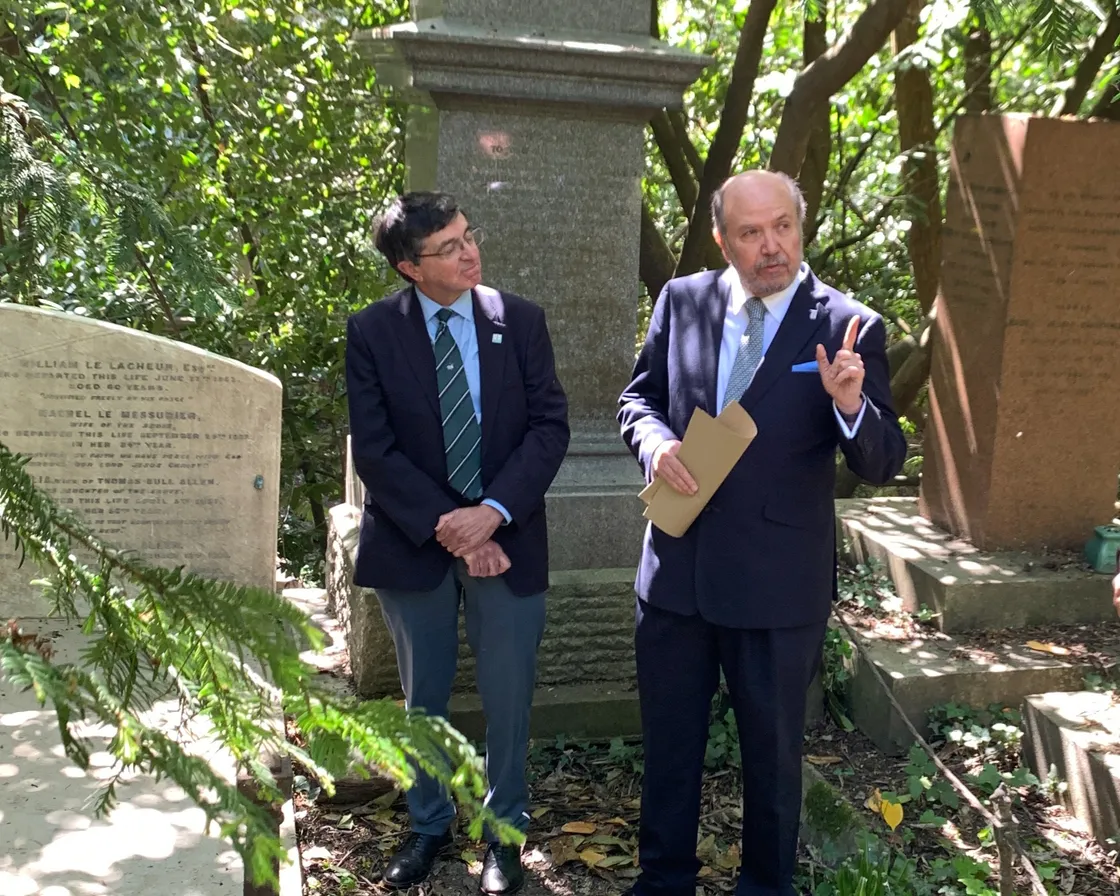
‘Of all the countries of Central America that belonged to the Spanish empire, Costa Rica was the most southerly and was very poor,’ he said.
‘The captain lands at the port of Puntarenas on the Pacific coast in 1841 and he goes up to the mountains at San Jose and talks to the coffee growers and tells them he can take their coffee to London and they can start a profitable business. He didn’t have the funds to pay for the crop but they trusted him – and I think it’s that trust that really makes the difference. He came back 10 months later with things that the Costa Rican coffee growers had requested to better their industrial production.’
All this success was not confined geographically to Central America, Mr Fabrega was keen to point out.
‘You can see that in Guernsey, Le Lacheur started building more ships between the 1840s and 1860s and we started growing more coffee, so you can see the parallel of the economic beauty of the process of this.’
Such was the pace of this shipbuilding boom in Guernsey – fuelled by the export of quarried stone, as well as Le Lacheur’s business – that the island rapidly lost a huge proportion of its trees. However, the picture in Costa Rica was – due to Le Lacheur’s approach to the trade – considerably more sustainable and forward-looking. Rather than setting up a monopolistic ‘marketing board’ through which all deals were required to be done – which was the norm in an era of colonial expansion and ‘inward investment’ where the profits could be siphoned back to European capitals – Le Lacheur dealt directly with the small-scale local farmers. The legacy of this is that to this day, 85% of Costa Rica’s coffee producers are independent farms with less than four acres. It was effectively ‘fairtrade’ a century before anyone had invented the word, or trademarked the name.
‘But it went further,’ the ambassador told us.
‘He became very good friends with a young man in the 1840s [Juanito Mora] who became, in the next decade, the president of Costa Rica. In the mid- to late-1850s we faced a very harsh situation – a conflict north of the border that ended up with a group from New Orleans taking control of Nicaragua, with the view of expanding its control over all the other countries to incorporate them into the confederacy of the south. Through this connection with Le Lacheur, we were able to obtain rifles and cannons and people from the British government were brought over to provide training, giving us the best army in Central America.’
At Mora’s request, Le Lacheur paused his ships’ trading activities at Puntarenas in order to transport this army along the Pacific coast to meet the ‘filibusteros’ in the northern region of Guanacaste – a force with a US-backed ambition not only of swallowing the fertile Central American nations into the confederacy and boosting its territory, but also of enslaving its people.
‘These invaders probably thought we had bows and arrows or some sort but the battle didn’t last too long,’ said Mr Fabrega with some relish, referring to the Battle of Santa Rosa on 29 March 1856, which lasted about 15 minutes.
‘To cut a long story short, we prevailed and our country did not have to be in that situation of being controlled, or even worse, enslaved.’
Mr Fabrega described Le Lacheur as ‘a man of deep spirituality’, pointing out that he was instrumental in building the Church of the Good Shepherd, a Protestant church in San Jose.
‘Costa Rica was mainly Catholic, and remains so, but the respect he was afforded allowed him to build this Protestant church in a predominantly Catholic country. That lay one of the most important parts of our history, where we are very open to respecting all faiths. It’s really part of the construction of our democracy.’
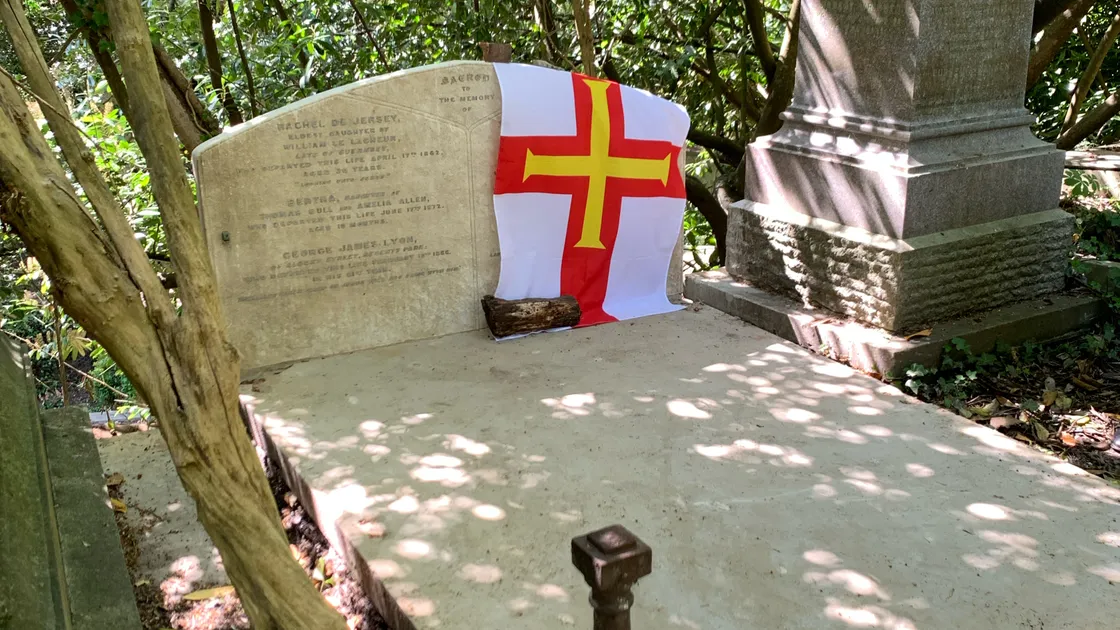
Guernsey Society chairman Keith Le Page removed the Guernsey flag from Le Lacheur’s headstone, which had been salvaged from the muddy slope down which it had slid, before being cleaned up. There had been a plan to re-engrave it, but once spruced up, it became clear that it was clear enough not to need it.
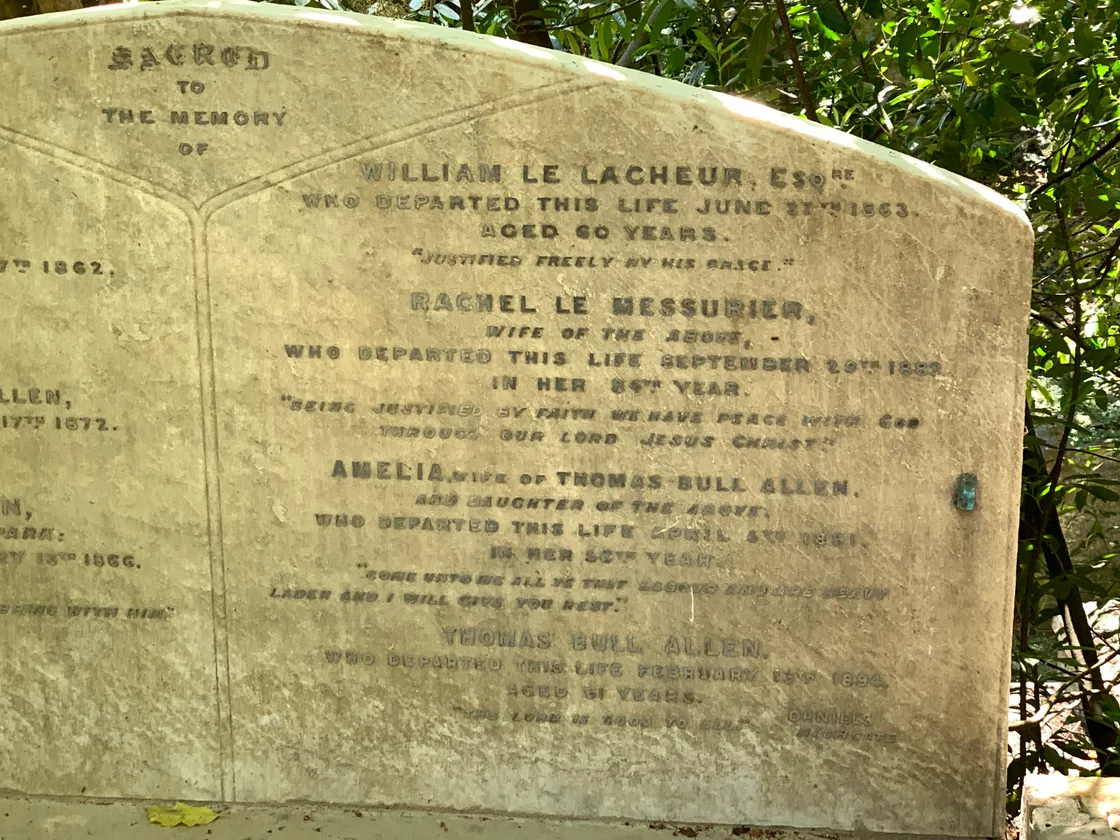
‘I really can’t say enough for what you – and the people that have supported you – have done,’ said the ambassador, ‘for restoring dignity to his place of rest, where hopefully people will continue to come to pay their respects.’
He recalled his own arrival in London in 2018 and the speed with which he was able to make connections with Guernsey, soon visiting the island and being given the privilege of firing Castle Cornet’s noonday gun and visiting a parliamentary session.
‘One of the characteristics of the people of your island is your good-natured friendliness which, in a way, has also been said of people from our country. So I imagine if that goes way back in time, that had to be something that made possible the good connection between the captain and the people of our country at that time. He was a man who had a vision and an energy and a spirit of entrepreneurship that defines the national DNA of your people. I know that his memory and his soul are somewhere else but this is where he was laid to rest. It’s really an honour. For me, this is more than just a ceremony.’
With the unveiling and the speeches over, the ambassador needed no persuasion to share some further thoughts with me for this piece. We stepped away from Le Lacheur’s grave, and found a rare spot where at least one of us could stand between graves, rather than on top of one. It’s unavoidable in that part of the cemetery – it’s expensive real estate, and consequently very crowded. The respectful gaps that were originally left between the first graves have subsequently been filled in, as the urgent need to accommodate has taken hold. It’s a pattern familiar to anyone who’s found a good place to pitch a tent at Glastonbury Festival on the Wednesday morning, only to return at 3am to find it encircled, with every blade of grass under canvas and guy rope.
Mr Fabrega spoke with such enthusiasm that he repeated the entire story and kept the whole party waiting for us for 15 minutes.
‘Probably for a good 80 or 90 years, coffee was really the main motor of our economy,’ he said.
‘When you start seeing how trade works – because my career was in international commercial law – it’s amazing to see how at that time it took the will of somebody like him to come all around the world and have the vision. Because it was at that time a poor, secluded country. He arrived at sea level and had to go up mountains where coffee can grow and convince them and build trust. When I was given the opportunity to come here, I decided it was something we really had to work on, and from the first couple of weeks we made contact with Guernsey and they’ve been very receptive.’
He mentions again the depiction of one of Le Lacheur’s ships on the official coat of arms of his country’s government and reiterates the personal nature of his own connection to the story.
‘I remember my grandparents saying “This nice piece of furniture came from England” and you couldn’t even get near it. We really stand on the shoulders of people like him. Who knows how the course of history would have been without him?’
Aware he is coming towards the end of his own tenure as ambassador, Mr Fabrega is hoping to leave his own lasting legacy – a pattern of connection between Costa Rica and Guernsey that can be relied upon to outlast him and the coterie of Guernsey-based enthusiasts joining him at that crowded London plot.
‘We’ve been talking of the possibilities of how we can establish some sort of working relation that continues to go forward, so we never lose that connection,’ he says.
‘Right now we are all aware of that, but like everything we will pass, like he did too. But this should never be lost. Guernsey and Costa Rica are both places of tourism. Young people come to work for two or three months in the high season, so we are thinking of things we can do with our universities. We even once thought of bringing our men’s football team that were going to play in the 2018 World Cup. The idea would be, let’s never lose this connection. Let’s make connections that grow, because I see a lot of similarities between us – the friendship, the trust, the ambition, the ideals. Things work when people get together and share. That seed that he planted should continue to grow and always bear fruit for the benefit of all.’
‘We were very lucky with the generosity of several people in Guernsey’
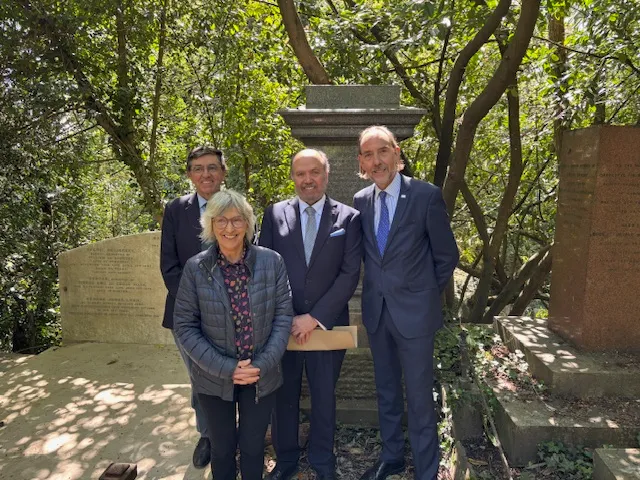
Geoff Brouard, the Dean of the Forest Douzaine, was among those attending the unveiling of the restored headstone. He told me about his involvement in the project.
‘I helped organise the blue plaque to William Le Lacheur, which is in La Rue de L’Epinel, in the Forest, which the ambassador came over to unveil a few years ago,’ he said.
‘He said to us if we were ever in London, to pop in to the embassy and say hello. So the following November, I was in London doing some Christmas shopping and I went to see him, just off Oxford St. I showed him a photo of William Le Lacheur’s grave, which my son-in-law got off the internet. I said it would be a shame for it to deteriorate further and it would be really good if it could be restored. He hadn’t known it was there and he called his secretary in to pinpoint the location for himself and that really started it off.’
While he was at the embassy, Geoff said, he saw the plaque ready to be erected at St Katharine Docks, where Le Lacheur’s first shipment of coffee was offloaded. However, when he was invited to the unveiling of that plaque, he was unable to attend, due to an already-booked holiday in Norway.
That invitation came from Marguerite Talmage – one of the prime movers in ensuring Le Lacheur’s legacy is properly recognised.
Marguerite and her brother Andrew Ozanne have been motivated by a fascination for the history of Guernsey – and in particular the Forest parish – but also by a personal connection. Their great-great-grandfather John Lucas was a captain of one of Le Lacheur’s ships and at one point held the record for the fastest sailing from Puntarenas to London – a mere 94 days.
Marguerite had thought about setting up a charity specifically to facilitate the raising of funds for the restoration, but was saved the trouble when she spoke to Guernsey Society chairman Keith Le Page at the St Katharine Docks event and he offered to use his organisation’s account to collect the money.
‘We started the fundraising campaign relatively recently and the Guernsey Press was very good at covering it really well,’ she said.
‘It caught the imagination, I think. We had a lot of support really early on and in excess of £11,000 was raised entirely through donations, so it’s a great achievement in a short time. I thought it might take years.’
Having been to see the grave for herself, she said she felt ‘very proud of what Guernsey has been able to achieve’.
‘It went really well today. The weather was fantastic and we had a lovely cross section of people there who were involved either with Capt Le Lacheur, related to him or supporting the fundraising campaign to restore the grave. It’s lovely to remember and celebrate one of Guernsey’s famous sons because undoubtedly, he’s up there with Sir Isaac Brock.’
For Keith, the day was the culmination of a lot of effort but also the beginning of a series of visits to the prestigious old London burial ground.
‘It was lovely to have everybody here and to see the gravestone revealed and tidied up and in a very good condition,’ he said.
‘We were very lucky with the generosity of several people in Guernsey. The Guernsey Society chipped in and an organisation or two also helped, so we’re very grateful to everyone who contributed. I’m not living too far away, so I’ll make it a regular date in the diary to just come and check the grave over.’
Film project ‘keeps moving forward’
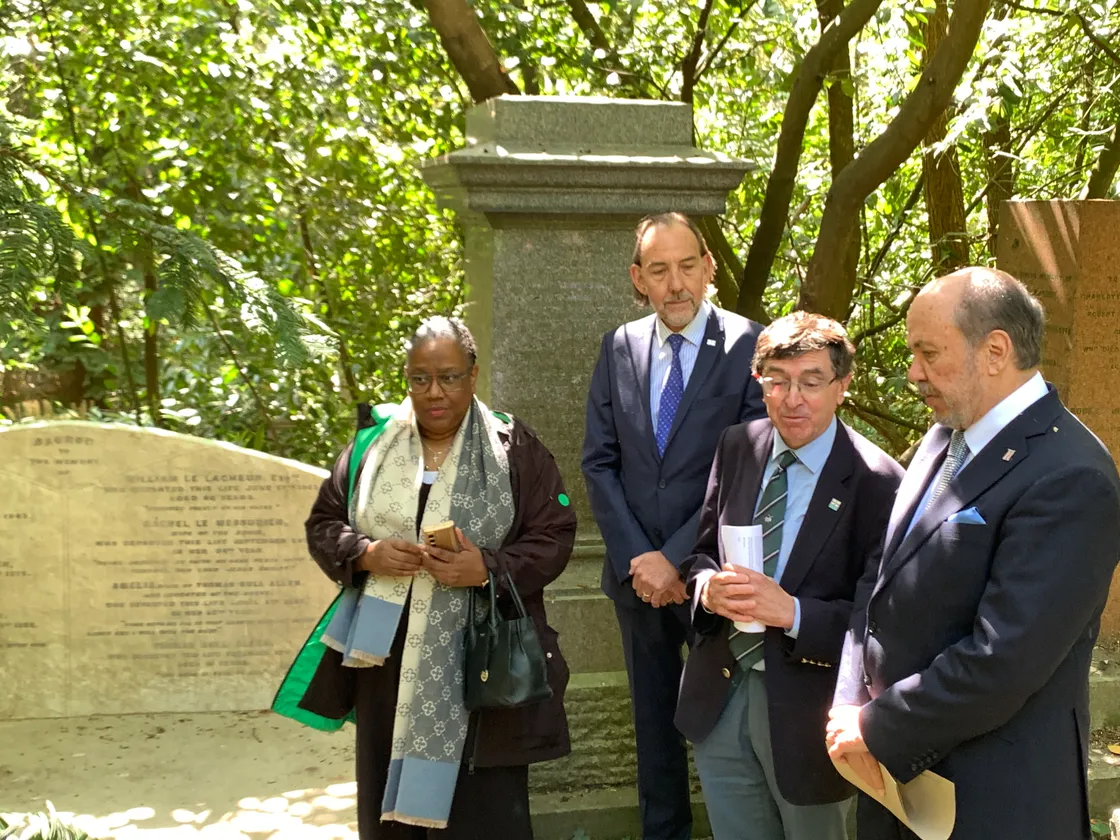
Also among the guests at the headstone’s unveiling were Associate Minister of Kensington Temple Elim Church Claudeth Hitchman, representing the denomination of Protestant faith adhered to and espoused by William Le Lacheur. She led the gathering in prayer during the ceremony.
Also present – having come across town from meetings in Westminster – was the States of Guernsey’s external relations lead Steve Falla, who thanked Ambassador Rafael Ortiz Fabrega for his ‘support, interest and personal commitment to recognising and preserving this important part of our shared heritage’.
And I was also interested to speak again to Jose Palma, a Costa Rican actor and film producer I first met at Sausmarez Manor, when he was over here scouting locations for a film with the working title of Black Gold – a film to tell the story of the friendship between Le Lacheur and Costa Rican president Juanito Mora, with its attendant consequences for both jurisdictions.
So I asked him for an update on the progress of its pre-production.
‘The project keeps moving forward in a way that I wasn’t expecting, which says a lot about the importance of the story,’ he said.
‘Investors and production companies, once they start realising the potential of the story, move very very fast, and we’re now in the last part of the development stage. However, film-making can take so long, and because of the economic situation worldwide right now, a lot of the areas of development have to be placed on hold, depending on the outcome of such events, so we’re trying to manage that as best we can.’
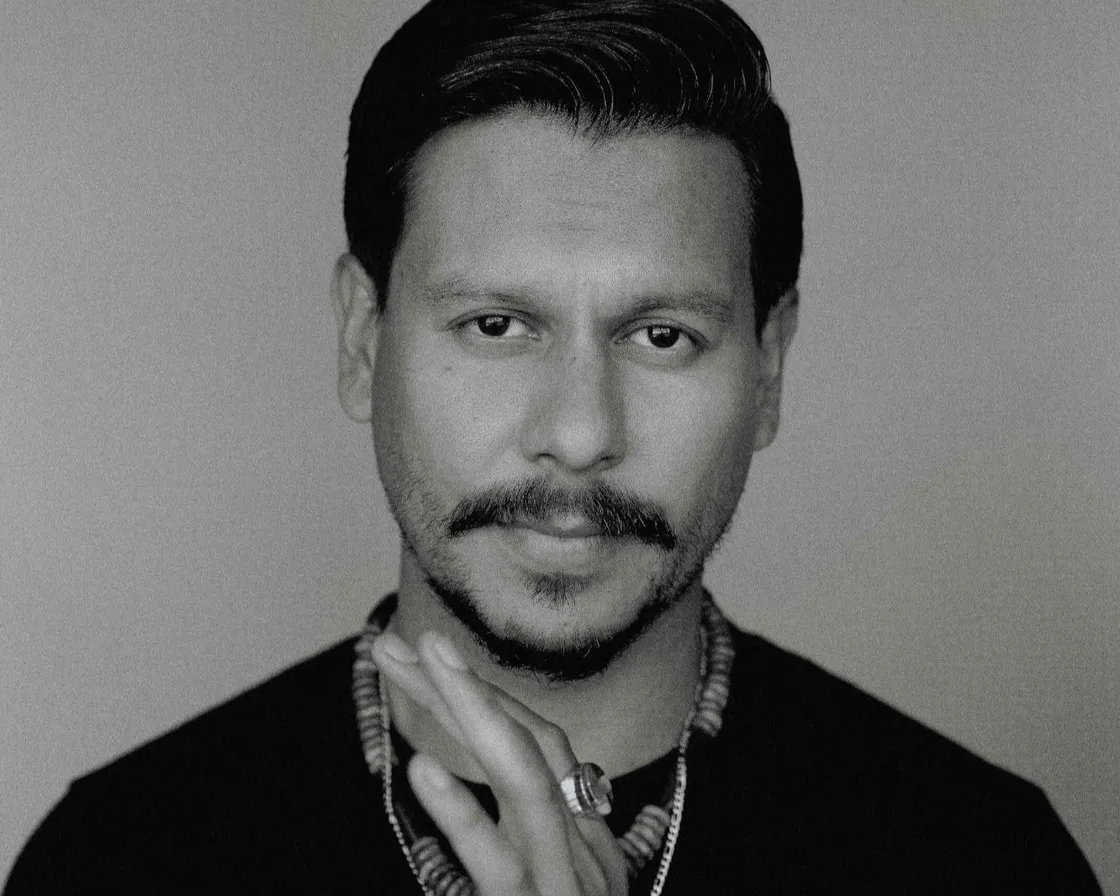
He said he was imminently due to meet coffee investors, with the aid of Procomer – the trade and investment promotion agency of Costa Rica – and was also due to speak to Canning House, a British not-for-profit, non-governmental organisation operating in Latin America, with a view to increasing awareness of the story.
‘It’s a very big task but we’re still hopeful that in two years’ time, we’ll have production running in Guernsey. That is our goal and we’re working really hard for that to happen.’
Le Lacheur’s great-great-grandson
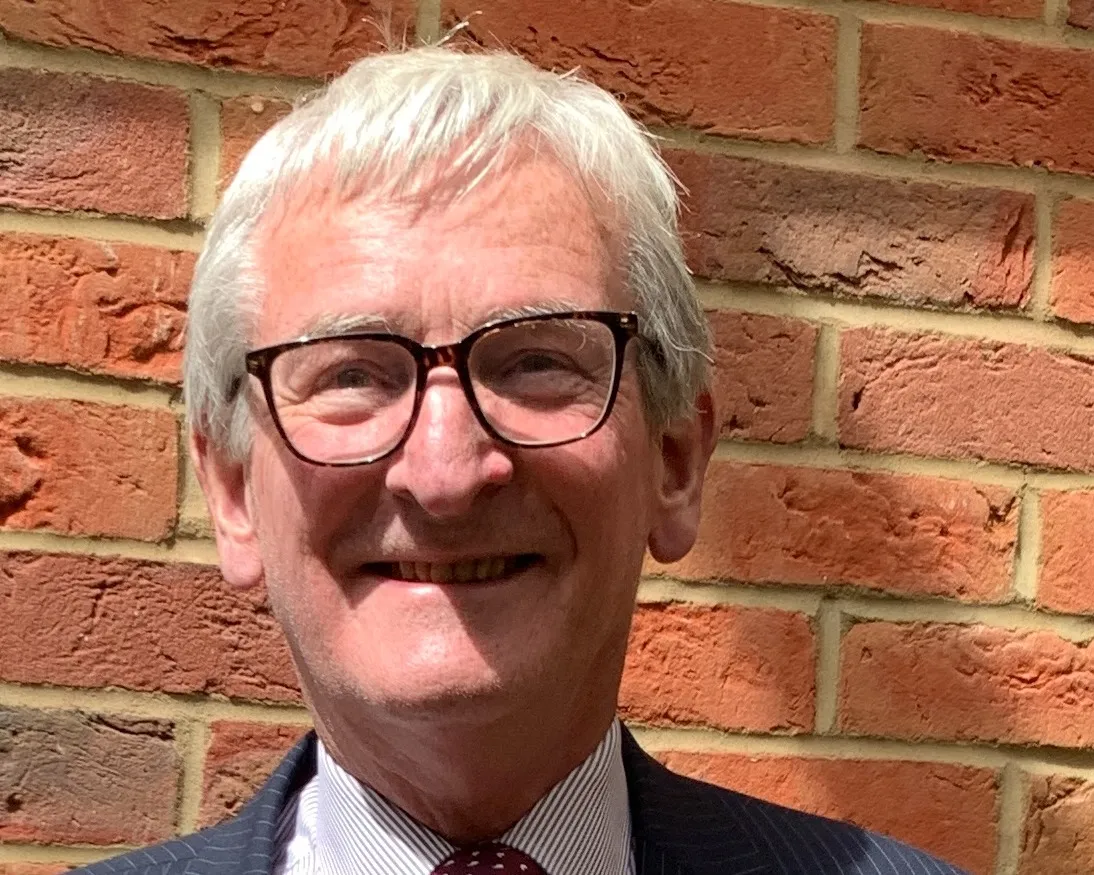
William Le Lacheur’s great-great-grandson Christopher Calcutt attended the Highgate ceremony, having previously been present for the unveilings of the plaques at La Rue de L’Epinel and St Katharine Docks.
‘My grandfather Edward Tom Le Lacheur died when I was seven or eight and I lived with him and had a very close connection with the history of the family,’ he told me.
So, did he grow up with a lot of stories of the great Captain’s escapades, or has he learned a lot about him recently?
‘Both,’ came the answer.
‘I’ve done a lot of research over the last 40 years into our family history and my grandfather was in merchant banking, which is what William set up in London, as well as in Costa Rica.’
Chris has bills of sale pertaining to his ancestor’s ships as they left the family, which he is regularly asked to show to researchers and historians.
He also provided documentation to Eric Sharp, the author of William Le Lacheur: A Very Distinguished Guernseyman – an authoritative publication which is a good place to start if you want to know yet more about the coffee-trading captain from the Forest.