

Polycystic ovary syndrome (PCOS) has been renamed polyendocrine metabolic ovarian syndrome (PMOS) following a major consensus process involving clinicians, researchers and patients from around the world.
The change was formally announced on 12 May 2026 following publication of a landmark paper in The Lancet and presentation at the European Congress of Endocrinology in Prague.
While the condition itself has not changed, the new name reflects a broader understanding of the condition and how it affects hormonal, metabolic and reproductive health.
One of the long-standing challenges with PCOS has been that the name did not accurately reflect the complexity of the condition. In clinical practice, this has sometimes contributed to misunderstanding about symptoms, diagnosis and long-term health implications.
PMOS affects around one in eight women of reproductive age, making it the most common hormonal disorder affecting women worldwide. Despite this, up to 70% of women with the condition remain undiagnosed.
The new name aims to better capture what we now understand about the condition and support a more holistic approach to diagnosis, treatment and long-term care.
Why has the name changed?
The term ‘polycystic ovary syndrome’ focused attention on the ovaries and implied that ovarian cysts were the defining feature of the condition. In reality, this does not accurately reflect what we now know about PMOS.
The structures seen on ultrasound are not pathological ovarian cysts, but small antral follicles that have not developed and ovulated. In addition, some women with the condition do not have these characteristic ovarian appearances on ultrasound at all.
This has contributed to misunderstanding among both patients and healthcare professionals. A 2015 survey found that 85% of patients believed ovarian cysts were the primary feature of their condition. Some women without visible follicular changes on ultrasound were told they did not have PCOS when they met other diagnostic criteria. Others found themselves seeking support for different symptoms across multiple specialties before the underlying condition was recognised.
The group behind the change concluded that the previous name did not adequately reflect the endocrine and metabolic features of the condition and may have contributed to delayed diagnosis, fragmented care and stigma.
The average time from first symptoms to diagnosis has been reported as more than a year, although for many women the journey is considerably longer.
What does PMOS mean?
Polyendocrine
Polyendocrine recognises that PMOS involves multiple hormonal systems working together. It is not simply a condition that affects the ovaries. Insulin, androgens and neuroendocrine hormones interact in complex ways, contributing to symptoms that affect several different parts of the body.
Metabolic
Metabolic highlights the central role of insulin resistance in the condition. Insulin resistance, where the body’s cells do not respond normally to insulin, is now understood to be a major driver of hormonal dysfunction in PMOS. It is present in up to half of women with PMOS, including many who are not overweight, and helps explain both the reproductive symptoms and the increased long-term health risks associated with the condition.
Ovarian
Ovarian remains part of the name because the condition still affects how the ovaries function. Follicle development and hormone production within the ovaries are disrupted. However, the focus is now placed on the broader hormonal and metabolic processes that influence ovarian health, rather than suggesting the ovaries are the sole source of the condition.
What are the symptoms?
PMOS presents differently in different women, which is one reason why diagnosis can sometimes be delayed.
Menstrual irregularity
One of the most common signs is irregular menstrual cycles. Periods may be infrequent, with fewer than eight cycles a year, or absent altogether because ovulation is not occurring regularly. Some women also experience very heavy or prolonged bleeding when periods do occur.
Signs of elevated androgen levels
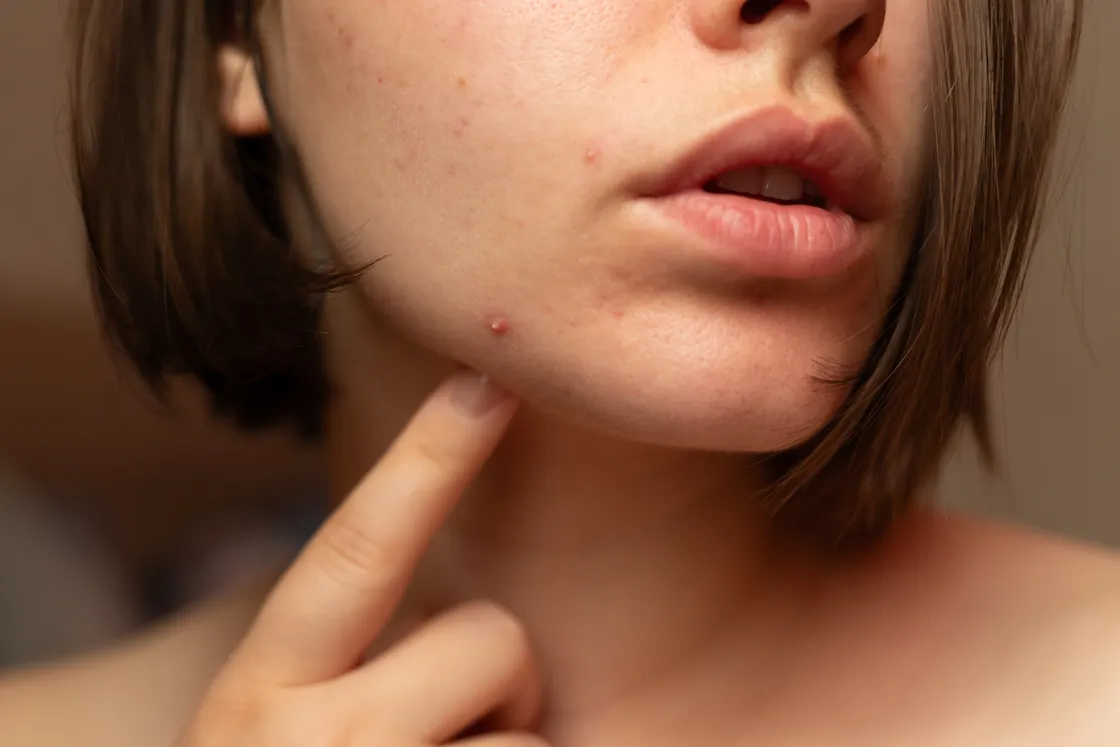
The second core feature is hyperandrogenism, or elevated levels of androgens such as testosterone. Symptoms may include excess facial or body hair, persistent or severe acne and thinning hair on the scalp.
Raised androgen levels can often be detected on blood tests, even when physical symptoms are relatively mild.
Weight gain and insulin resistance
Weight gain and difficulty managing weight are common, often driven by underlying insulin resistance. Many women describe gaining weight more easily than expected and finding weight loss particularly challenging despite healthy lifestyle changes.
Mental health
The impact on appearance, fertility and weight can understandably affect wellbeing, but there is also increasing evidence that the hormonal and metabolic changes associated with PMOS may directly influence mood. Anxiety, depression and low self-esteem occur more frequently in women with PMOS.
Other long-term health risks
PMOS is also associated with a number of other long-term health risks, including:
Cardiovascular disease
Type 2 diabetes
High blood pressure
High cholesterol
Gestational diabetes
Pregnancy complications
These risks are present even in women who are not overweight and in those whose reproductive symptoms are relatively mild.
How is PMOS diagnosed?
The criteria for diagnosis have not changed as a result of the name change.
A diagnosis of PMOS requires at least two of the following three criteria:
1. Irregular or absent menstrual cycles, defined as fewer than eight cycles per year, or cycles consistently shorter than 21 days or longer than 35 days in women who are at least three years beyond their first menstrual period.
2. Clinical or biochemical evidence of elevated androgens, either through symptoms such as excess hair growth and acne or through blood test results.
3. Polycystic ovarian morphology, identified either through the characteristic follicular pattern on pelvic ultrasound or an elevated anti-Mullerian hormone (AMH) level.
Importantly, because only two of the three criteria are required, a diagnosis can often be made without ultrasound. A woman with irregular periods and elevated androgen levels on blood testing may meet the diagnostic criteria without requiring imaging.
PMOS should only be diagnosed after other conditions that can produce similar symptoms have been excluded, including thyroid disorders and elevated prolactin levels.
In teenagers, the criteria are stricter. Both irregular menstrual cycles and evidence of elevated androgens are required because some degree of hormonal irregularity is normal in the years following the onset of menstruation.
What treatment options are available?
There is currently no cure for PMOS, but there are a range of evidence-based treatments that can improve symptoms and reduce long-term health risks.
Treatment is individualised and depends on symptoms, priorities and whether pregnancy is desired.
Lifestyle measures
Lifestyle measures form the foundation of management for all women with PMOS.
Reducing ultra-processed foods, maintaining regular physical activity, prioritising sleep and managing stress have all been shown to improve insulin resistance, support hormonal balance, regulate menstrual cycles and reduce cardiovascular risk.
Importantly, many of these benefits occur independently of weight loss.
Hormonal contraception
The combined oral contraceptive pill is commonly used to regulate menstrual cycles, reduce androgen levels
and improve symptoms such as acne and excess hair growth.
While it does not directly address insulin resistance, it can be highly effective at managing day-to-day symptoms.
Metformin
Metformin, a medication originally developed for type 2 diabetes, is frequently used to improve insulin resistance in women with PMOS.
It may help regulate periods, improve ovulation, support weight management and reduce longer-term metabolic risk.
Anti-androgen medications
Anti-androgen medications such as spironolactone may be used when excess hair growth, acne or hair thinning are particularly troublesome. These medications work by blocking the effects of androgens within the body.
Fertility treatment
For women trying to conceive, treatment depends on individual circumstances.
Some women experience improved fertility through lifestyle changes and treatment of insulin resistance alone. Where additional support is needed, ovulation-induction medications such as letrozole and clomifene can be used.
For some women, assisted reproductive treatments such as IVF may also be considered.
What should you do if you think you have PMOS?
If you have irregular periods, symptoms such as persistent acne, excess facial or body hair, thinning hair on your scalp, fertility difficulties or unexplained weight gain, it is worth discussing your symptoms with your GP.
You do not need to have every symptom associated with PMOS, and you do not need to have characteristic findings on an ultrasound scan to meet the diagnostic criteria.
Your GP will be able to assess your symptoms, arrange any appropriate investigations and discuss whether PMOS could be contributing to them.
If you already have a diagnosis of PCOS, that diagnosis remains valid. However, the name change does provide an opportunity to review your care. If previous discussions have focused primarily on periods or fertility, it may be helpful to ensure that other aspects of the condition, including blood pressure, cholesterol, blood sugar levels, insulin resistance and mental wellbeing, are also being monitored and addressed where appropriate.
Looking ahead
NICE is currently developing its first dedicated guidance on PMOS, expected in December this year, and both NICE and the Royal College of Obstetricians and Gynaecologists have confirmed they will adopt the new terminology.
As a GP, one of the most positive aspects of this change is what it represents beyond the science. For many women, the journey to a diagnosis can be frustrating and, at times, isolating.
We often see women who have spent years trying to make sense of symptoms that don’t seem connected. Irregular periods, acne, unwanted hair growth, weight changes, difficulties conceiving, low mood or fatigue may be treated as separate problems, when they can all be part of the same underlying condition.
While a name change alone will not solve those challenges, I hope it encourages more conversations about PMOS and helps women feel confident seeking support when something doesn’t feel right.
Perhaps most importantly, it’s a reminder that we need to listen carefully to women’s experiences. Blood tests and scans are important, but so is understanding how symptoms are affecting someone’s day-to-day life. Earlier recognition and better awareness can make a real difference.
Sources: Teede HJ et al., ‘Polyendocrine metabolic ovarian syndrome, the new name for polycystic ovary syndrome: a multistep global consensus process’, The Lancet, 12 May 2026; Pulse Today, ‘From PCOS to PMOS — a practical update for GPs’, May 2026; Pulse Today, ‘UK guidelines to adopt “PMOS” as new name for PCOS’, May 2026.








You need to be logged in to comment.