Life Is Strange: Reunion
Square Enix. PS5 (Als for Xbox Series X/S, MS Windows)
This marks what appears to be the conclusion of a trilogy of tales that began with the first Life Is Strange in 2015. There were more games in the series but this one follows on directly from the last and most recent entry, Double Exposure.
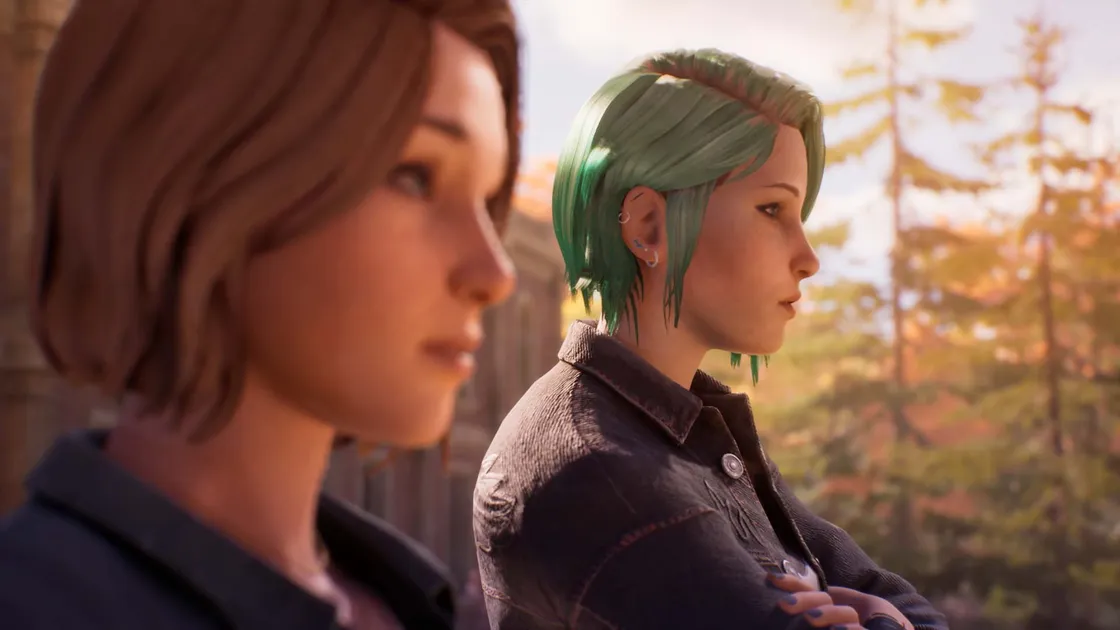
Picking up a few months after the climax, we are yet again following photographer Max, now a teacher at Calston university.
After a weekend away she gets back to find the campus ablaze, with students trapped inside the buildings.
Seeing the death of her close friends makes up her mind, and drawing on her special powers she goes back in time three days to begin investigating what led to this tragedy and to try and stop it.
But this is also the story of Chloe, Max’s friend and former lover, who may or may not have died at the end of the first game, depending on your choices.
At the start of this one you can make five key choices from the past two games that will set the pattern for this one, although quite how they play out in the story is hard to tell on a first run.
Chloe in this game is very much alive, but has lost touch with her old friend and is plagued by dreams, or maybe memories, of what happened between her and Max.
The reason for this is some timey-wimey parallel universe mumbo jumbo that actually makes a weird sort of sense within the context of a science fiction/fantasy game series.
Unlike previous games, which told their story in chapters, here the narrative is one continuous story and it’s only at the end that you find out what decisions other players made.
There are many elements that can be different, depending on your actions, and several endings to find if you want to play the game through more than once.
While the big event in the first game was a storm and in the second it was the death of another of Max’s friends, here it’s all about the fires – there’s more than one, with each having a distinct cause.
I was hoping that we’d see all of Max’s powers used at some point, but there’s none of the parallel time-line hopping that was the big feature in the last game and only use of her time-travelling into a picture at the start. The focus is on her short-term rewind skill, but there’s enough of this to make figuring out how it can solve a particular situation feel satisfying.
I enjoyed it more than the second entry, although some might not like the sections where you’re not called upon to do anything more than wander around looking at things and having conversations. For me, it added to the story and helped round out the characters – the heart of all of these games.
Although this could be the end of Max’s story, I suspect that if it does well enough we may well see more of her in the future.
The Occultist
Daedalic Entertainment. PS5 (Also for Xbox Series X/S, MS Windows)
Taking place on an island, Godstone, that has apparently long been abandoned, this game opens with the protagonist, an occult expert called Alan, travelling to there to find out what happened to his father.
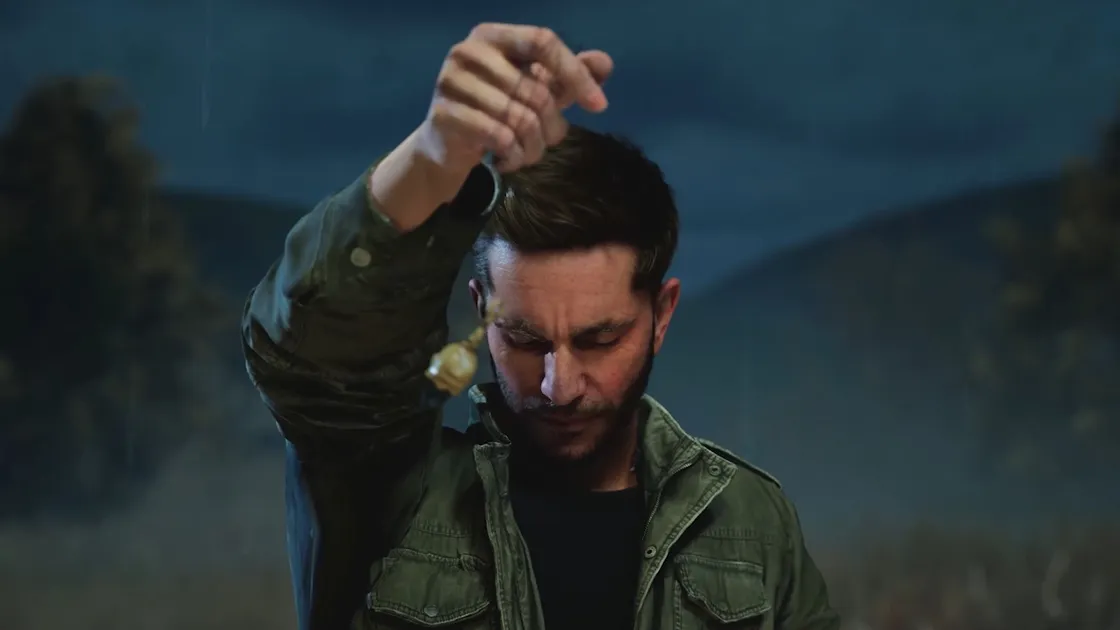
Alan is equipped with a pendulum that at first alerts him to nearby hidden objects or features which will be revealed if he looks at them through the crystal. Sometimes these manifest as documents he can pick up and read, other times it might be just blood trails or figures that were in that location in the past.
Ultimately, the pendulum can possess several features which include rewinding and fast-forwarding short periods of time, which can be necessary in order to move objects around that might be in the way in the present and blocking a useful clue, for instance.
Later on it’s able to manipulate pests to distract enemies, grab objects from afar or even interact directly with the spirit world.
There’s no combat as such and aside from exploration the gameplay is all about avoiding wandering foes or figuring out what part of the environment can be affected that might stop more aggressive enemies.
Despite being busy exploring the island Alan has enough time to illustrate and write a journal of his findings which gradually grows as you delve deeper into the hidden secrets and also records clues that he finds along the way.
Presented as a first-person mystery adventure, there’s a few jump-scares as you explore and the only voice you hear most of the time is Alan’s as he talks/thinks to himself.
There’s also some eerie orchestral music accompanying his adventure which includes some ethereal vocalising that helps set the creepy tone.
Puzzles generally involve picking up items to look for clues and occasionally collecting things that you’ll be able to use later. Sometimes their use is not obvious, although Alan’s comments might give you a hint as to what you need to do with some of them.
While the vast majority of the action is well-paced and gives you plenty of time to react, the climactic battle is more of a challenge and comes closest to actual real-time combat, with Alan called upon to use all the powers at his disposal to survive.
Best played at night with the lights out, it’s a creepy and at times unsettling game that I enjoyed for its atmosphere and for not forcing the player to run and hide every time a ghost was nearby, like many other ‘survival horror’ titles.