There were certainly times when I was questioning my judgement.
Even before we got off the rock, while we were waiting – in the steaming hot departure warehouse of the White Rock ferry terminal – to board our delayed sailing to St Malo, I began to doubt whether my kids would appreciate what was essentially a very long drive interrupted by petrol stops, sleep and the occasional swim, just to chase a shadow.
If it hadn’t been for the lovely staff at Timothy – round the corner from our Intra-Muros hotel in St Malo – taking pity on us and serving up steak hache despite having officially closed at 11pm, I might have faced a teenage insurrection.
My uncertainty loomed even larger when we missed our intended train to Rennes – where we were due to pick up our hybrid hire car – and had to get the next one, meaning we faced the prospect of an even later arrival at our next digs all the way down in Bordeaux. And of course the experience of picking up any hire car is never one to improve the mood. I can’t remember the exact conversation, infiltrated as it was with mistranslations and misapprehensions, but the gist was that we were being cordially invited to pay an extra 35 euros a day for the privilege of not committing our souls to the devil in the event of the car hitting too large an insect. This is one of several good reasons why I try to avoid hiring cars. However, on our last two trips to the continent, first my meagre Toyota Auris struggled to get up the hill from France into Switzerland, causing traffic mayhem and incensing truck drivers, and then my wife’s people-carrier overheated and didn’t make it back from the Loire Valley, causing me to go back and rescue it a few days after our return. A long drive across two burning nations in either vehicle was therefore a worrying prospect.
One saving grace, as we clocked up kilometre after mile of motorway in between tolls, was that in-car entertainment has evolved somewhat. When I was navigating from a ring-bound A3 map on family holidays in the 1980s, our dad would complain that all these David Bowie songs sounded the same, while we would retort that ‘the same applies to your string quartets, if you’re not familiar with them’. So while Julie patiently endured my esoteric collection of albums on the car stereo, child one was devouring several series of Gordon Ramsay’s Kitchen Nightmares and child two was powering through series four of Manifest – both protected by and contained within noise-cancelling headphones.
This did settle my nerves a little about how this whole trip might ultimately be remembered. At least these kids – whose response to being dragged to Stonehenge was ‘it’s just some stones in a field’ – were having some self-determined downtime.
The Bordeaux accommodation was just 30-odd miles from where forest fires had been raging the previous week, and the unrelenting summer air was still oppressive as we arrived and dived straight into the pool. But we had to get back out within an hour because of an approaching thunderstorm and minutes later it was raining great dollops of heaven-sent H2O. I’m not sure this phenomenon was attributed to us, but the proprietor was soon sliding a bottle of his own rose in our direction with a smile on his face.
Now we could, the very next day, have made it all the way to the village I had identified as our eclipse-watching spot in the mountains of northern Spain. But instead, we stopped for two nights at what we thought was a child-friendly camping/motorhome spot just outside Donostia with its own swimming pool, where we’d hired a four-bed cabin.
This accommodation, with its walls of bendy plastic, its spongy shower-room floor, its insufficient room to walk around or between the beds, and its booming population of mosquitoes, was quickly summed up by our daughter as ‘horrific’. And she had a point.
Although we had afforded ourselves the opportunity to stroll through the ancient city streets of Donostia (aka San Sebastian) and take a dip in their popular (aka crowded like sardines) beach, we had denied ourselves the opportunity of instead staying three nights in (or near) that chosen village – which just happened to lie beside the Rio Ebro, which runs alongside Spain’s most prestigious wine region of Rioja.
We paid for this as Wednesday dawned – the day of the eclipse. We only had to drive 150km to reach San Vicente de la Sonsierra, where Euskadi (aka the Basque Country) gives way to Rioja. But we very quickly realised that we weren’t the only people in Europe who had got it into their heads to travel into the Spanish mountains that day, to enter the zone of totality which had been marked on many an astronomer’s map. The traffic was heavy, the progress was slow, and the eclipse warnings on the motorway display boards were beyond our ability to translate, causing us to wonder whether they were planning to close the route, or simply warning of heavy traffic. Or, perhaps, just warning people it might suddenly get dark later, for no immediately apparent reason.
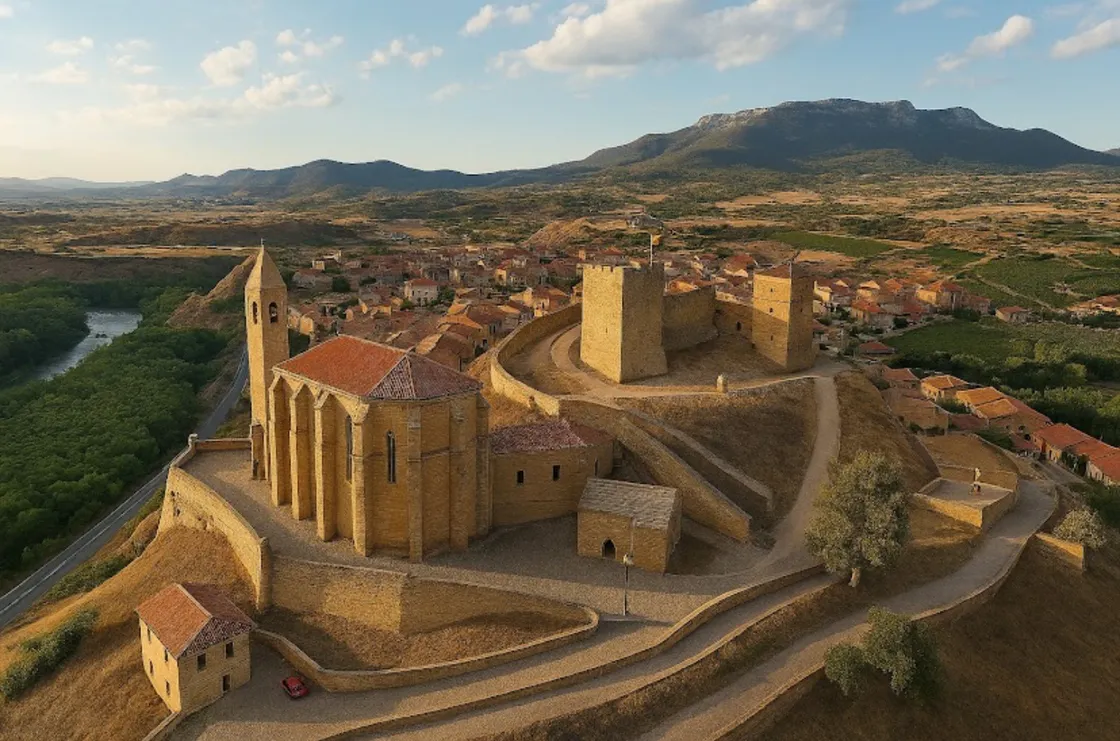
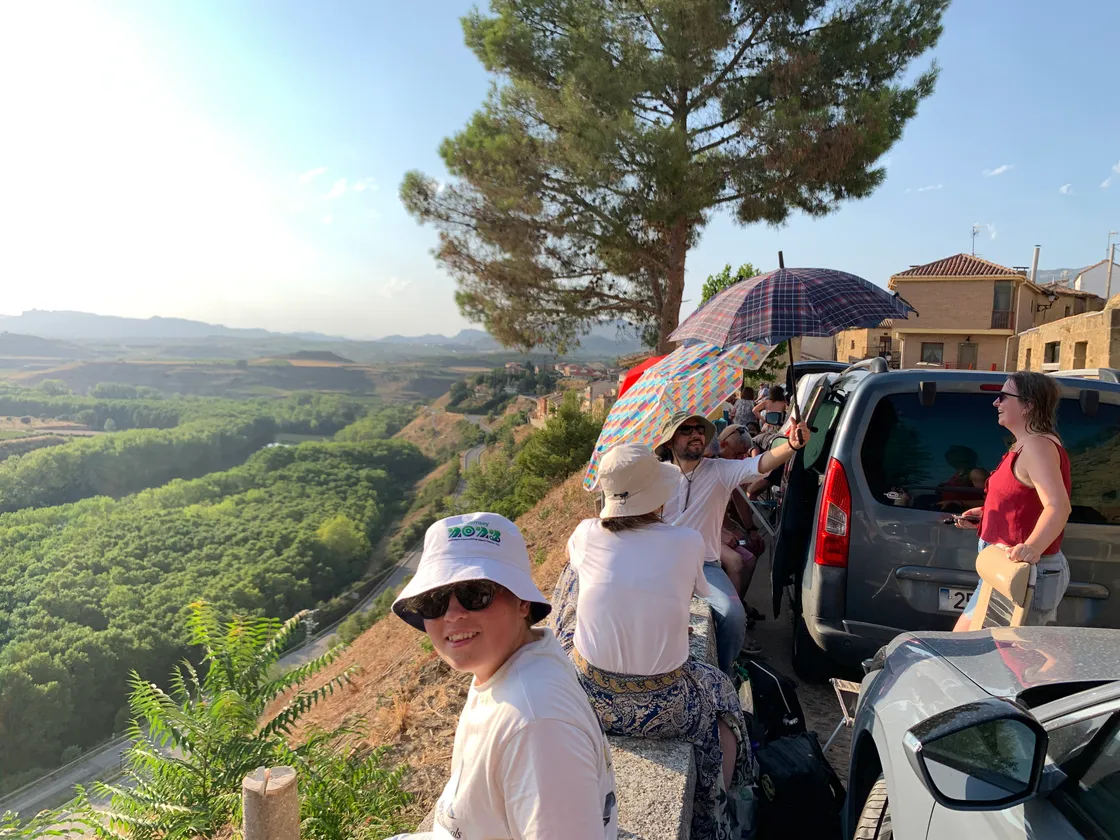
We were sufficiently spooked to head straight for our roadside motel, check in, dump a few things and then drive directly to the viewing spot. We got the last car parking space on a dead-end road – appropriately named Calle de Buenavista – halfway up the hillside underneath the ancient, dominating Castillo-Fortaleza, with a clear view over the grapevine-laden plain stretching out westwards to distant mountains.
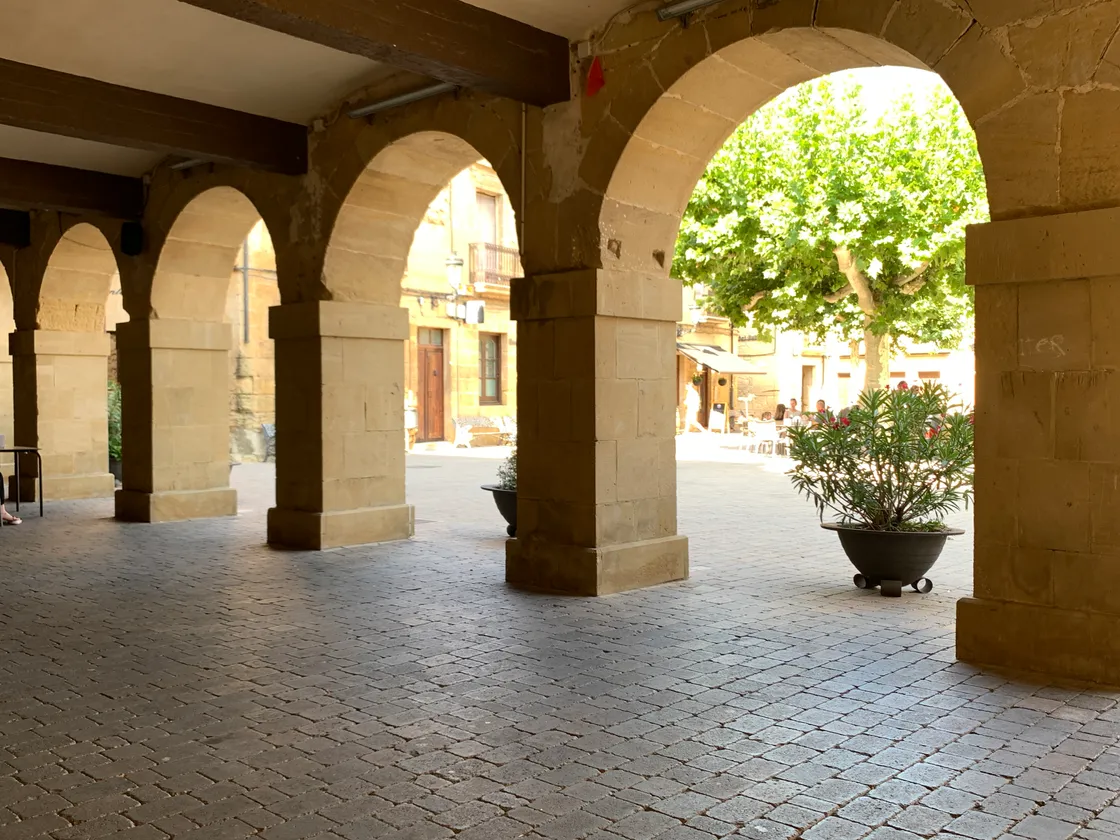
Our spot secured, we set out to kill the three hours remaining before the celestial show was to start, and sought the shade of a colonnade in the village square. Initially very quiet, a crowd built up as locals rose from their siestas and more foreigners like us showed up. As the clock struck five, the temperature relented from its peak of 39C but still the entire throng took turns to dip hot heads under the cygnine statuary adorning the plaza fountain. The elderly couple running the local taberna were overrun. Not so much bartenders as barbrutalists, they became increasingly befuddled as the line of soft-drink seekers stretched into the next room and eventually out into the open air.
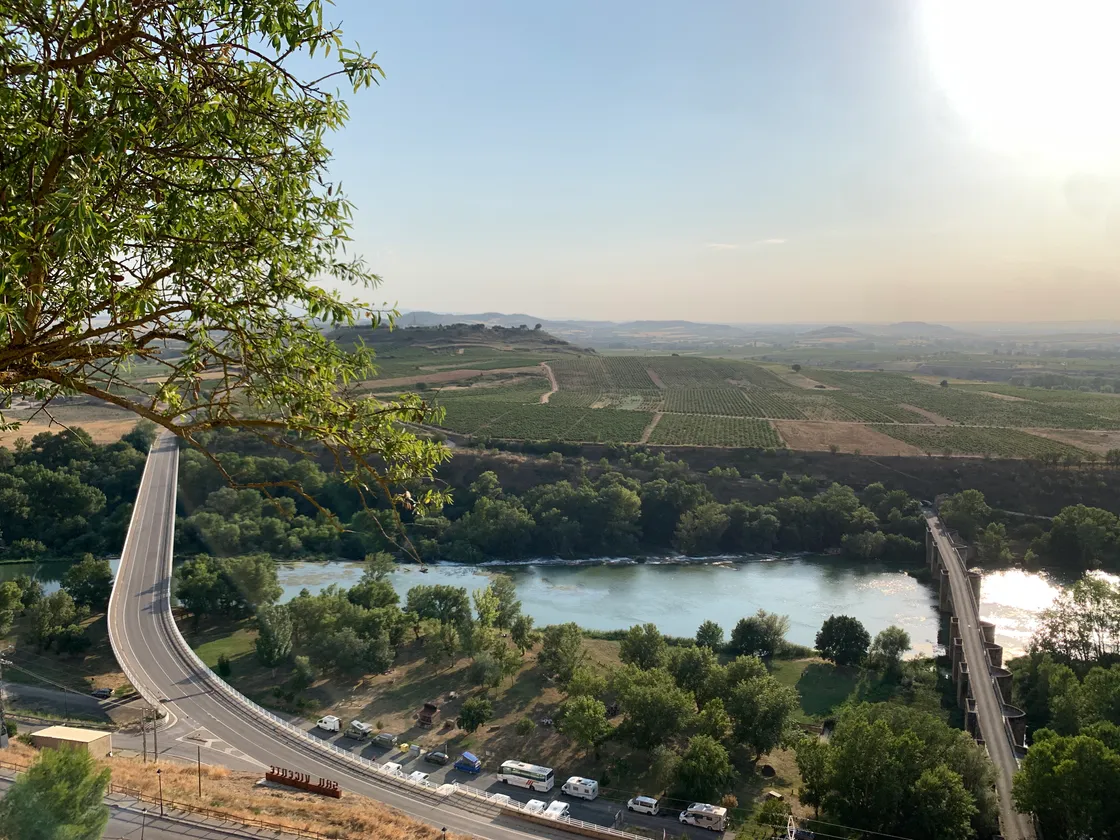
We headed back to our chosen spot with still 90 minutes to go before the first lunar bite of the sun, yet we found ourselves having to ask some locals to move out of their camping chairs so we could open our car boot and get to our food. The whole area had become a human logjam, reflecting the great weir far below us, where foliage was held up above the plunging river water, beneath an ancient viaduct.
There was no shade, and with the mercury still stubbornly at 36C as late as 7.15pm, I began to look forward to the eclipse not just as a rare alignment but also as a blessed interruption to the unrelenting solar rays.
It was at this point that I started looking at social media, curious to see if the phenomenon had already started back home in Guernsey, and my attention was grabbed by a post on the Island Archives’ Facebook page.
I have long been aware of the astronomical and photographic achievements of my cousin Warren De La Rue. I call him my cousin, as that seems to be indicated by the combination of three family trees I’ve been given – one by an aunty, one from the archives of the De La Rue company and one by local insurance director Dean De La Rue.
There is at least one demonstrable error on one of these – the company one – and possibly more, but until I get round to doing the necessary digging, I’ll go with my being descended from Thomas De La Rue’s younger brother Guillaume – Warren’s uncle.
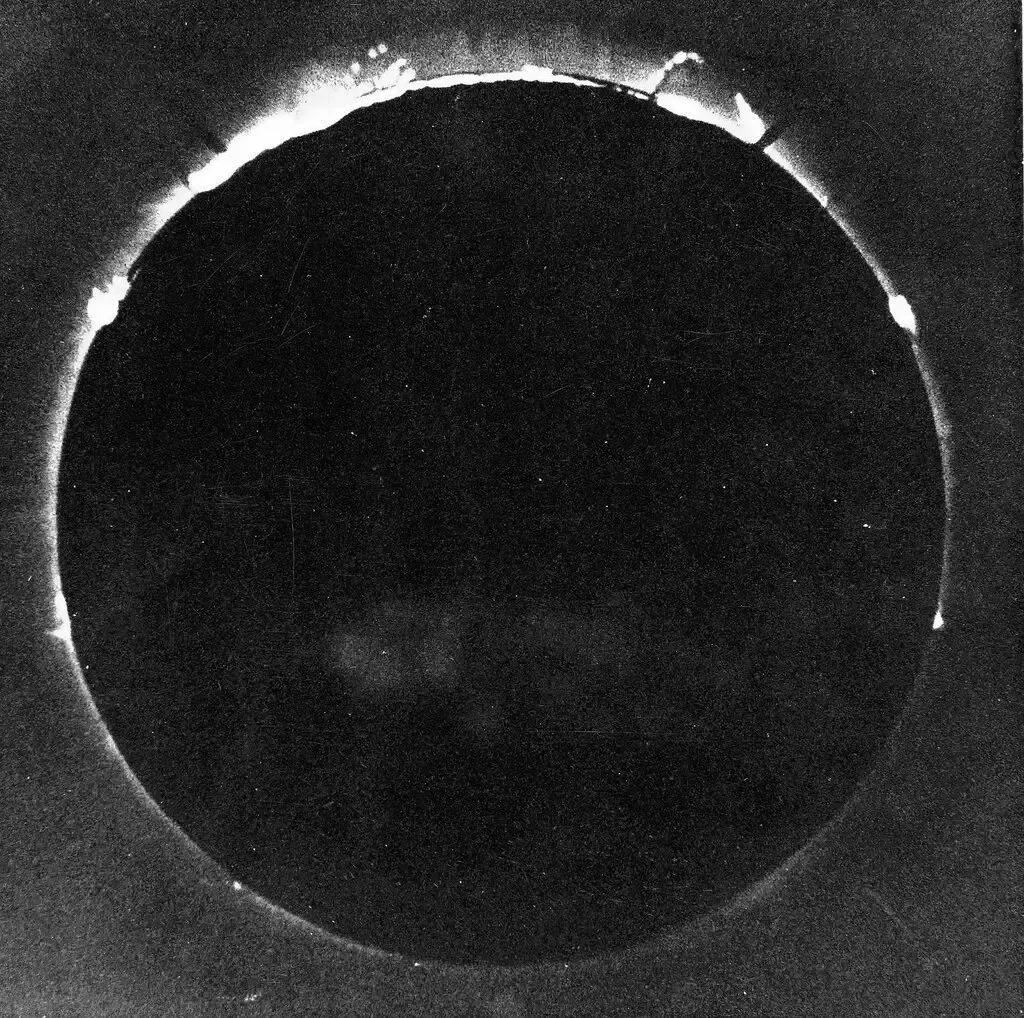
Warren, named after his mother’s maiden name, was the subject of this post from Island Archives. It pointed out that he had gone off on his travels in 1860, taking his ‘photoheliograph’ in order to produce a state-of-the-art image of a total eclipse. In doing so, he was able to help establish that the ‘halo-effect’ of light around the moon on these occasions was a result of activity occurring on the surface of the sun – solar flares. It had been theorised that the cause was light travelling through the moon’s own atmosphere or perhaps an effect caused by the Earth’s atmosphere.
His contribution to astronomy was enough to see him made a fellow of the Royal Society and to have a crater on the moon named after him.
I already knew all of that. But what I’d never taken on board was where exactly Warren had gone, to get this famous image. It turned out to be Spain, large tracts of which had experienced totality on 18 July 1860. And the post named the exact location as Rivabellosa, which I looked up on my maps app and discovered with some astonishment was just a mere 28km upriver from where we stood. We had been drawn to the same river valley in the same area of Spain to witness the same phenomenon.
Admittedly, I hadn’t brought a photoheliograph and I didn’t even intend to use the camera on my phone. I’d come all the way from Guernsey just to watch something weird happen for 85 seconds and I didn’t plan to record it – except perhaps in the artfully memorialised form of a Guernsey Press feature.
What had compelled me? Was it in the genes?
Well, back in 1999, Julie and I were in the northern isle for our umpteenth Alderney Week and went up to Tourgis Hill along with 10 or so friends and watched the total eclipse there on 11 August. So I knew what it felt like to stand on a darkening world, as the light and warmth of the sun was momentarily snuffed out by our moon, and how this was an experience of an entirely different order of magnitude to the partial eclipsing that had gone before it, and which followed it. And I wanted to experience this again – hopefully with less cloud. And, even more, I wanted our children to experience it.
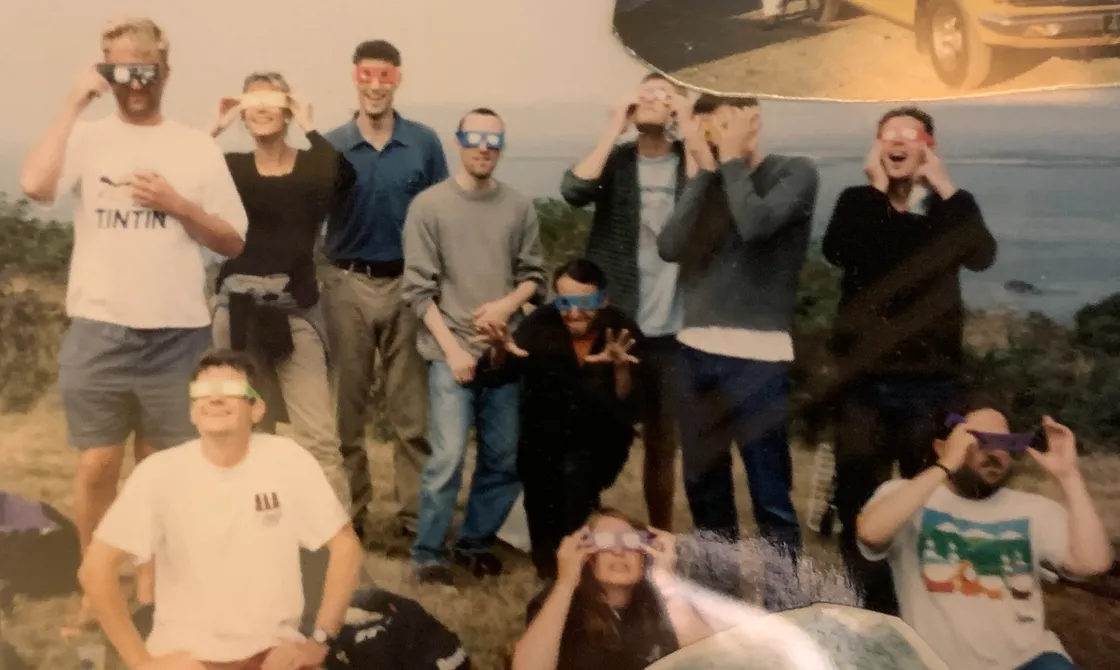
On our Spanish slope, the minutes ticked down to the locally advertised 7.33pm and a couple of minutes later I thought I saw – through one of our four pairs of eclipse glasses which I’d picked up from the Les Bourgs shop on the Bridge the previous Friday – the first little dent in the lower right of the sun’s disk. The others quickly donned theirs and yes, there it was.
Just like in Alderney, that first bite and those first few minutes were tremendously exciting, before the reality set in that a high level of excitement cannot be sustained for the hour-long build up to totality.
But as the heat finally began to abate, we noticed the first natural consequence. Whereas the seagulls had flown squawking toward Burhou and Les Casquets in 1999, here we saw seemingly panicked swallows suddenly darting around below us, above the forest canopy that stretched out on either side of the riverbanks.
As the final few percentages of the sun’s surface held out against the lunar invasion, I saw a message from Dad saying the maximum had passed back home. That last slither seemed to take ages to be smothered and the crescent sun seemed to slide around the top and left of the moon. It’s a contradictory facet of the solar eclipse that it’s the moon hiding the sun, yet the sun that is catching up with the moon.
Finally, the moment came when the last beads of direct light were swallowed up. Off came the PennWest University eclipse glasses and to my eternal relief and satisfaction, I heard “oh, wow!” from my right, as our two teenagers took it in. Cheers went up from others sitting on our wall, and from above us, along the road to the high castle.
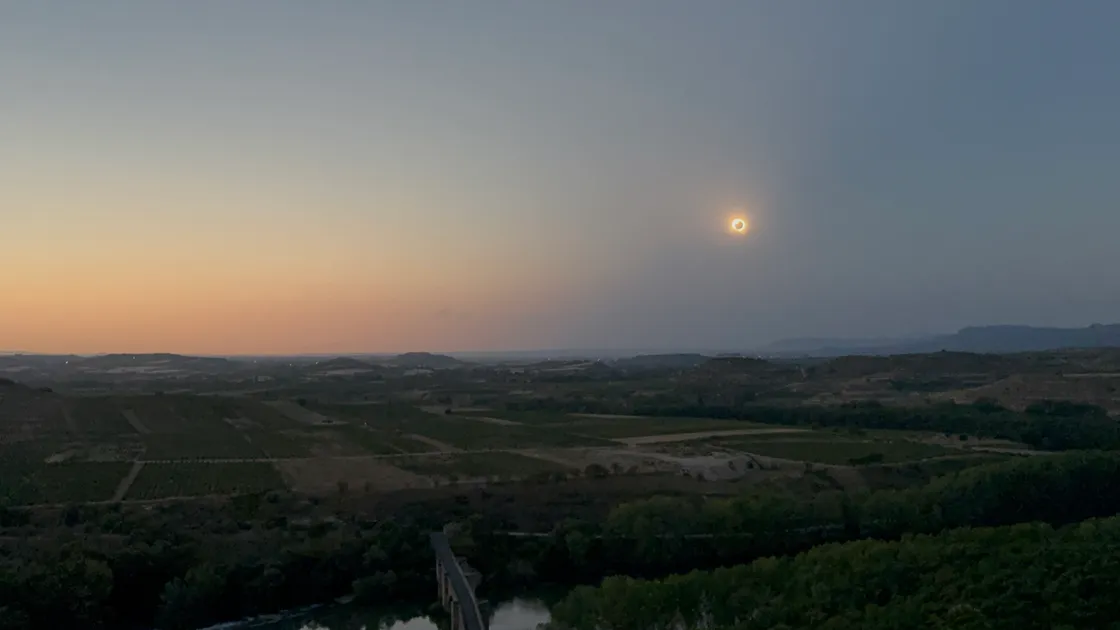
Unlike in Alderney, where the event happened directly overhead and was just visible through low cloud, this was happening with the sun about an hour away from setting. This meant that as totality began, the southern sky was lit up with golden rays and blue sky, while the northern sky was darkened.
The swallows disappeared entirely while the minute and 25 seconds of totality passed in a dimmed hush.
The halo effect was there for all to see but so also was an array of sunlight through the far distant atmosphere, seemingly emanating from the moon in all directions barring a gap at seven o’clock – caused by what, I couldn’t tell you.
Then the sky began to brighten in the north and to darken in the south before, finally, the first beads appeared on the moon’s right. I seem to remember being told this momentary effect of ‘beading’ is caused by the sun’s light coming through the high crater edges of the moon before fully rounding it.
The sunlight was then quick to flood in, suddenly forcing us to look away and reach for the eclipse glasses.
And we, as members of the fickle species we are, were quick to think ‘righto, that was nice, time to drive home’ – even though the same extraordinary event that kept us gripped for an hour was now being repeated in reverse.
To be fair, my son argued strongly to stay for another hour, and given the sunset timing of this particular eclipse, this would certainly have been one to keep watching. But tiredness, hunger and headaches had set in elsewhere in the clan and he lost the vote.
As we prepared to leave, some gasps of delight from a young woman to our right caught our attention. Her friend was holding out her hand, which was sporting a shiny new engagement ring. Their hugs and celebrations were only interrupted by having to step aside to let us pass in our car.
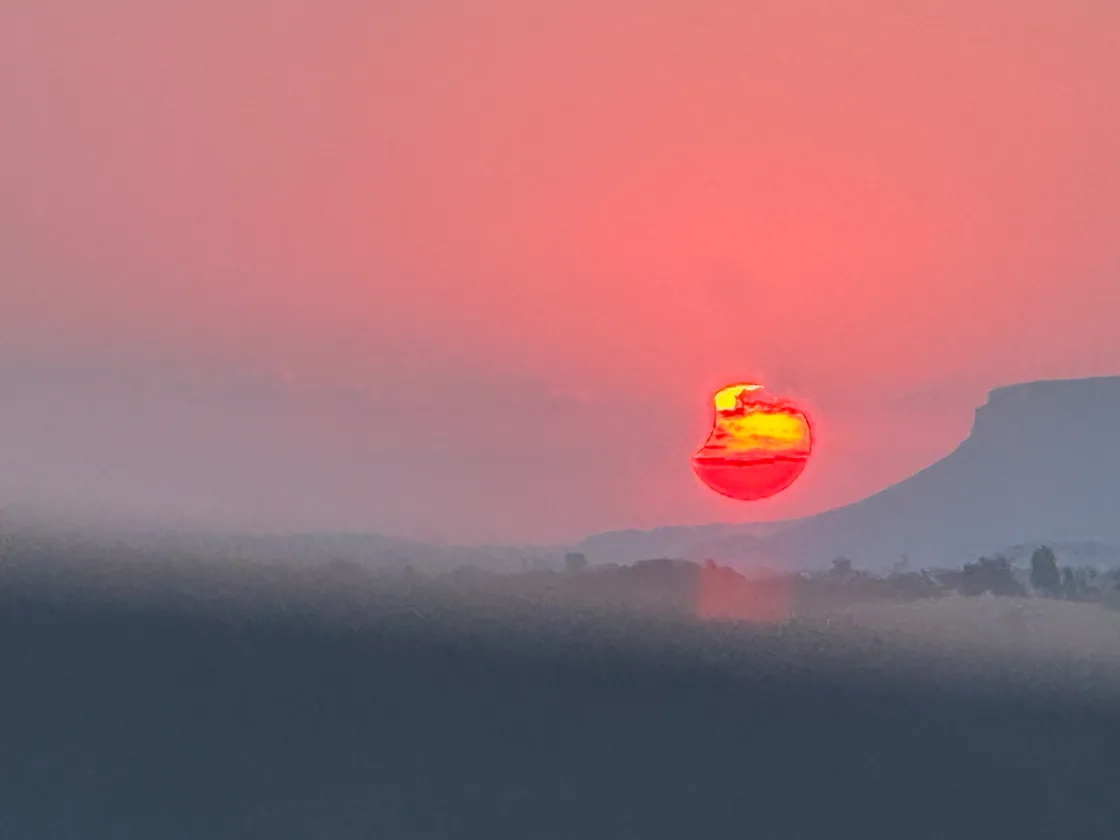
On the way back to our motel, 30km away, the ever-lowering sun, still partly eclipsed, began to set among the distant mountains. Clouds enrobed the fireball and the effect, photographed by my son through the tinted windscreen of our hire car, was like something out of the Star Wars series – a death star in flames.
The journey back was even more speedy than the journey out there. There was just time to visit the famous beaches of Biarritz, which was plenty of time to conclude that they’re not a patch on ours, and then we drove 680km in one 42C day all the way up to Rennes.
Another delayed ferry – and having to wait for all the Poole passengers to file out and clear passport control before we were allowed to proceed – meant I didn’t have time to go home on the day of our arrival back in Guernsey, and went straight to the Albert Pier to lead the first of two back-to-back cruise ship tours.
As I met my German translator, Heinrich, I explained that I had to go and change and put sun cream on, as I’d just arrived back from Spain where I’d watched the eclipse.
‘Ah yes,’ he said. ‘We saw it too. We’ve just sailed from Bilbao.’
Next time we’ll stow away.