

If ever there was a summer to be away from the office, it was this one. The weather was glorious, there was the largest and longest World Cup of all time to watch, and various increasingly absurd episodes of the States’ tax soap opera thankfully to miss.
If I had been able to choose a time for major surgery requiring lengthy recuperation, I suppose it would have been May 2026. But despite the suspicions of my editor, it was definitely unplanned and the timing was a coincidence. Indeed, it was an emergency – a ‘you-might-lose-the-use-of-this-organ-or-that-function’ type of emergency.
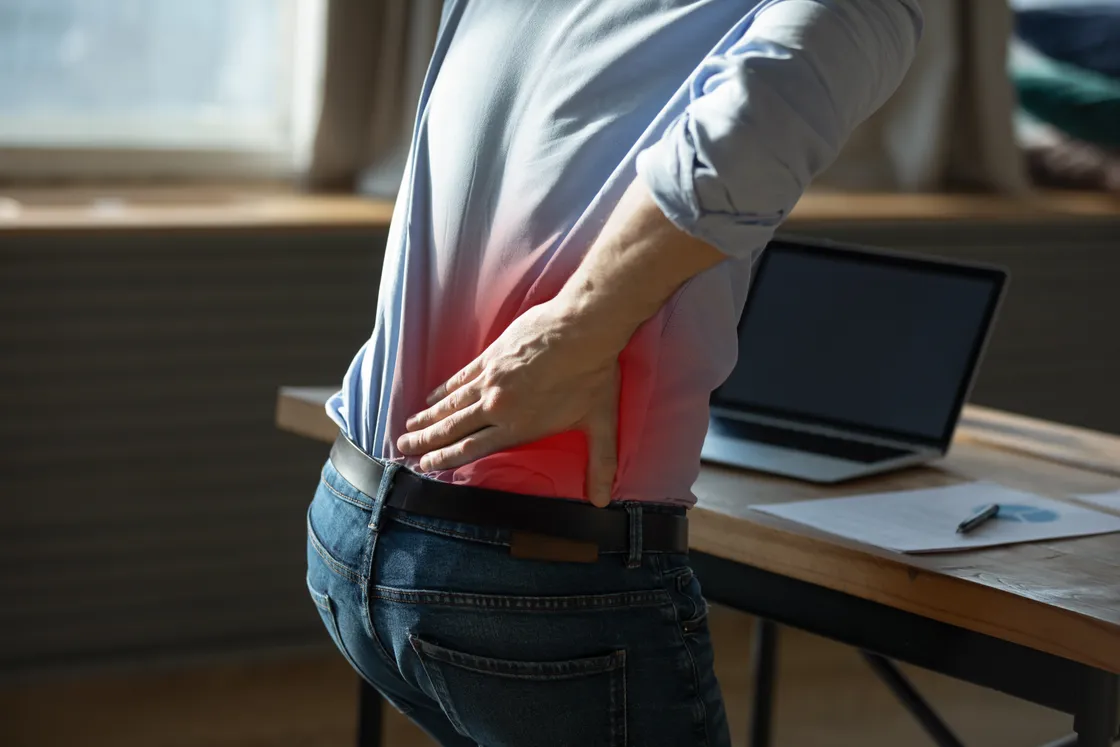
I would like to be able to tell a heroic story of how this happened, but I can’t because it was actually quite pathetic. I was doing a few light exercises one morning, including sit-ups, when I felt a small ‘ping’ and much pain in my lower back, and by the end of that day I was crawling to get anywhere.
Unable to walk, for a couple of weeks I worked lying down, writing on a laptop resting on my knees (actually this is sounding ever so slightly heroic, Mr Editor) before the pain suddenly worsened and became too bad even to do that. I was reluctantly taken off to see a thankfully conscientious and eagle-eyed GP, Dr Elliott at L’Aumone. My medical notes say I described severe nerve pain in my legs, alternating between dead leg and stabbing feelings, and a band of numbness around my hips and lower abdomen.
It was a Friday. Dr Elliott said something unusual was concerning her which would play on her mind all weekend unless she got me in for an urgent MRI scan, which she did somehow, and her instinct was spot-on. The scan showed a large herniation of the L4/L5 disc in my lower back, causing something called cauda equina, a rare, severe medical emergency which involves the significant compression of nerve roots at the bottom of the spinal cord. The cauda equina nerves communicate with the legs and pelvic organs. It typically presents as low back pain, leg weakness and numbness in the groin area. It is said to affect about 1 in every 2,500 people with back pain who visit a doctor and roughly 1 in every 50 who have a herniated lumbar disc.
Cauda equina can quickly lead to permanent loss of bladder and bowel control and partial or complete paralysis. Surgery to relieve pressure on the nerves must be carried out quickly to give patients the best chance to regain normal body functions. Quickly means within 24 to 48 hours. Decompression carried out between 48 and 72 hours or later is associated with a much higher rate of permanent neurological damage and loss of functions.
‘You require surgery very soon,’ said the consultant at the Princess Elizabeth Hospital who read my MRI scan. ‘How soon?’ I asked. ‘In the next few hours,’ he said. ‘We are going to put you on a medevac flight tonight and you will have an operation in Southampton straight away.’ The consultant was quite superb, as were all of the medical staff I saw during a few hours in our accident and emergency department. One of the reasons I wanted to write this article was to publicise how brilliantly I was cared for by the health service in Guernsey and the UK’s National Health Service from the moment I staggered into the GP surgery to the day I walked out of Southampton General following surgery.
I knew a little about cauda equina because, ironically, last year Nikki, my wife, was herself left immobile in a hospital bed having herniated a disc in her lower back, and doctors suspected it was compressing nerve roots at the bottom of her spinal cord. I was advised to pack overnight bags for both of us as a medevac was about to be prepared to fly her to the UK for emergency decompression surgery. As it turned out, a final scan did not indicate cauda equina, and instead of a medevac she had a week in hospital in Guernsey and was put on the waiting list for surgery. She was still on the waiting list by the time of my injury 10 months later and today remains pretty much in constant pain in her back and especially her legs. The disc herniation itself has regressed, but she has little relief from excruciating nerve pain left from the original injury which was not operated on as speedily as it needed to be, and there is uncertainty about whether she will ever recover. I was just lucky to be operated on quickly, and many times I have wished that Nikki and I could swap places. There is, by the way, no exciting cause of us both having essentially the same back injury at the same time.
The States appears to have decided that the air ambulance service from the island can be improved, or perhaps carried out more cheaply, by using a different provider after the existing contract expires later this year. The existing operator has launched legal action against the tender process leading to this ‘brave decision’ in the Yes Minister sense of the term. My medevac at the end of May could not have been handled more efficiently or sympathetically. I am yet to find a local patient who says otherwise. Two nurses from the service arrived at the PEH as soon as they could, straight from an earlier medevac, carefully moved me onto a stretcher and put a sort of vacuum mould around me to prevent movement during the flight. Their meticulous care and professionalism were extremely reassuring. They made room for Nikki to join me on the plane, which had to land at Bournemouth because that is where late flights go and it was by now after midnight. After blue-lighting us to Southampton General, they made sure I was safely admitted and thoroughly briefed the nurses there. If another operator can do this better they must be quite some outfit.
Overnight, I was in too much pain to sleep more than a few minutes at a time. I thought to myself that I wouldn’t wish this injury on my worst enemy, so to speak. If the surgeon, Mr Griffith, had arrived in the morning and proposed chopping off my right leg, I might well have consented. Instead, he explained that he was going to carry out a discectomy to remove the part of the disc pressing on nerves. I was hardly in a position to argue, but anyway he was very informative and reassuring. He guaranteed that he’d have me back on the ward in time to listen to that evening’s Champions League Final on the wireless.
It is said that discectomy surgery works best when a herniated disc causes pain, numbness or weakness which travels into an arm or leg but is often less helpful for pain only in the back or neck. Sometimes the surgeon also needs to remove small amounts of bone or ligament to reach the herniated disc. It can sometimes be done as keyhole surgery, with small cuts, but mine was carried out through open surgery, which typically requires longer recovery, although I was surprised how quickly I was back on my feet.
Freedom from excruciating pain was such a relief. Just 24 hours after surgery, the saintly NHS nurses having got me up to walk around unaided and provided me with a roast dinner, I was able to return to Guernsey on a scheduled flight. With only shorts to wear, I found myself walking through the airport, looking absurd, sporting those unglamorous medical stockings designed to prevent blood clots. The more experienced one becomes in being poked and prodded and opened and closed up in the cause of being kept alive and upright, the less one worries about the aesthetics of it all.
Once home, I seemed to fall quickly off the radar of Guernsey’s health administrators. My surgeon recommended physiotherapy, but none was offered until, two-and-a-half months later, I chased it up myself and discovered my notes had essentially been filed and forgotten about. When I was eventually offered an appointment, my notes had not been sent to the clinic. That was my first and only complaint about the otherwise outstanding service I received. I also had to wait many weeks for reimbursement of the cost of my flight back to Guernsey – that’s not really a complaint but it’s not how our health insurance scheme is meant to work and concerned me because of the effect it could have on some less fortunate patients.
Today, I am virtually free of pain and moving almost normally, as a result of modern medicine, the expertise and care of a host of doctors and nurses in Guernsey and Southampton, our social insurance schemes which provide support during recuperation, and the patience of my employer, the Guernsey Press. For all this, I received two bills – the cost of a GP appointment and an accident and emergency visit – totalling less than £200.
It receives its fair share of criticism, but our health service also has many fortunate and thankful customers.




You need to be logged in to comment.