
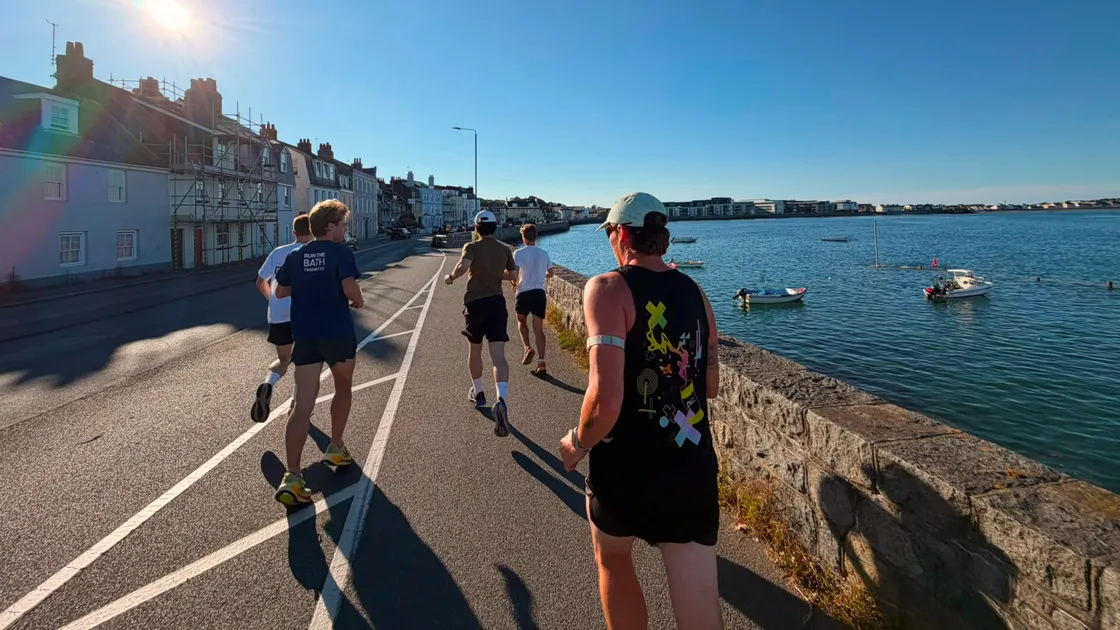
For an island with no shortage of outdoorsy folk, spotting joggers along the cliffs and coastlines of Guernsey has never been a particularly unusual sight.
However, recent months have seen an uptake in new groups dedicated to the sport, a development that has certainly not escaped the notice of 72-year-old Jean-Pierre Mace, founder of one of the island’s longest-standing running groups, JP’s Runners.
‘You drive along the front anytime nowadays, you see so many runners. There are just so many,’ he said.
The development has also caught the eye of Nina Mattinson, who has seen her Thirty Thursday group, which she began in 2019 with the aim of supporting herself and a few friends to complete the Couch to 5k challenge, balloon to now have almost 300 members on its Facebook page.
A particular facet of the phenomenon that has also not escaped the 49-year-old’s attention is the demographic that seem to make up the vast majority of those behind the new running uptake.
‘There seems to be an influx of younger runners in particular,’ she said.
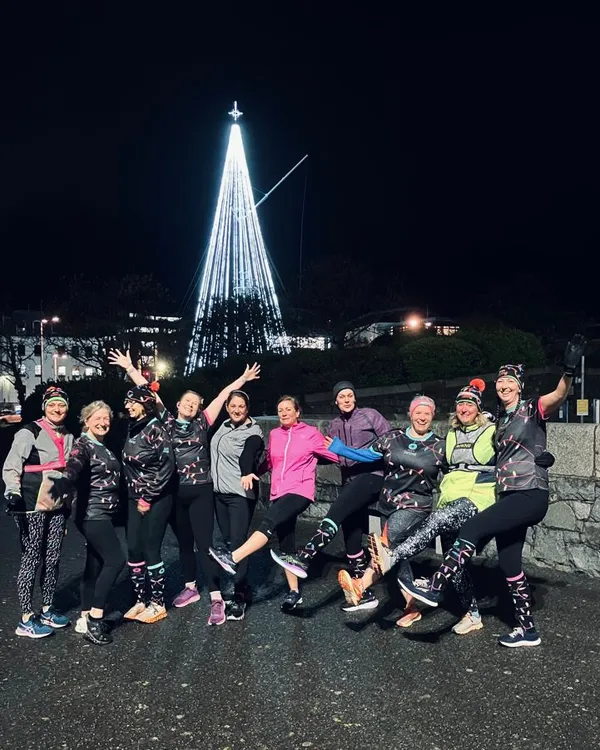
‘I think it’s down to a change in attitude. They’re not going out to party and drink as much. They’re all about looking after yourself, your body, your mind. I think youngsters are just realising that being outside is really good for you.’
Such a suggestion was echoed by Rosalie Van Zutphen, founder of Inclusive Islanders, a social initiative launched in March to bring together people on Guernsey aged 19-35.
Most of the group’s activities are sober, including its run club.
‘I’ve found there’s a big rise in young people just wanting to do sober activities. You want to be productive the next day and I also think there’s a big rise in people caring about their health and fitness,’ she said. ‘There’s nothing wrong with drinking and going out, having a party, but it doesn’t all have a to built around alcohol, and I think young people are realising that.’
Yet, for Rosalie, the increased interest in running amongst her generation spoke to something broader than a simple health drive. Rather, it tapped into the very same problem that drove her to set up Inclusive Islanders in the first place.
‘We have an issue here with lack of opportunities for young people. Young people are leaving the island. It’s a big issue,’ she said.
‘I came back to Guernsey after university and it was hard for me to re-integrate. I realised there’s an issue here with loneliness amongst young people and just not having the activities to get out and meet people. In school its different, because the schools organise those things, and you have the Youth Commission, but once you get into your 20s, it's a bit like, what am I going to do? It’s a really big issue here. People are lonely.
‘I think that’s why there is a rise in the run clubs in Guernsey right now. Run clubs are all about meeting people. It’s such a great way to make friends. It really is more than just the running. It’s the community.’
Rosalie’s perspective mapped neatly onto that of her peers who had similarly launched their own running groups in 2026.
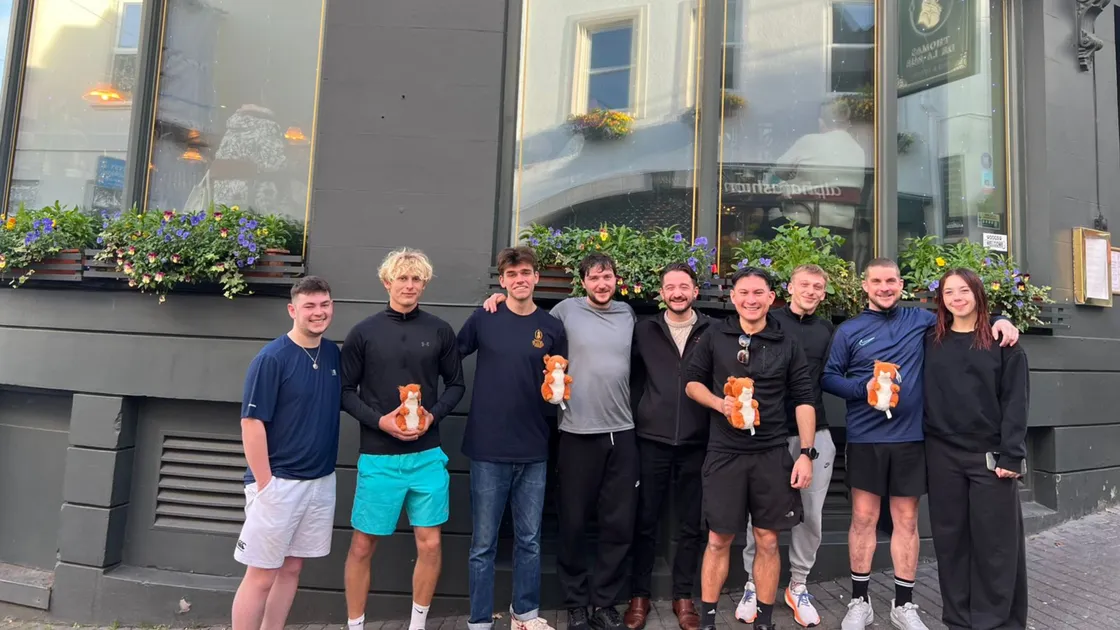
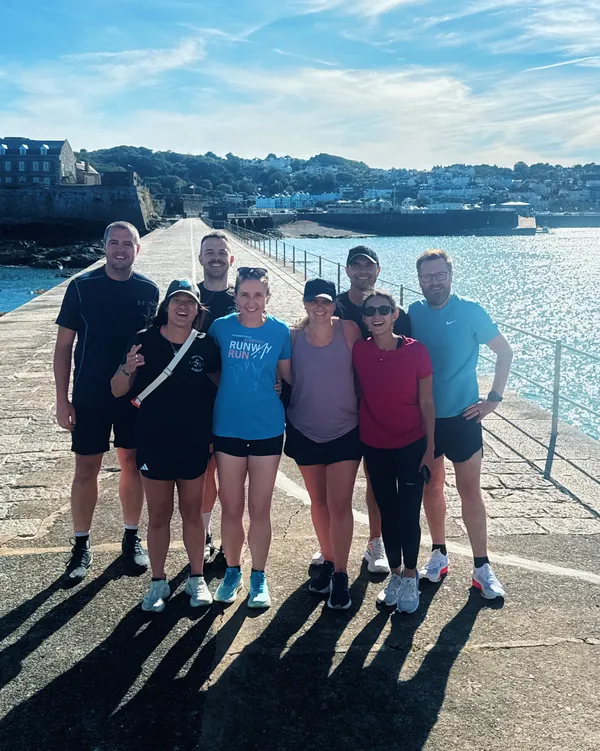
For example, at Kyle Tester’s Thomas De La Rue club, runners pair their work out with a post-run drink at the pub to make sure they get in that all important ‘social release’ alongside the fitness kick, and those joining Rachel Dallin’s 5KsDifferentWays can also ‘spend two hours having brunch and chatting’ after finishing their runs.
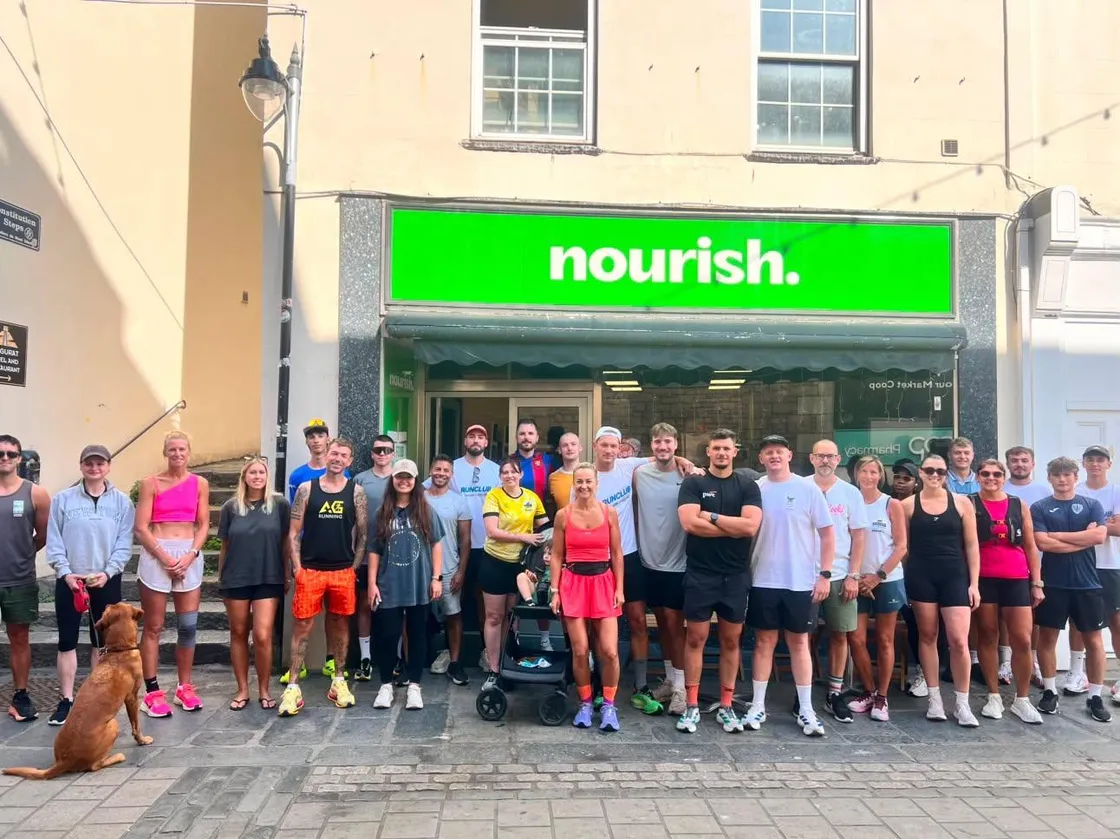
For Ruth Hurst and Jarred Knoetze’s Tides & Tempo too, ‘the social side is just as important as the running’, and at Sam Masterman’s BoxClub24, it is also ‘all about running to be with people’, with the conversation shared over free fruit and coffee at Nourish cafe being as much a part of the meet-up as the run itself.
But why running as the activity of choice for this generation so keenly seeking social connection?
One answer to that curiosity for all of the running groups in question could be found in the ‘accessibility’ they found in the activity.
Firstly, there was the lack of need for any overly involved pre-planning or specialist kit to keep in mind. Or, as Rachel phrased it, ‘It’s easy. You can get on your trainers and just go. You don’t have to think about tides, or finding a ball or a pitch, or a set number of people you need to play with.’
On top of that, there is then its capacity to be easily moulded to meet different people’s needs, as Ruth pointed out: ‘The runs are designed to accommodate all abilities. You can start at whatever level suits you.’
Indeed, a key feature across the newly debuted running groups is the flexibility each embeds into their meetings in terms of pacing and distance, with some even offering a walking option for beginners to get into the swing of things.
Such a set-up is perfect for those looking for a more laid-back, social and inclusive approach to exercise rather than a gruelling, competitive work out session, a facet Rosalie highlighted when reflecting back on the question of why she herself had decided to trade in her university’s hockey club to join the run club instead. ‘I’m not very competitive and when there’s less pressure around sport, I actually find I enjoy it more. Running’s a great one because you can do it for your own goals and set your own runs.’
A third and final point that then further played into the accessibility of running for many was its low cost.
Other than getting your hands on a pair of trainers, there is no need ‘to spend a fortune’, as Kyle said. ‘It’s a work-out you can start as soon as you leave your house.’
It was also a point Rosalie highlighted as key, linking the topic back to earlier discussion of her peers’ step away from alcohol.
‘A lot of young people are struggling with employment. There’s a lot of financial stress for us and people don’t want to spend all their money on it. It’s just not worth it.’
Beyond the matter of accessibility, another factor that also rose with notable consistency among the island’s new running cohort when considering why running in particular was the activity of choice for them, was the idea that there was something about it that was inherently social.
As Kyle said: ‘Running and being social go and in hand. It gees you up to be social. After you’re done, you just don’t want to go home straight away. You don’t want to sit at home alone.’
Sam held a similar position, understanding that ‘there’s a shared struggle when you run in a group like that. It’s like team-building with strangers. You just start chatting and get to know people.’
Yet, in addition to its in-built social qualities, he also understood there to be something about running that was also inherently good for mental health too, another point that rippled across the other running groups with considerable consistency.
‘A mental release’, ‘a happy pill’, ‘a mind-clearer’, ‘a stress buster’ – just some of the phrases that were used to describe the activity in question. And not only by Guernsey’s newer runners, but also by those with longer-standing connections to the activity such as Nina, who credited it as key in helping her to cope with her sister’s cancer diagnosis, and for Jean-Pierre too.
‘You’re out there and you forget about your work,’ he said. ‘You’re chatting about whatever. It might be the run, it might be what you did the day before or what you’ll do tomorrow. And of course, you develop friendships. And then you come to think, well, let’s have a coffee afterwards, and slowly you find you have some of your best mates.’
It’s when reflecting on such perspectives that scratch beneath the surface of what might first appear to be a new health obsession sweeping the island, that the backbone behind the running boom come into clearer view.
Not so much about running, or physical fitness at all, it transpires.
Rather, such groups have sprung up to providing young people with affordable opportunities to meet others their age in a place where they find such opportunities to be sorely lacking. It also provides them with a much-needed respite from the mental strain they find arising when facing uncertain futures, shaped by rising costs, job insecurity and s housing crisis.
And so, while running might remain the accessible vehicle, the central attraction to the groups in question is in fact the space they providing young people in Guernsey to experience something they are struggle to access elsewhere in their lives here. Somewhere to unwind, find community and belong.




You need to be logged in to comment.