This evening thousands will spend a few hours enjoying the Guernsey Air Display, but behind the scenes, the event is the result of an entire year’s work and countless volunteer hours.
Fundraising, safety planning, discussions with military organisations and educational initiatives all go into bringing the spectacle to the island.
Organisers say the challenge is no longer booking the aircraft to take part, but ensuring the display remains financially and operationally viable for future generations.
‘It’s a tried and tested formula. Work on the next display starts almost as soon as the previous one finished,’ said event organiser Natalie Davidson.
‘We have to apply to the RAF for their assets, we put applications in to all three services for their display assets, and that has to be in at the end of September.’
But attracting aircraft has become increasingly difficult.
Recently retired Meet the Pilots organiser and Air Display Foundation chairman Gary Elson said the military element of the show has changed dramatically over the past three decades.
‘When I first arrived in the island in 1992, you could almost fill an entire two-hour display with RAF aircraft,’ he said.
‘Now we get the Red Arrows and the Battle of Britain Memorial Flight and that’s about it.’
As military participation has declined, organisers have had to rely more heavily on private display teams, which come with significantly higher costs.
But it’s not as easy as simply calling up and booking a slot.
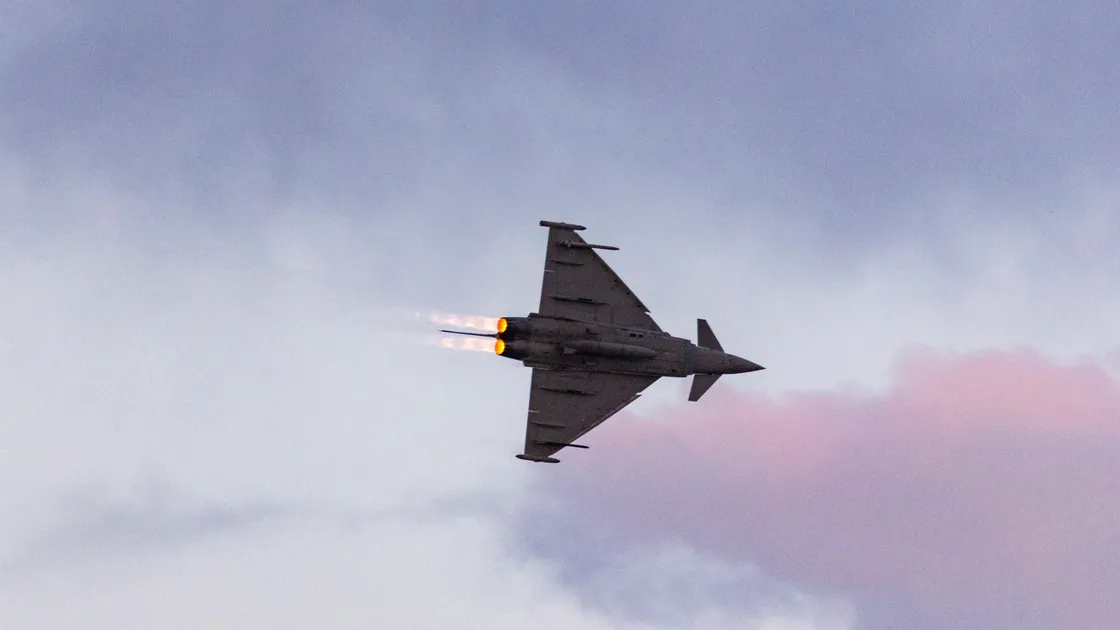
‘You can’t just book a Typhoon or a Chinook,’ said Natalie.
‘It’s got to come through the military and neither are doing as many displays as they have done in previous years.’
Some crowd favourites are no longer suitable for a seafront display, and organisers have to manage the expectations of air display fans – just because an item has appeared before does not mean it has a permanent spot in the local line-up.
‘The Chinook has changed from a display to a role demonstration where it picks up a cannon and moves it. You can’t do that on the seafront, so a very popular item is no longer available to us,’ said Gary.
‘The Typhoon is still very much in demand, and they don’t tend to take part in midweek displays.’
Guernsey’s traditional midweek slot adds another layer of difficulty. The military aircraft are all operational. Other than the Red Arrows, those seen flying over the island are not just sitting at base waiting for a display date in the diary.
Despite the seafront display and mid-week challenges, the organisers believe that Guernsey remains one of the favourite destinations for display crews.
‘As a place to display, they seem to love coming to Guernsey,’ said Gary.
‘It’s a bit more challenging with the sea and the land as a flying experience, but we’re an established part of the schedule. Guernsey is always listed on the circuit calendar.’
While securing the aircraft is tricky in itself, paying for them might be even harder.
Flying display director Barry Neal estimated that the 90-minute display now costs between £65,000 and £70,000 to put on.
‘Quite a lot of that money is already committed before we have it,’ he said.
‘You’re broadly looking at £13,000 for the Red Arrows, about £6,000 for insurance to cover the foundation’s public liability and in the region of £30,000 to pay for the display items themselves. The rest goes towards ancillary costs.
‘The biggest hurdle we have to face is getting the money.’
Public perceptions of the Air Display’s funding model are often misunderstood, with many people believing the Air Display is States-funded, or that the Red Arrows and RAF assets are free.
Comparison with Jersey’s air display can also be misleading.
‘Jersey’s fundraising model is completely different,’ said Natalie.
‘The States of Jersey puts a lot of money into it and the budget that they’re working with is three times what we have, but because they’re the sister island and so close, people compare us.’
In reality, the event is organised on behalf of the Royal Air Forces Association and it remains the main annual fundraiser for the charity.
This year, funds raised will be split between supporting the display and the charity.
Despite operating with a much smaller budget, she believes Guernsey consistently punches above its weight compared to UK displays.
But the lack of guaranteed sponsorship is making long-term planning more difficult.
‘There are some people that we talk to quite early on, but we don’t get RAF confirmation until February or March when they start planning their season,’ she added.
‘But at that time, we haven’t always got the sponsorship in, so sometimes it can be May or June until we know what we’ve got.’
Organisers have been rethinking the event in recent years.
Although Guernsey hosted the only seafront display in the British Isles during Covid, and was one of the only places the Red Arrows displayed, tightening budgets and declining sponsorship was raising concerns about the long-term future of the community event.
‘Something needed to change otherwise there was a danger it was going to whittle away,’ said Natalie.
Last year the decision was made to move the air display to an evening event, which received great feedback.
The evening slot meant more families were able to attend together and gave local hospitality businesses a midweek boost, as well as boosting hotel occupancy during the shoulder season, with visitors who attend annually for the air display.
For the organisers, the display is about far more than getting planes in the sky.
One of the bigger developments in recent years has been the expansion of Meet the Pilots, which gives the public direct access to the aircraft and their crews.
Gary ran the event for two decades before handing over this year.
He said it offered opportunities people would rarely get elsewhere.
‘When we do Meet the Pilots, it gives people the opportunity to access planes that they wouldn’t normally,’ he said.
‘We bring them in and people get to say that they spoke to the Hurricane pilot, or saw the Spitfire up close. It’s really rewarding.’
Jon Le Ray is taking over the role this year and Meet the Pilots is being extended to run into the evening, with the hopes of getting more school-aged children attending, as well as adults once they have finished work.
Flying display director Barry is based in the UK, but has been involved in the Guernsey event since 2000, when he was in the RAF and asked to visit the island to look at how the air display was run. He has been part of the team since 2001 in various roles and took over as flying display director in 2009.
The format of Guernsey’s air display gives him a unique opportunity compared to UK events he works on.
‘I enjoy the role wherever it might be, but I have a particularly great relationship with Guernsey and the team,’ he said.
‘For other air displays, the aircraft fly in, display and fly out again, but in Guernsey’s case we have aircraft flying into the airport. This year, we’re bringing them in a day early for Meet the Pilots, so it means I’m able to have more face-to-face contact with the crews, even with the Red Arrows because Red 10 is on the ground.’
Due to Guernsey’s set-up, organisers and crews are able to have an in-person briefing before the display.
The educational side of the air display has become increasingly important as organisers look to broaden the impact of the event further than an hour-and-a-half display.
‘Sending pilots into schools is a really important part of the display,’ said Natalie.
‘It’s more than just planes in the sky.’
Through the display’s Educate and Inspire programme, crews visit schools and speak to pupils about aviation, engineering and careers in the military and the aerospace industry.
Aerobatic pilot Rich Goodwin has become a particularly popular contributor.
As well as performing at the display, he has spoken to schoolchildren about his engineering background and the Muscle Biplane he designed and built himself.
‘We created the Educate and Inspire programme because a lot of airfield-based displays will have a Stem [science, technology, engineering and mathematics] tent, or the Reds will have their simulator, but we can’t really do that where we are, which is where Meet the Pilot fulfils some of that role,’ said Natalie.
Gary added that ‘Stem villages’ are becoming increasingly popular across the entire air display circuit.
‘It is a counterbalance to the sustainability argument, and it’s a really good way of engaging people so that they look at being a pilot or an aircraft engineer as a future opportunity,’ he said.
Like air shows across the globe, the Guernsey Air Display raises questions about environmental impact.
But put into perspective, the discussion is more nuanced than people may realise.
‘When you look at some of the bigger air shows in the UK, the percentage of the footprint of the aircraft is tiny,’ said Natalie.
‘It’s the 250,000 people travelling miles to get there, but we’re completely on the flip side, we don’t have that so our main footprint is the aircraft.’
Organisers noted the sustainability initiatives, including developments in sustainable aviation fuels.
Rich Goodwin has been involved in exploring carbon-neutral fuel alternatives, with air display organisers choosing display teams which are actively taking steps to tackle climate change.
As a member of the British Air Display Association, the local foundation is committed to the charter which includes eliminating single-use items, thinking green with contractors, facilitating public transport and active travel, offsetting aviation emissions and promoting sustainable aviation.
Paper programmes are no longer included in the display, posts on social media encourage active travel, and locally-sourced produce is used for the sponsor reception.
What spectators see on display day is only a fraction of the planning that has taken place behind the scenes.
‘The air display has changed dramatically since those early days in terms of the acts people were able to get hold of, the location, the control, the regulation,’ said Barry.
‘In those days it was primarily military aircraft that were displaying and Guernsey didn’t have specific aviation law, it followed the UK’s air navigation order.’
Since becoming flying display director in 2009, he has seen many regulatory changes, the introduction of a director of civil aviation role and changes in the way harbour, emergency services and airport contributions were managed.
‘Once we’ve invited the various display acts to come in, in the meantime we’re working on all the regulatory aspects with the director of civil aviation, arranging what harbour assets will be provided to support us, agreeing with St John how they’ll be able to support us, discussing with the emergency planning officer who will coordinate the support of the emergency services for the period of the display.’
Safety planning extends well beyond the aircraft themselves.
Gary said emergency planning meetings examine every possible scenario, often outside of the air display itself.
‘So much of it isn’t actually related to the planes, it’s things like if a burger van catches fire, or there’s an accident at Port Soif which takes the emergency assets away, and then we can’t run the air display because there aren’t the assets available,’ he said.
‘It goes so much further into the event than just the flying.’
On the water, the operation is equally as complex.
New to the Air Display Foundation, Mark Dravers has been working with Guernsey Harbours to reduce costs while maintaining safety measures.
A line of five yellow buoys creates the display line used by pilots during the show, while separating the aircraft from spectators.
‘There’s a restricted flying display area that is patrolled by a lot of on-water assets, such as the Flying Christine and the Leopardess,’ he said.
‘They have to patrol the edge of the area to make sure no boats enter during the display.’
Meanwhile, the airport closes for the duration of the display, requiring coordination with airlines and air traffic services.
Guernsey is also one of the few air displays that has experienced a drone threat. In 2023, the Red Arrows almost didn’t get to display due to a drone being flown in the display area, but after a short delay the show was back on.
For all those involved, the focus is now on ensuring the display remains viable and in place for future generations.
Mark said attracting younger volunteers would be crucial.
‘The whole theme is to get the thing on a firm footing for the future,’ he said.
‘We need some more younger people on the foundation and to look ahead to a time when we might not get the Reds.’
As one of the main hooks for the air display, the Red Arrows are scheduled to retire the Hawk T1 aircraft in 2030, with the search on for a replacement aircraft.
But despite the challenges, organisers remain passionate about an event that has become a favourite date in Guernsey’s calendar.
‘It’s really hard work and hard raising the money, but it’s such a fabulous community event,’ said Natalie.
The display remains free to attend and continues to draw thousands of spectators along the east coast.
Barry believes the air display’s value extends well beyond aviation.
‘We know the Guernsey community enjoys the air display,’ he said.
‘The ferries, flights, hotels and restaurants are booked and there are people who visit specifically for it.
‘But without the money coming in from Guernsey, there will be no air display.’
The aircraft may only take to the skies for a few hours each year, but the effort to keep them there never really stops.