
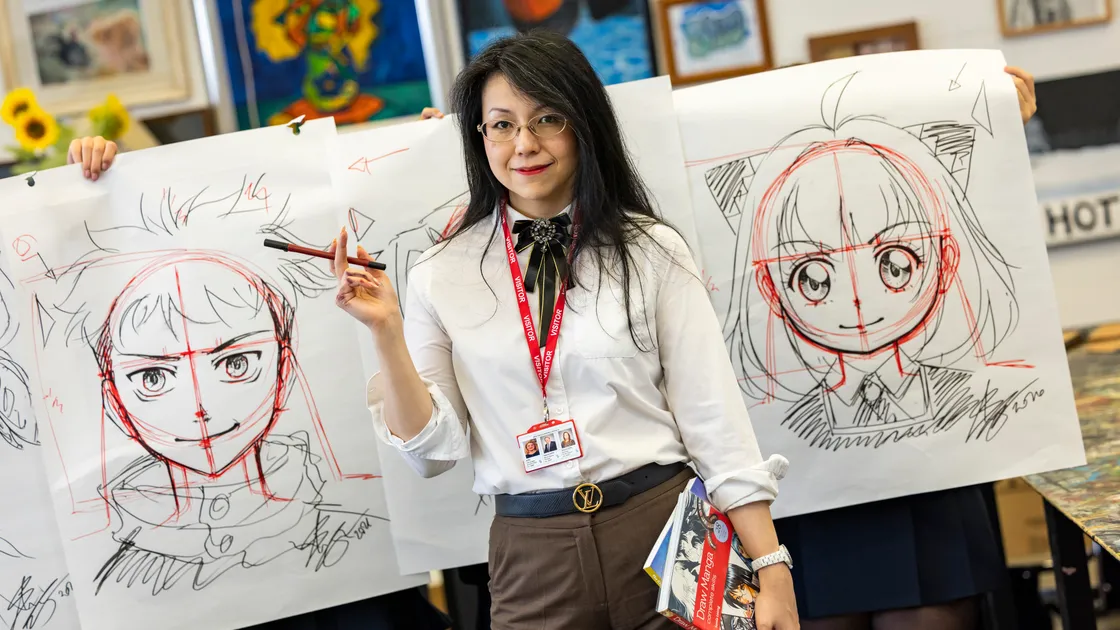
Sonia Leong’s second visit to the island came 15 years after her first, and saw her once again deliver a series of talks and workshops at schools across the island.
‘It’s been like two to three schools a day, pretty much,’ she said. ‘I talk a bit about the work I do, and I also teach them a bit more about anime and manga in general, the whole style, the processes of creating it, what the range looks like and why it looks the way it does. But then I also do practical drawing workshops as well, so I actually get them to draw along with me and draw characters with me.’
Sonia’s interest in the world of comics, particularly the manga styles she specialises in, blossomed while growing up in Malaysia in the 80s.
‘In south-east Asia, we love all sorts of Japanese and Chinese styles of artwork. But I grew up reading comics anyway because my mum was a very avid comic reader,’ she said.
After moving to Thailand and joining an international school she found that initial interest bubble into a desire to actually start trying to create her own works.
‘I really got my enthusiasm around then,’ she said. I started swapping comics with a lot more people and I realised how beautiful comics could be. I thought: “I love this.” That was really what got me more into wanting to draw it and wanting to make it.’
Luckily, Sonia found that her natural talent for art fitted well with her interests.
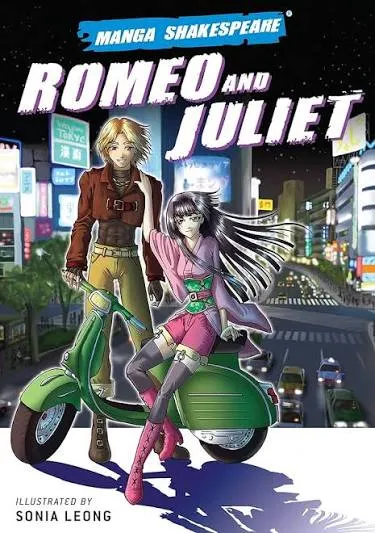
‘I am the type of artist that, when I look at things, I convert them into 3D objects in my mind. I break things down into volume and shape. So that way I can just draw them whatever angle or pose I want,’ she said.
‘That talent was very, very useful for me to nurture when designing my own original characters and drawing them consistently from scene to scene in different poses. That’s a key skill that a comic book artist or a manga artist has to have. And not all people see like that. Some people see in outlines. Some people see in light and dark and negative space. They are more suited, I suppose, to other types of artwork.’
However, despite her enjoyment of art and creating her own comics, she did not initially consider it a to be a possible career path for herself.
‘I pretty much only did art formally in school up until Year 9. I was under subtle pressure to not pursue creative careers, because my mindset, and the mindset particularly of the Far East, is that you’re going have to focus on your maths and your business and your economics. So, I dropped all my art subjects gradually as I got older,’ she said.
That mindset eventually saw her pursue a degree in economics and politics at the University of Warwick. ‘But I kept up artwork and drawing on the side. I just kept doing it for fun,’ she added.
Yet, after receiving positive feedback for that work, which she had happened to share online and enter into several competitions, that mindset started to shift.
‘I started winning competitions and suddenly I was getting job offers from different publishers, left, right and centre. And then, within a couple of years, I was earning more money from my art than my office day job,’ she said.
That was enough to convince her to become a comic book artist full-time, a decision she has not looked back on since.
Besides being able to dedicate her life to her twin passions of art and storytelling, the part she finds most rewarding about her job is seeing her work’s fandom grow.
‘I know people have cosplayed a few of my original characters from my original stories. They’ve dressed up as them. It’s the highest compliment any artist can get, if somebody spends the time, effort and money to actually make a costume based on one of your characters,’ she said.
Looking back on her successful career as her time in Guernsey drew to an end, she had some parting advice for any students who might be inspired to walk down the same career path as her.
‘You have to have the confidence to be able to sell your work and know your worth as well,’ she said. ‘You also have to be very efficient about the way you work. You have to have a thick skin. Once you’ve done a job, don’t agonise over it. Is the client happy? Good, you’ve done your job.’
‘Also, make friends,’ she added. ‘Particularly be friends with other people who make very different stuff to you, because it means if they get a job sent in that they’re not suited for, they might pass it onto you. You might pass stuff to them. And it’s a small world. We all know each other. So be friendly.’


You need to be logged in to comment.