
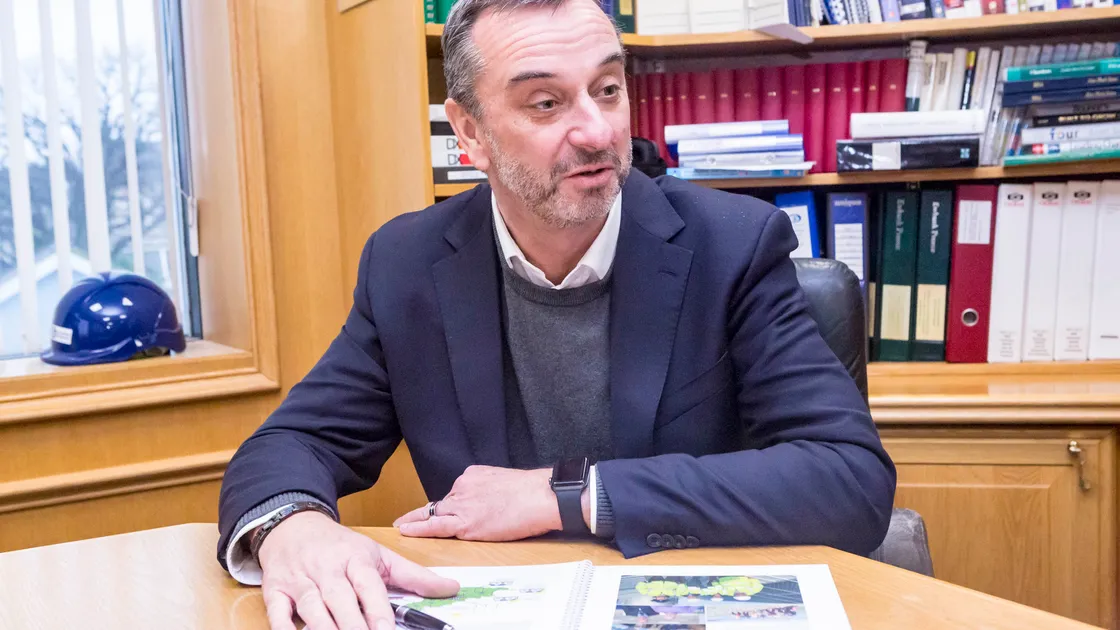
In the Guernsey Electricity Report and Financial Statements for 2017 to 2018, Mr Bates said it was claimed that the world of energy was changing more quickly and more fundamentally than at any point since the industrial revolution.
The UK’s electricity output last year was at its lowest since 1994, despite a population rise of eight million.
Reasons for this were said to be a combination of more efficient appliances, energy-saving lightbulbs and, more recently, LEDs.
GE saw a 1.9% decrease in electricity consumed in the last financial year and this was also attributed to energy-efficient electrical appliances as well as improvements in efficiency within buildings and industry.
The utility predicts that in the future island electricity demand will increase due to heat and transport sectors becoming electrified, while total energy consumed by the island will fall.
These predictions are made using a number of variables, including how quickly people electrify their heating and how many are switching to electric cars, as well as taking into account predictions made by other bodies such as the States of Guernsey.
‘We understand that transportation, heating and power, that’s where energy is. The models used have looked at the different scenarios that come out of these assumptions to then show what the future might be,’ said Mr Bates.
As well as more energy efficient products, renewable energy sources are providing a greater proportion of electricity.
The UK reported that last year renewable energy supplied a record breaking 33% of electricity – up from 29% the year before.
Guernsey can also expect to see an increase in the contribution of renewable energy sources.
In March last year installation of 330 solar panels was completed at Vale power station.
The panels have been generating renewable energy and in the first 50 days had already generated enough energy to provide either seven average homes with light and power for a whole year or drive for 100,000 miles in an electric vehicle.
Mr Bates said the solar panels had exceeded expectations.
‘Although we did have a very good summer,’ he said.
Energy from French suppliers is also becoming increasingly renewable. Last year 86% of energy was imported from France with 33% of imported electricity coming from La Rance Barrage, a hydroelectric source. The other 53% was nuclear.
Mr Bates said the future goal is for 100% of island electricity to be imported.
This would be through the existing cable link and a second direct from France.
‘If one cable goes out, the other will still function and so Guernsey’s generator will only be used for testing and for security,’ he said.
Mr Bates said the company is working to understand the dynamics of a future where more of the island’s imported energy sources are renewable.
‘We need to know what happens on a sunny day when there’s excess electricity being produced, how the price of electricity will be affected. Or if it’s a cold cloudy day and there’s not much electricity being generated, how would prices be affected then,’ he said.
The company also predicted that there will be an increase in prosumers – individuals who produce and store their own energy – and these connected off-gridders will need to be planned for.
‘We need to think about what our grid network needs to look like in order to support this happening. We want to be able to provide a ‘‘spill and top-up’’ service,’ said Mr Bates.
‘This would mean if people have too much energy, such as on sunny days, we would be able to take and store it and if, on cold cloudy days, they didn’t have enough we can top their grid back up again. Guernsey Electricity could be there as a last resort,’ he said.
For this to work, Guernsey Electricity would need a means of electricity storage. Currently the only electricity storage on island is that privately owned by residents or through electric cars.
‘We are looking into grid scale storage,’ said Mr Bates.
However, he said the company is waiting for the right time to act.
‘This is a newer technology. Tthere’s a reason we didn’t install solar panels 10 years ago, they were far more expensive then,’ he said.
The Little Green Energy Company technical director Jamie Clark said the business had seen an increase in installations of solar panels in the past five years, mostly by households and small businesses and also expected the number of electric cars to increase.
‘Electric cars are perfect for island life, they have a range of 70 to 80 miles, you’d have to be doing a lot of driving on island to do over that in a day,’ he said.
Solar panels are also becoming more advantageous to households, according to Mr Clark.
‘How much you save varies from house to house but the standard size system for households is four kilo-watts, and this would save about £800 per year,’ he said.


You need to be logged in to comment. If you had an account on our previous site, you can migrate your old account and comment profile to this site by visiting this page and entering the email address for your old account. We'll then send you an email with a link to follow to complete the process.