
In her governance review of Education, Sport & Culture, Professor Catherine Staite highlighted the sunken costs and continued uncertainty caused by the flip-flop decisions on the transformation of schools.
In 2018, the States threw out detailed plans for a three-school model after Deputy Matt Fallaize was successful with an amendment to pursue a two-school model.
Then in March this year, the successful ‘pause and review’ requete meant that the brakes were put on the two-school model and ESC was sent back to the drawing board again.
For Professor Staite, it was the system that was at fault.
‘Such a significant change of strategic direction, to the “one school, two sites” model from the “three schools” model being developed by the previous committee should have been informed by a thorough, evidenced-based review that tested both models against agreed criteria.
‘This would have enabled the States of Deliberation to choose which model gave Guernsey the best combination of benefits and thus reduced the likelihood of further major changes of policy.
‘These issues are not the responsibility of the committee but they do highlight some really significant weaknesses in the States of Guernsey’s approach to making complex strategic decisions.’
Professor Staite, who is an emeritus professor in public management and has considerable experience supporting local and national government, called for ‘honest and open conversations’ about the extent to which the current structures are fit for purpose.
It is the first recommendation in her review so that major policies can be subjected to rigorous debate, evidence and independent evaluation, without getting blown off course at the last minute by an amendment or a requete.
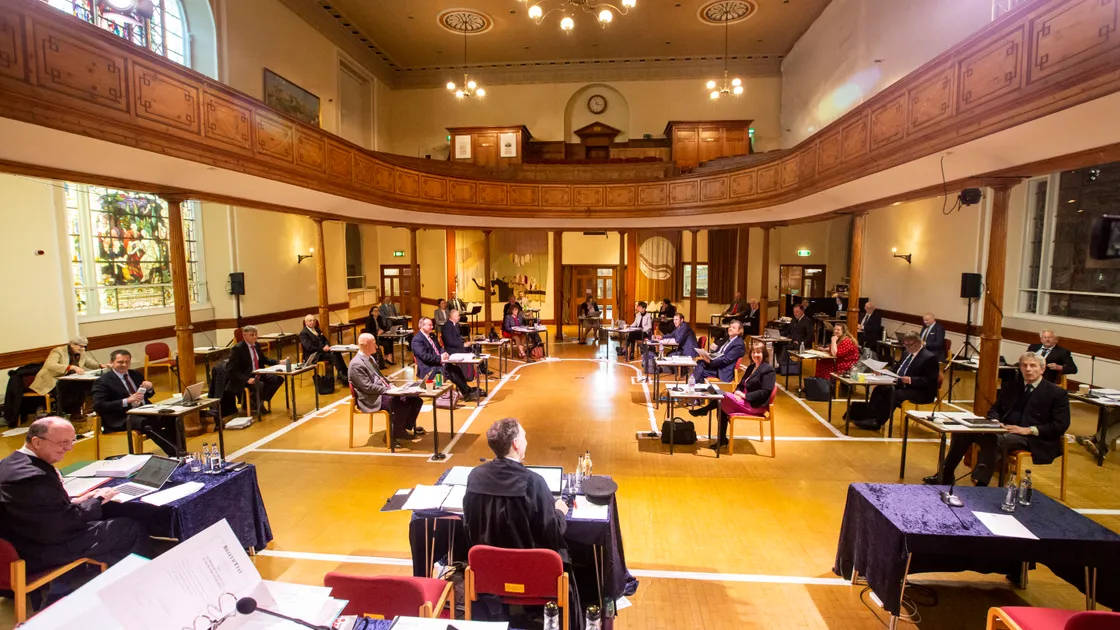
In her view the current committee system with 40 independent representatives is not working.
‘The evidence available in both the academic and good practice literatures suggests that committee systems always have problems because of a lack of clarity about power and accountability, as well as with effective decision-making and organisational agility, which is why most UK local authorities have adopted an executive cabinet and scrutiny model.’
A further recommendation is that the Scrutiny Management Committee should be given more resources so that it can hold ‘rapid reviews’ of urgent problems.
States members currently have to perform both executive and scrutiny roles, and these tend to undermine one another.
The Scrutiny Management Committee was established to try to overcome this problem, but an absence of resources has meant that it ‘lacks teeth’.




You need to be logged in to comment. If you had an account on our previous site, you can migrate your old account and comment profile to this site by visiting this page and entering the email address for your old account. We'll then send you an email with a link to follow to complete the process.