

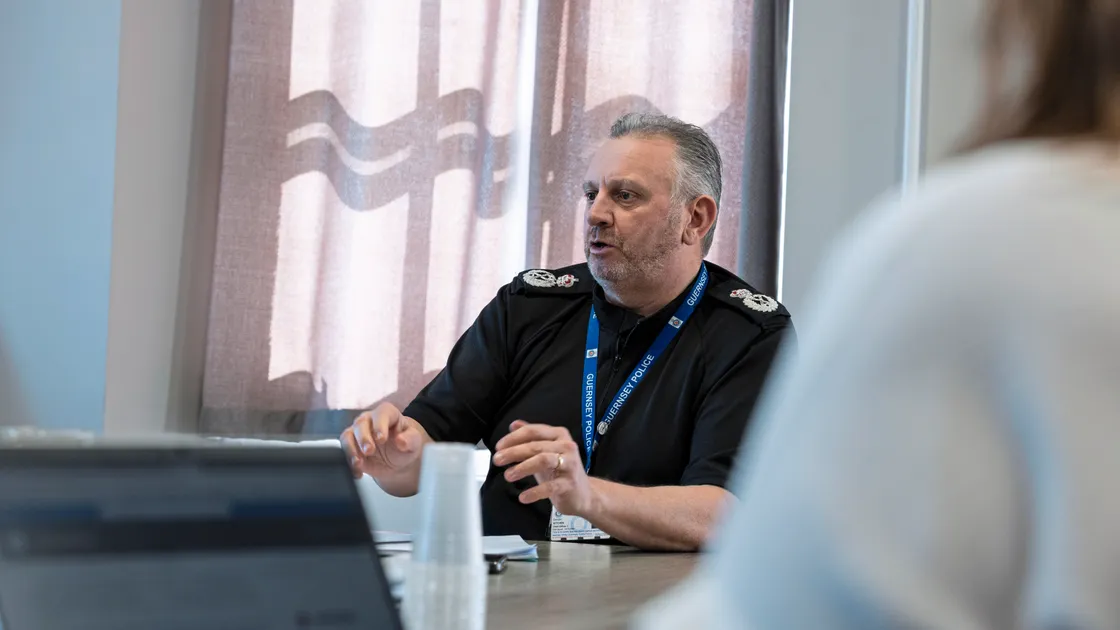
The most recent annual report from Guernsey Police showed that only one out of every five reports of crime to the police led to charges being placed.
It was a fact that some crimes could not be proven, he said.
And there were other ways of disposing of crimes out of court, such as restorative justice where victims meet the perpetrator.
‘Sometimes victims don’t want to go through the whole court process, but want to be heard,’ he said.
‘That’s equally as important as court, because sometimes that can build an intelligence picture around what’s going on, and it also can inform our work in terms of what’s happening in the community.
‘Bluntly, I’d aim to achieve 100% detection rate, but there are a number of outcomes in between absolute detection, someone going through court, and nothing happening at all.’
His recently-published strategy set out one of his goals to increase public confidence to report all incidences of violence and abuse, as well as to triage calls to the police to ensure that those that did not require an immediate response from an officer were handled by partner agencies.
‘Every report of a crime is treated seriously, that’s got to be the starting point,’ he said.
‘I would always encourage people to report crime, to report intelligence, to report concerns.’
Last year the number of reports of sexual offences, for example, increased by about 70 but he said that this did not necessarily mean that there had been 70 more sexual offences, but that people were more confident about reporting incidents.
Part of the reason for that was the implementation of a site to support victims and the introduction of the sexual assault referral centre.
‘We don’t want anyone to be the victim of a crime, and especially not crimes of such high impact, such as sexual offending,’ said Mr Kitchen.
‘So while it’s ambitious, and potentially, some would say unrealistic, you should always aim for zero crime.’
If there was a crime committed, he wanted the police to be able to identify it and for people to be confident to come forwards, he said.
But at the same time there was work going on aimed at prevention, such as school visits.
‘Education and prevention work is as crucial as looking into crimes that have already happened, because the ultimate aim has got to prevent anyone from becoming a victim of a crime.’





You need to be logged in to comment.