

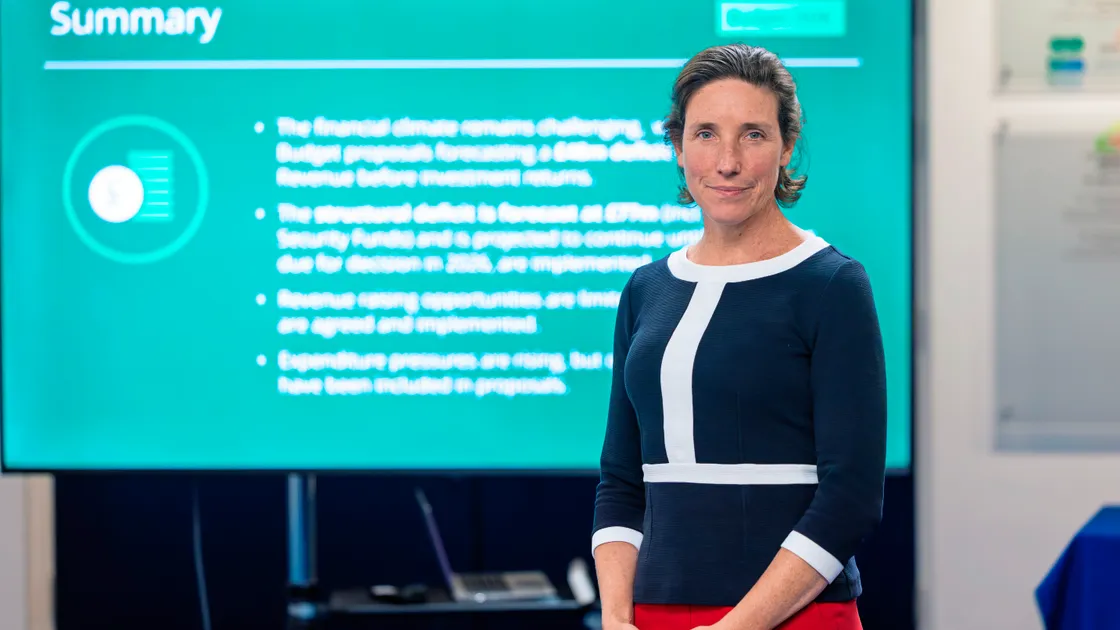
This is perhaps best described as an unspectacular budget. Why have you decided not to go further with revenue raising or spending restraint?
We didn’t have very much headroom for a start, but also the timing of the election significantly impacted committees’ abilities really to get under the bonnet, which in fairness to committees I think they are really keen to do. They’re keen to have a look at expenditure bottom-up and make sure we can implement any reforms, but that’s not something that was available to them, given the time since the general election.
On the revenue-raising side, you are proposing additional measures that would bring in about £1.2m. a year [net of increases in tax allowances] through all the predictable measures, and a new vaping tax. Are you concerned that there might be some criticism that this is a set of slightly populist measures, avoiding some of the harder revenue-raising measures?
No, absolutely not. We’re tackling that very difficult work head-on. We are bringing back to the Assembly options for tax reform in the first half of next year and that is very much front of mind. We’ve got to distinguish between long-term structural reform, which in this Budget report we absolutely underline is very necessary, and the year-to-year budgeting process. It’s necessary for us to have a Budget for 2026 and there’s no point in big, spectacular changes when we know the more fundamental review is taking place right now.
Watch the full interview with P&R president Lindsay de Sausmarez
The previous States decided to freeze the withdrawal of mortgage interest tax relief from 2023 to 2026. Why is your committee is now reversing that for 2026, which could cost a couple about £400 next year?
All taxpayers are effectively subsidising home ownership and we know that, while housing is an enormous pressure in Guernsey, the rental market is particularly badly affected at the moment. More to the point, the reason the phased withdrawal was frozen in the previous budget last year was because it was linked specifically to a proposed increase in income tax which the States did not support. So the States supported the mitigation but not the reason for it. All the original rationale around the phased withdrawal of mortgage interest relief still stands. We thought that, given the overall picture, there was no justification for keeping mortgage interest relief where it currently has been frozen for a few years.
The States is facing a growing structural deficit, and next year a growing operating deficit is forecast as well. Yet your proposals, as far as day-to-day spending is concerned, are that committees should get an inflation increase of 3.3% on this year’s budgets and another £8m. on top. Does that indicate that you have given up on spending restraint already?
Not at all. What you haven’t taken into account is that savings will be netted off against that. We have identified £4m. which is the first tranche of savings we think realistically can be delivered. That is looking at, for example, the amount of work which the States commissions out. We really want to work a little bit differently. We know that often, and I know this from personal experience, we’ve been in situations where we know the answer to something but we commission a report to tell us exactly that anyway. That cultural habit is something we want to address head-on.
We think £4m. is realistic in terms of savings. We didn’t want just to pluck an arbitrary figure out of the air. We have based that on some thought. We didn’t want just to impose arbitrary cuts on committees, which has been a tactic used in the past. This is about doing things a bit differently and making sure we are challenging from the bottom-up, and we are going to bank some of those savings. We think £4m. is realistic and achievable and that’s why we put it into this Budget, but I should stress this is the first year of a continued programme, and it will be quite structured and there will be accountability around that.
You have made a presentation to States members today. What kind of response have you had to this Budget from them?
As you have said, it’s quite an unspectacular budget. I think people appreciate the wider fiscal context and wider economic context. I think they also appreciate that there is a more fundamental review taking place about our tax system. We have stressed that we are very open to conversations and suggestions. We will wait to see what comes forward from colleagues. Generally speaking, I think there was broad acceptance of the economic climate at the moment, which is challenging.


You need to be logged in to comment.