

Inadequate financial controls and slapdash relationships with external suppliers were also major reasons for senior figures failing to intervene as the projects gradually spun out of control.
An £18m. scheme known as MyGov was meant to centralise customer services but delivered no substantial improvements, while an attempt to modernise systems at the Revenue Service at a cost of £24m. made things worse for taxpayers and staff.
An investigation into the failures, which is being led by chief executive Boley Smillie, is expected to conclude by the end of next month, and interim findings have been shared with the Policy & Resources Committee.
‘Concerns were raised along the way, but the process of how those concerns were addressed fell far short of anything that we could call effective,’ said P&R president Lindsay de Sausmarez.
‘There was a significant disparity between the reported and the actual progress of these projects, so there was a lot of window dressing in order to make people feel a bit better about it.
‘We had great financial controls on paper, but they were frequently not followed.
‘External suppliers failed to meet their deliverables and we did not have the levers to make sure they were delivering.’
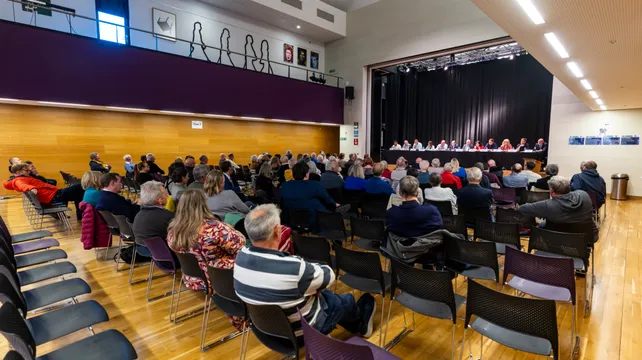
Speaking at an event hosted by Gpeg at The Duke, Deputy de Sausmarez said that Mr Smillie was doing a great job of working out what had gone wrong on various high-profile projects, and that it remained his number one priority.
She called them ‘horrifying examples of government inefficiency’ and said the weaknesses which led to them ‘had to change’.
Mr Smillie, who was also at the event, said his wish for ‘absolute transparency’ about the failures was supported by P&R from the minute he took his concerns to the senior committee last summer, and that he was under no pressure to report his findings prematurely.
Some deputies want those responsible to be publicly named but others are concerned that doing so would discourage staff from raising concerns when problems arise in the future.
‘We have committed that by April of this year all of the findings associated with this work will be revealed in some way and, along with that, the actions we will take as a consequence,’ said Mr Smillie.
‘You are not going to hear from me right now about what accountability looks like, but what I can guarantee 100% is that there has to be an answer to that question next month.’
P&R recently announced a series of changes led by Mr Smillie which were in part prompted by interim findings of the investigation into botched IT projects.
Every consultancy contract issued by the States now has to be signed off by Mr Smillie.
He has paused a project to expand digital services set up to replace MyGov.
And he is ripping up reforms to the senior leadership team made in 2018 and reintroducing the idea that each principal States committee should have its own lead official, previously known as chief officer or chief secretary.


You need to be logged in to comment.