

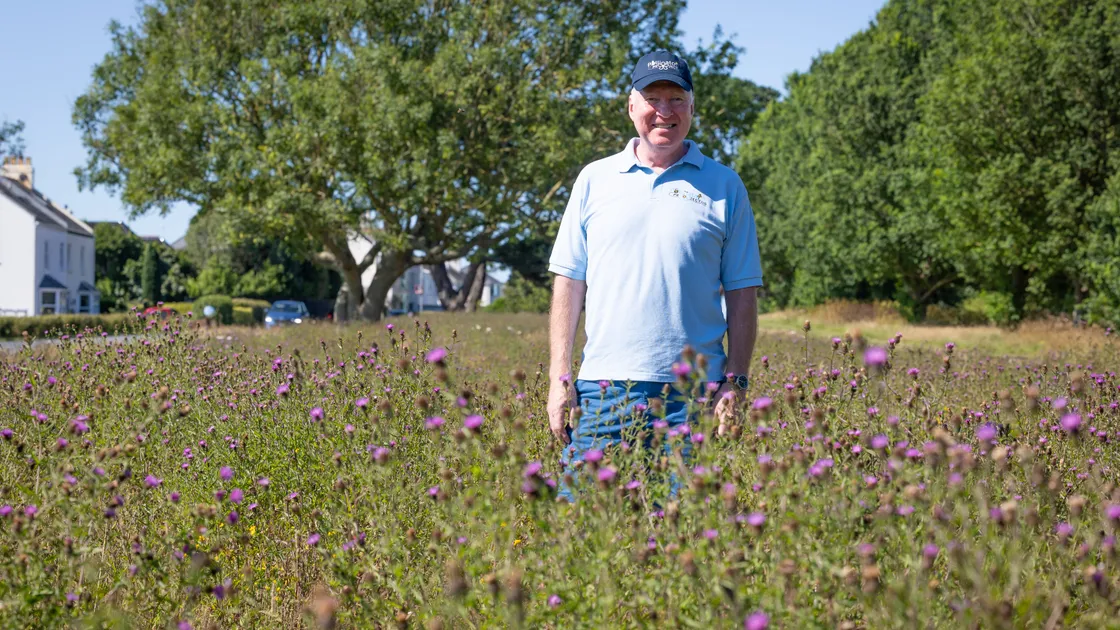
The Pollinator Project asked the public what sort of future they would like to see for the field, which stands alongside Fort Road.
In 2017, two areas of about 1.44 acres were sown with a mix of annual and perennial native wildflower seeds. In the first year there was a lovely show of colour as the annuals bloomed, followed in the second year by perennials, which form the basis of the meadows today. But some people feel that the area often looks scruffy.
The consultation followed growing public interest in how semi-wild spaces can be better managed to balance nature, access and, at the same time, look good. The Pollinator Project invited comments on four landscape options.
There were 95 questionnaires completed, along with 86 written comments made. Three-quarters of all respondents supported continuing to manage the native wildflower meadow.
The next most popular option, backed by 14%, was treating the area as mown grass. More than half of respondents favoured introducing native hedging to the scrub area, while nearly half supported the creation of an avenue of native cherry trees to improve structure and seasonal interest.
The Pollinator Project chairman Gordon Steele said the strength of public support had been encouraging.
‘Islanders clearly recognise the value of spaces that support wildlife as well as people,’ he said.
‘We were especially pleased at how constructive the suggestions were and that will help us shape the site for the long term. Of course this isn’t a one-off exercise; consult and forget.
‘We are always going to be open to feedback in person, or online.’
He said the Pollinator Project was not just about one field.
‘It’s about showing how small changes in land management can deliver real gains for nature across the island and still look good,’ he said. ‘We’ve surveyed the soil, the plants and animals in the area and will monitor changes each year.
‘Fort Field can become a model that any landowner can follow.’
A three-year service level agreement is due to begin in January 2026.
The initiative aims to demonstrate how simple, affordable habitat management can boost biodiversity across Guernsey and inspire broader action.


You need to be logged in to comment.