

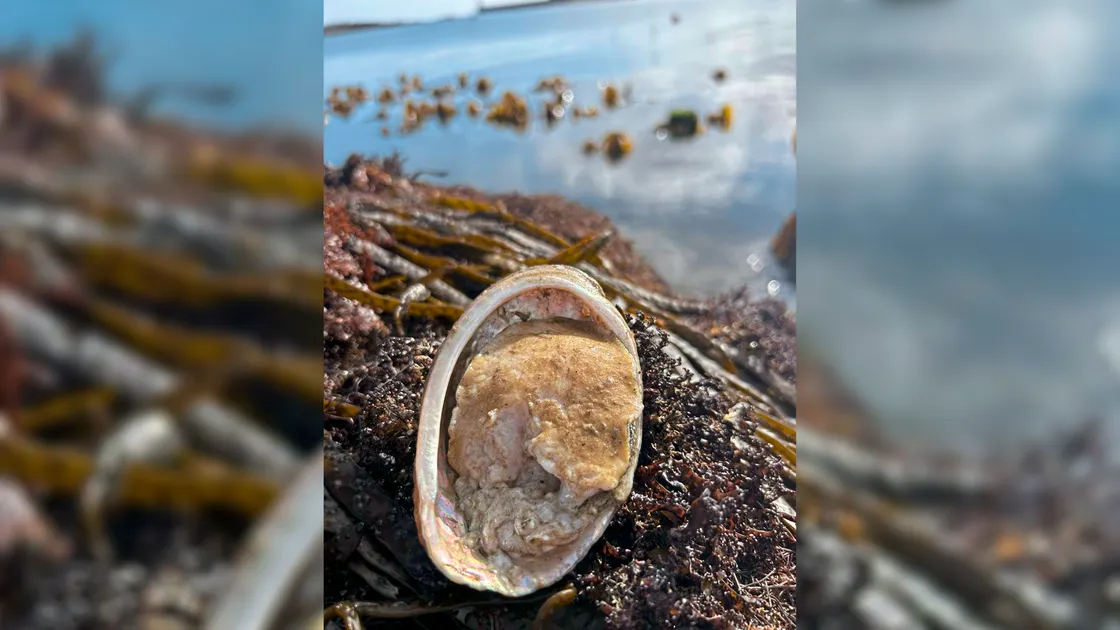
But the scale of the damage is unlikely to be understood until next year’s ormer tides.
A surge in octopus numbers has already been blamed for a decline in crab and lobster catches, but it appears the cephalopods are now turning their attention to Guernsey’s favourite shellfish.
Bernie Le Gallais, whose company A1 Crab Supplies sells shellfish to local restaurants, said that he and the fishermen who supply him had seen the impact that octopuses were having.
Mr Le Gallais said that during the last spring low tide he had seen the evidence first-hand.
‘It was a spring tide and I had a mooch down to low water and you could see dead ormer shells everywhere, you don’t often see that,’ he said.
‘I found one half eaten and if you look you can see the octopus’s beak mark. Local fisherman have been regularly telling me that they have found empty ormer shells and scallop shells in their pots that octopus have taken back there to eat.’
Jason Hamon, owner of Surf & Turf on Castle Pier, said he heard similar stories, but they would not know the real impact on ormer numbers until January, when ormering season started.
‘We could be looking at a bad season but we won’t know until people start going out looking for them,’ he said.
Octopus, according to some experts, have a particular liking for ormer flesh, and in California and Australia they have been blamed for low numbers of abalone – ormers are a type of abalone.
The octopus will either dislodge the ormer from rocks with its strong arms or drill through the shell using its radula – a ribbon of hard, rough teeth on its tongue – before injecting a paralysing toxin from its saliva.
The eight-limbed predators have already been blamed for a decline in the catches of crabs and lobsters.
Mr Hamon said it was not just the amount of crab being brought in, but the quality that was being affected.
‘They can be a good size, but with less meat on them,’ he said. ‘It appears they are spending a lot of time hiding and not feeding.’
He has been trying to sell locally-caught octopus but said that demand for it had declined over the winter.
‘It’s really a summer thing so sales have slowed down,’ he said. ‘There is demand in other markets but the problem is getting it there. In Portugal, where it’s really popular, they have banned the catching of octopus for a month because numbers are so low. Some of the companies in Jersey are shipping them but the logistics mean we can’t.’
Mr Le Gallais agreed that local fishermen were trying to catch and find a market for octopus, but it was proving difficult.
‘We don’t have the facilities to freeze and ship them. Some of the local fishermen were selling them in Jersey but the price has dropped to the point where they won’t even take them.’
He added that crab numbers had been on the decline for years, but they have really dropped off a cliff since that amount of octopuses surged in the last two years.
‘I spoke to a local fisherman and this week in 70 pots he got just 3 spider crabs and 3 lobsters - it’s really hard to make a living but the guys are stuck as they can’t sell their boats or pots locally. Some of them have got freezers full of octopus.’
‘One of things putting people of eating them locally is not knowing how to prepare them. We are doing our best to help by selling them flatpacked and ready to go.’
He believed Guernsey would only see a decline in octopus numbers if there was a sharp cold winter or if they ate so much of the food in local waters they starved.
‘With global warming sea temperatures are so high we will never get that cold snap,’ he said.’Ten years ago we didn’t see tuna and now they are here regularly along with Mediterranean fish like the common comber that we are now seeing all the time. There’s no doubt we were seeing the effects of climate change in our local waters.’
The first ormering tide of the year is 3 January.





You need to be logged in to comment.