

The Nature Commission is taking over the surveying and flagging of the nests of black-backed Meadow Ants.
Julie Davis from La Societe Guernesiaise volunteered to start recording the ant nests in 2017, to help understand more about them and protect them.
‘Monitoring the ant nests over several years was so interesting – social insects are amazing,’ she said.
‘It was a bonus that they’re found on the cliffs which are beautiful, although some of the climbs are pretty steep.’
The only surviving populations in the British Isles are found in the Channel Islands, specifically on the south-coast cliffs of Guernsey, and the cliffs of Jersey.
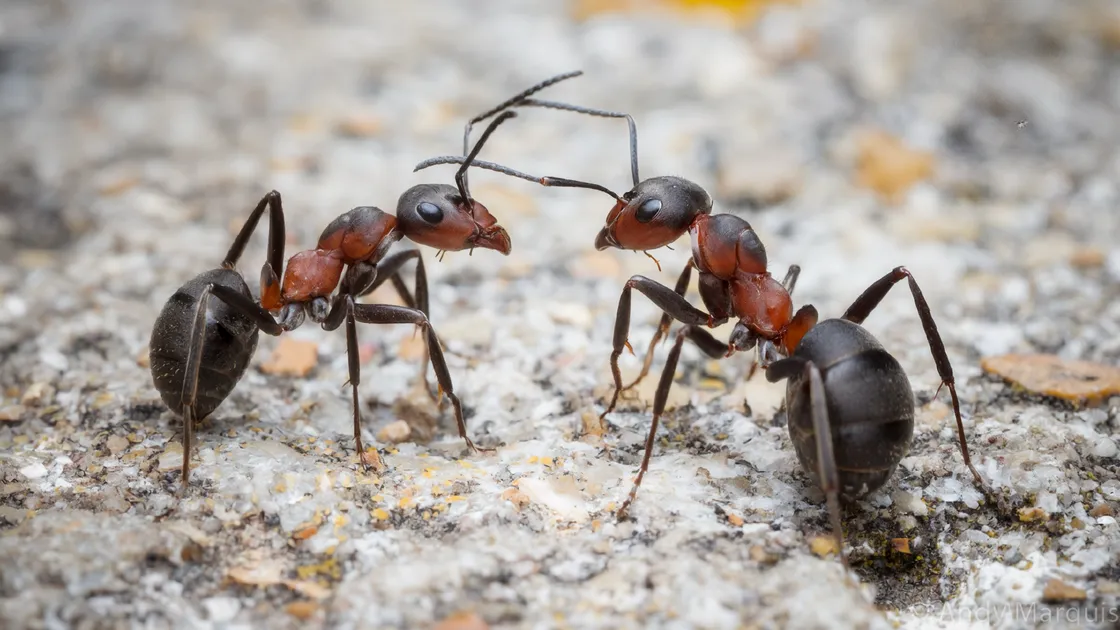
The ants are large and matt black with a reddish-brown middle section. They nest in big mounds which are covered in coarse material such as twigs.
The ants, a species of wood ant, need dry, warm, open areas to nest in, which means they sometimes nest very close to the cliff paths.
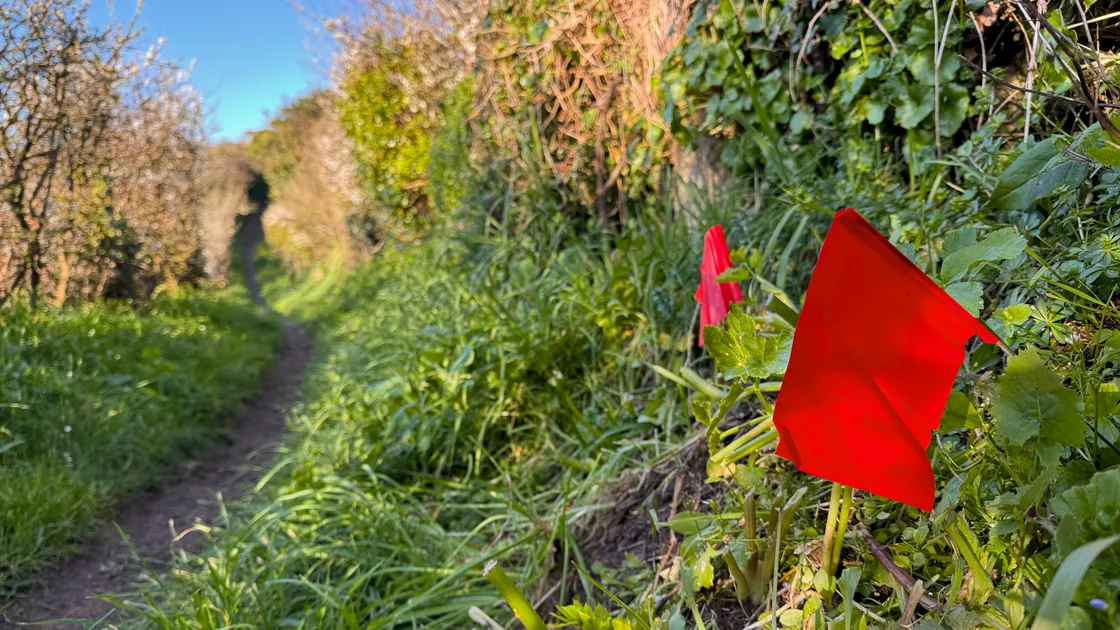
Many islanders who walk along the paths will recognise the red flags used to mark their nests.
‘These ants are a key species in Guernsey and are a sign of a healthy habitat with good diversity of plants and animals present,’ said Nature Commission ecologist Charlotte Burgoine.
‘They are threatened by loss of suitable nesting habitat due to overgrowth of species such as brambles and bracken. The spread of invasive non-native species such as sour fig can smother ant nests, and strimming the cliff paths can inadvertently damage the nests.’
Each nest is checked twice a year, with notes taken on its condition and the activity levels, and measurements taken, to monitor population numbers and changes over time.
Any nests which are vulnerable, for example, to the strimming of the cliff paths, are marked with the red flags so the team can avoid them.
The Nature Commission will be starting this year’s survey in the next couple of weeks to flag any vulnerable nests before the cliff path cutting starts.
‘There has been a 42% decline in the number of nests since the 1990s, so this combination of monitoring and flagging helps to protect them.
‘Last year 64 nests were found, which was a 15% reduction on the number of nests recorded in 2019,’ said Miss Burgoine.
‘However, it is easy to overlook nests from year to year. Several new nests were also found last year, some of which were a decent size, and hopefully those nests will thrive over the coming years.’




You need to be logged in to comment.