

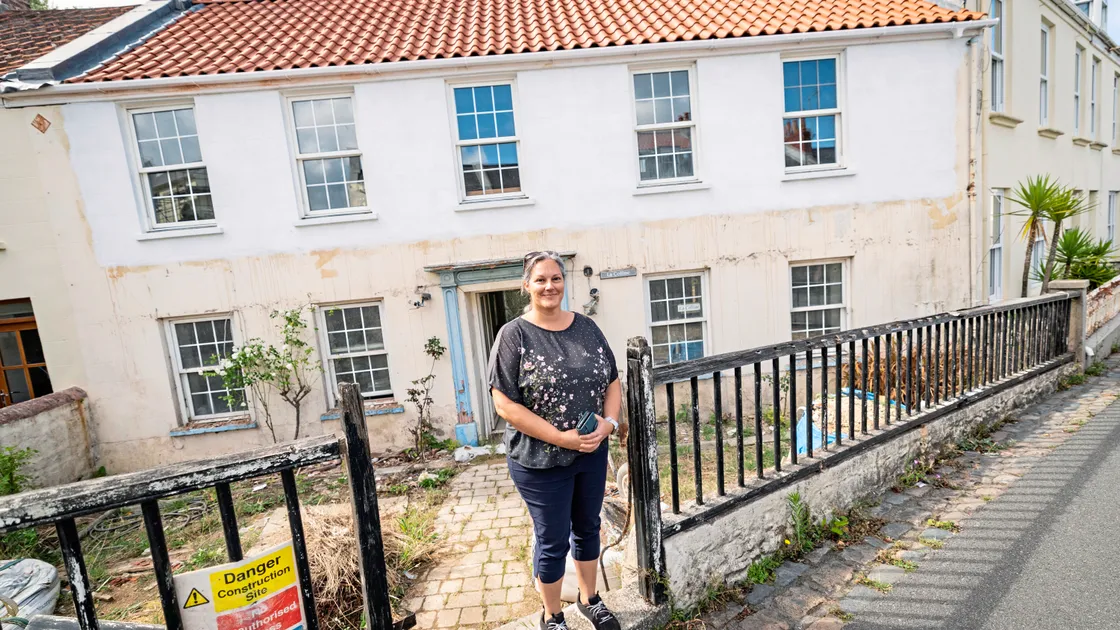
Debbie Sebire bought the listed La Colline on Les Amballes in St Peter Port in 2018, with a dream of updating it.
‘The house has damp rot, wet rot, brick rot, deathwatch beetle and woodworm, is structurally unsound, and not of any historical significance,’ she said.
‘Most of the house is just not worth trying to save.’
Built around 1750, the house was originally a one-storey, thatched granite cottage, with an upper floor built of brick added in the 1800s. It was listed in the 1990s when a register of properties was created across the island.
‘It was listed from the outside without anyone going in,’ she said.
‘Heritage had no idea of what was inside or whether it was worth saving.’
A spokesman for the Development & Planning Authority said permission was granted for internal alterations in 2024.
‘Officers provided substantial assistance and guidance to the applicants throughout the successive applications to proportionately preserve the special interest of the protected heritage asset,’ he said.
‘None of the submitted planning applications were refused.’
He added that applicants often needed to seek assistance from suitable professional experts when dealing with protected buildings.
‘This helps to develop an understanding of the special interest of the building and ways to mitigate harm so far as possible.
‘The resources of the Planning Service are insufficient to enable this service to be provided at taxpayers’ expense,’ he said.
Ms Sebire contacted the Guernsey Press after reading about the battle between the owners of Les Vardes Farm and the DPA.
She wanted to warn others about the problems faced.
Although she has previous experience of restoring protected buildings, Ms Sebire said she could not understand why the DPA wanted to save so many hidden and unoriginal features.
‘We have practically rebuilt the house, but it will still be listed,’ she said.
She understood wanting to keep the character of the area and protecting building facades, but nothing behind the front wall of her house was worth saving.
‘Don’t slam the people trying to renovate rather than the people who let these houses get into such a state. This is not the first listed property I have been involved in, but it’s probably the last,’ she said.
Planners refused to visit listed house, says owner
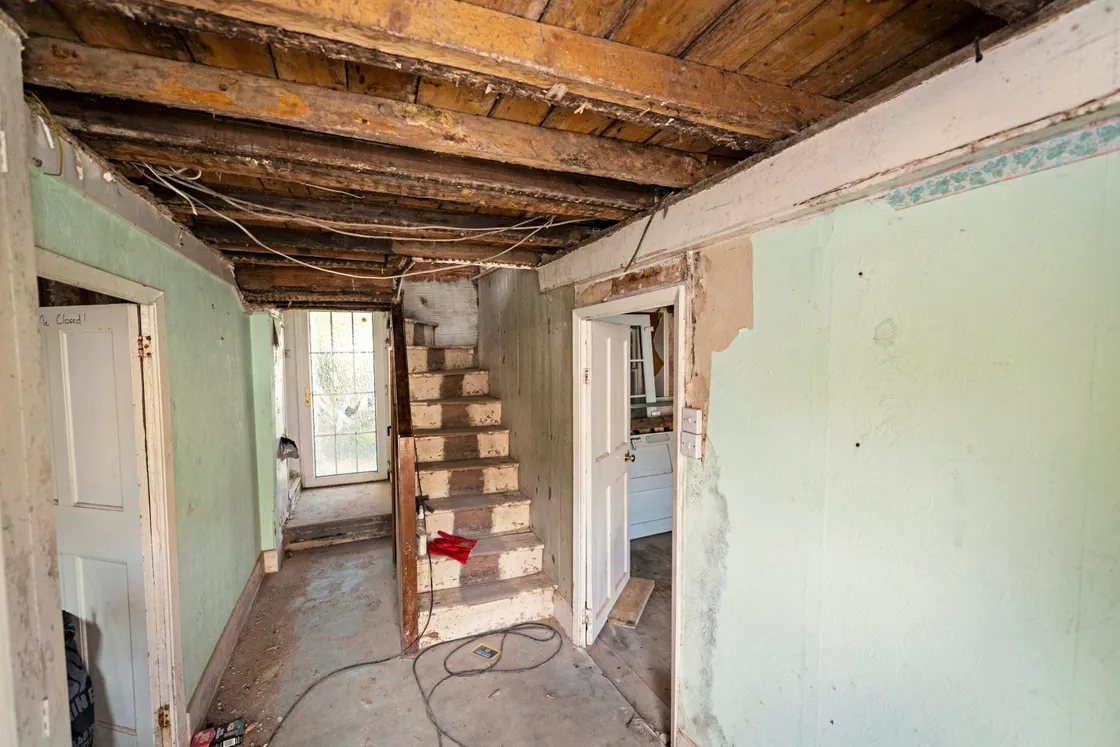
Planners allegedly refused to visit a listed building to give guidance, as a new homeowner grappled with discovering a long list of problems.
Debbie Sebire started working on plans for the Les Amballes building just before the pandemic, knowing she was taking on a challenging property. But she said the process has been so complex it was hard to know what had cost more in time and money – Covid or heritage.
‘We knew there would be damp but weren’t prepared for what we found,’ she said.
‘We spoke to planners from the start and tried to get them to come out and look at the house, but they always refused and asked for us to send photos instead. We started stripping back and everything was rotten. The roof timbers had completely gone and it all had to come out – it took a year for them to accept that.’
She then informed the Development & Planning Authority of engineers' advice to pull down the front wall after the roof timbers were removed and it began leaning on the scaffold.
‘But they still wouldn’t come out, and the delays meant the rain got in the house and made everything worse,’ she said.
‘Heritage [at the DPA] insisted we got an architectural agent to help. He's been great but he’s really just sending in the photos. When we found we had brick rot they made us replace it with new brick, even though you can’t see it from the outside and it wasn’t part of the original cottage. That means it’s not well insulated and wouldn’t pass modern building standards.’
A spokesman for the DPA said it was unable to take on the role of consultant or designer for individual applicants as a substitute for such professional expertise being commissioned by owners directly. The authority was satisfied that its resources were deployed effectively.
‘Applicants are helped by our conservation and design team to arrive through the planning application process at successful outcomes, which proportionately balance the legal requirements to preserve the special interest of protected buildings with the needs and desires of property owners to undertake sometimes substantial works to those buildings, as was the case here,’ said the spokesman.
Outgoing DPA president Yvonne Burford, whose successor will be elected tomorrow, said she was satisfied with the way heritage planning worked.
‘Following a comprehensive and in-depth refresher into the work of the Planning Service, including the protected buildings aspect, whereby all members spent time with individual sections and were able to ask many questions, and mindful of budgetary constraints, I see no need at the present time to alter the established processes in that specific area,’ said Deputy Burford.
‘However, as with all parts of the service, this will be kept under review, and I always welcome and encourage feedback from islanders.’
Mrs Sebire said she struggled to understand some of decisions taken by the DPA.
‘They are insisting we save as much of the woodwork as possible but for what purpose?’ she said.
‘The boards on the ground floor are obviously much newer than the first floor and not original but they have all got to come out, be numbered, treated and replaced. The stuff they want us to retain is in shocking condition.’
The windows date back only to the 1980s. Mrs Sebire would like to replace them with UPVC.
‘But we are scared to take them out just in case they make us replace them with single-glazed wood,’ she said.
This is not the first listed house Mrs Sebire has worked on, but previous experiences had been very different.
‘I’d like heritage planners to be doing what they were doing 15 years ago and coming out to look at properties and work with developers,’ she said.
‘I’ve had moments of regret for buying it and the delays have cost a lot of money. Heritage constantly delay the process, requesting photos and not replying, and then you have builders standing around waiting. You can wait months for a response. We even had to get permission for plants to put in a planter – we still haven’t had a response to that.’
She believed that dealing with the authorities put off potential investors from developing listed properties.
‘This house was empty for eight years before we bought it and we have now had it seven years,’ she said.
‘If it wasn’t listed, Planning wouldn’t have been involved at all. It would have just been building regulations and could have been back on the market in nine months.’

You need to be logged in to comment.