

It said they must be stopped.
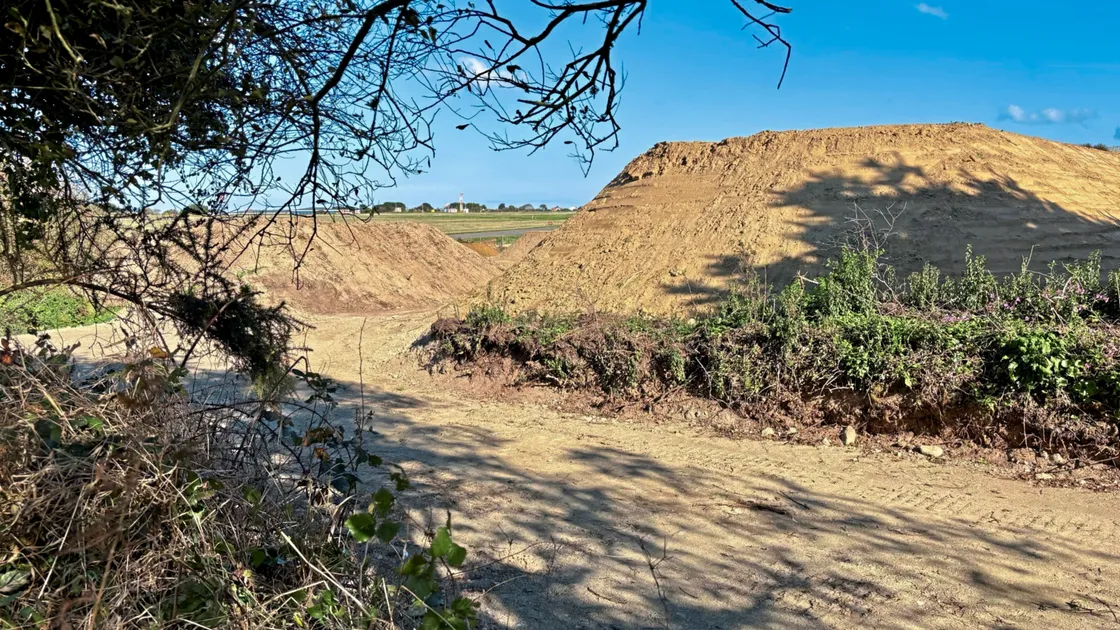
Last week the Guernsey Press highlighted how an agricultural field near the airport had all the vegetation, including a stand of willow trees, removed just before an application for temporary accommodation for workers was submitted.
Planning had written to the landowner, saying it needed to apply for some of the work, but there were no rules against removing unprotected trees and vegetation, as this does not constitute development.
National Trust President Mike Brown said this type of clearance work was not an isolated event but was being seen increasingly frequently across the island.
‘A growing number of landowners and developers are quietly clearing ecologically sensitive land before applying for planning permission,’ he said.
‘By doing so, they remove the very evidence that should trigger environmental scrutiny and public debate.
‘It’s a quiet, cynical tactic – and it’s working.
'But developers, we see you.’
Mr Brown said that without clear legislation, pre-application clearance had become an easy and abhorrent loophole for developers.
‘Destroy the habitat before you apply, and there’s nothing left for the planners to measure, assess, or protect.’
Mr Brown acknowledged that Guernsey faced a real housing crisis.
‘Too many families are priced out, too many singular large and unaffordable properties are built on plots that could accommodate more, smaller and affordable units,’ he said.
‘Young people are leaving, and the pressure to build is intense. But that does not mean we must accept environmental shortcuts or the quiet erasure of our natural heritage before the community has had its say.’
The National Trust is calling for a ban on pre-application clearance of biodiversity-rich land and penalties for developers who destroy habitats before environmental assessments can take place.
They would also like to see a public register of pre-cleared sites, to ensure transparency and accountability, as well as ‘biodiversity net gain’ defined and mandated in law, with monitoring and enforcement built in.
‘Guernsey’s natural heritage is part of its identity,’ said Mr Brown.
‘Every field, hedgerow and wild corner contributes to the island’s ecological and cultural richness. Once lost, it cannot be recreated. We need homes, but not at any cost. Not if the price is the death of nature and the silence of birdsong.’
‘Developments should leave nature better off, not worse’
New developments should leave nature better off than it was before, not worse, the National Trust has said.
The idea is at the heart of the idea of biodiversity net gain – something which president Mike Brown said that Guernsey needs.
In many parts of the UK, BNG is now a legal requirement, ensuring at least a 10% biodiversity improvement that is monitored for decades.
Developers are required to measure the ecological value of a site before building begins and ensure that once construction is complete, biodiversity has been measurably improved. This can mean planting more trees than were removed, restoring wetlands, or creating wildlife corridors.
‘But in Guernsey, biodiversity net gain has no legal definition or enforceable protection,’ said Mr Brown.
‘While some planning permissions include conditions to plant trees or create ponds, there is no legal safeguard to prevent those features being removed later. Once the permission is granted, a pond can be filled in, or a hedge cut down – and there is no consequence.’
The trust believes that pre-emptive clearance undermined the spirit of the planning system and that environmental impact assessments could not account for what has already been destroyed.
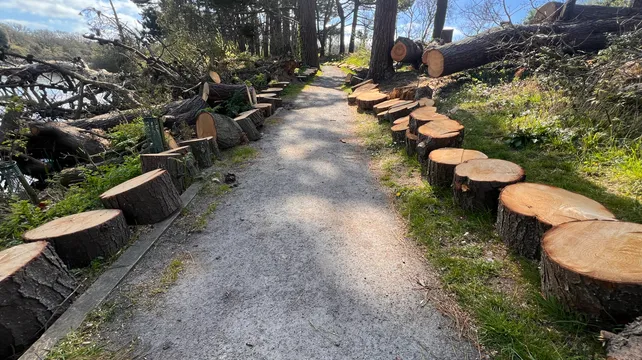
He gave an example of a St Peter Port woodland off Les Amballes that was cleared ahead of a 2021 housing application. An application for three houses was later approved.
‘Public objections lose force when the trees have already gone,’ he said.
‘Wildlife has no voice and in many cases no time to flee and rehabilitate. Those untidy patches are often biodiversity hotspots, nesting grounds, foraging areas and ecological corridors for pollinators, birds and small mammals.’
Outgoing Development & Planning Authority president Yvonne Burford said earlier in the summer that she had hoped the DPA would take steps to further protect biodiversity, while not creating unnecessary barriers to development.
Mr Brown said this discussion could not come a moment too soon.
‘Similar examples continue to emerge across the island,’ he said.
‘This is not an argument against building homes.
‘It’s a call for honesty and accountability – from developers, planners and all of us as buyers and islanders.’
‘Because once the land is bare, it’s easy to say it was never worth saving.
‘Which is exactly why developers are pulling a fast one and ripping up nature, unencumbered.
‘This has to stop. It needs to be made illegal and recognised as the crime against Guernsey’s nature that it truly is.’
You need to be logged in to comment.