

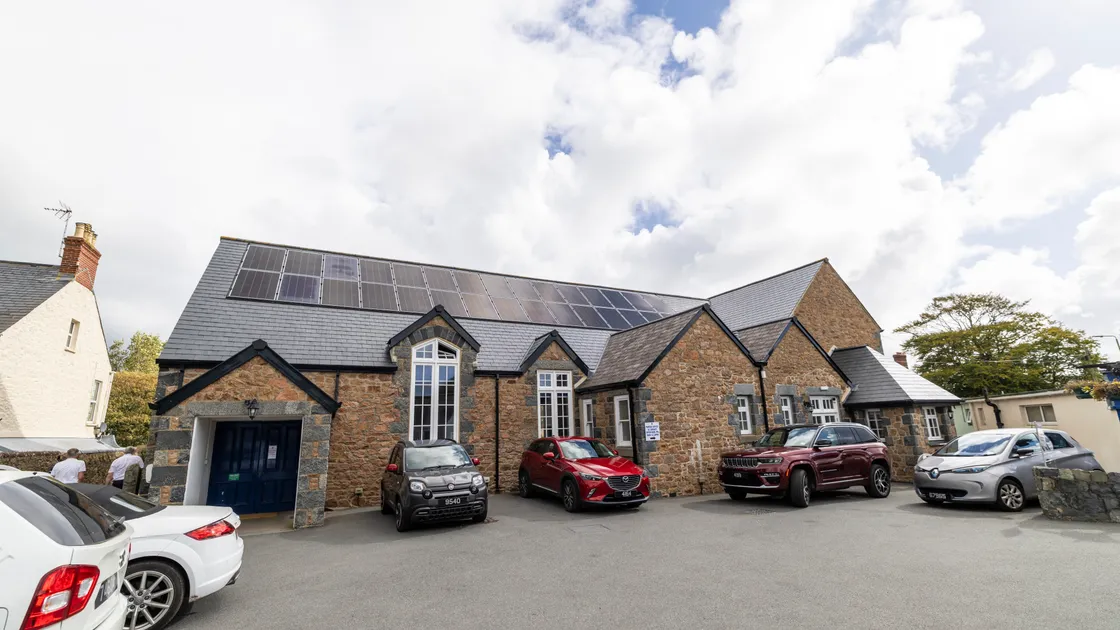
Two years ago the States agreed that the island should have 5MW of solar energy capacity installed and operational by 2025. It is understood that the current figure is less than 4MW.
Environment & Infrastructure president Adrian Gabriel has ruled out using taxpayers’ money to accelerate the take-up of solar power.
‘We’ve been leading on it and we’ve been speaking with Guernsey Electricity, but it’s down to investment at the end of the day,’ said Deputy Gabriel.
‘I said we would use our resources proportionately and where most needed. I don’t believe that using government resources on solar photovoltaic subsidies or anything like that is appropriate.’
The electricity strategy approved by the States in 2023 also included a target of 10MW of solar energy capacity by 2028.
Guernsey Electricity’s most recent annual report recorded a 20% year-on-year increase in community solar PV generation, but also highlighted that more rapid development of infrastructure would be required to meet the targets in the States’ electricity strategy.
Managing director Alan Bates said the island was likely to be about one-fifth short of the 2025 target, after Deputy Neil Inder claimed in the States that it would be missed substantially.
‘Our data suggests there is nearly 4MW currently installed in Guernsey of the 5MW solar PV 2025 target outlined in the States’ electricity strategy, including about 600kW of community solar operated by Guernsey Electricity which feeds renewable electricity into the grid for the benefit of all customers,’ said Mr Bates.
‘We continue to engage with the government and wider energy industry on progress towards the next targets set out in the electricity strategy, while recognising that our role is to support rather than lead market development.
‘To facilitate progress, we are aware that there may be changes needed to existing market arrangements, such as the merit order, to enable larger scale developments to become part of the local renewable generation portfolio.’
The merit order is a direction to Guernsey Electricity which effectively requires the company to rank energy sources by price alone and always dispatch the cheapest into the network.
The electricity strategy included a commitment to review the merit order as quickly as possible, with a view to shifting the priority to on-island renewable generation, but this has not yet happened.
Mr Bates said he was pleased to see continuing ‘steady organic growth’ in behind-the-meter renewables, which is where generation is connected directly into a customer’s electrical network, typically situated on the customer’s premises.
‘However, as this growth of local renewable generation continues, we need to be mindful of the impact this can have on the stability of the wider electricity grid as it reaches a more material scale,’ he said.
‘As local renewable generation grows, we remain focused on providing reliable and affordable electricity to all our customers and therefore we are aware of the need to manage appropriately any additional costs introduced to the market by these targets.’
Guernsey Electricity’s climate change statement includes a target of installing up to 20MW of community solar PV of 2050 to contribute to the electricity strategy target of 50MW over the same period.
The company will publish its next annual report in the middle of next month.





You need to be logged in to comment.