

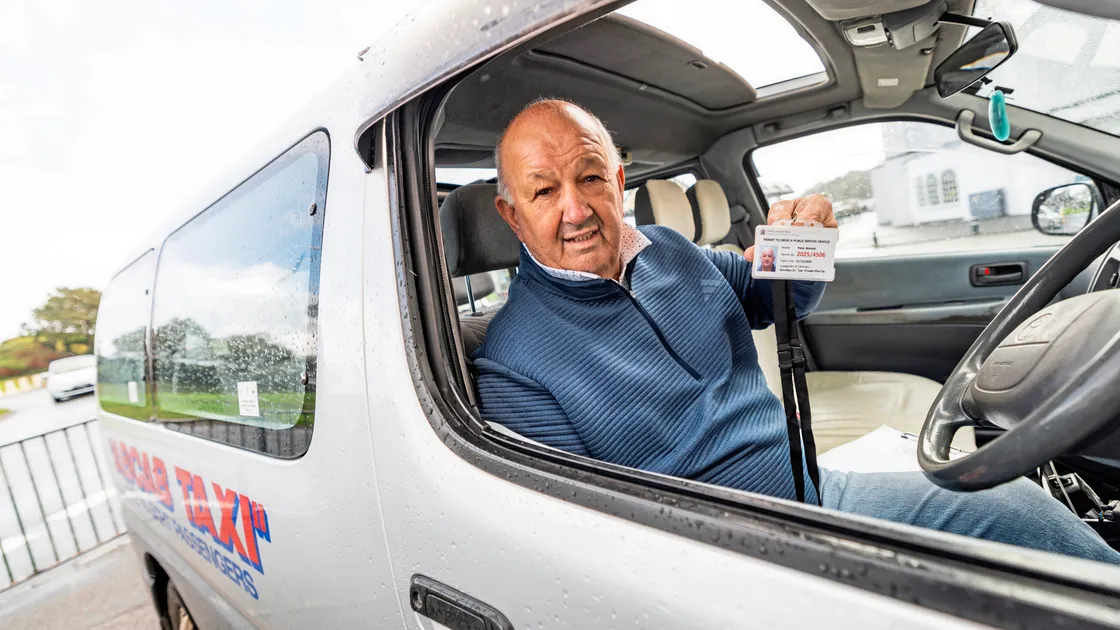
Laura Oxburgh, head of on-island travel and transport implementation at the States, said that feedback had been received that it was often hard to identify vehicles and drivers when raising concerns or complaints, but also when meeting drivers at locations such as the airport.
‘Public service vehicles are legally required to display their taxi licence plate, but the number can often be hard for people to capture as the vehicle drives away,’ she said. ‘Discussions have therefore taken place with the Guernsey Taxi Drivers Association to find a way to make it easier for individuals to identify their taxi driver.’
She said that lanyards and ID cards were agreed to be the best way forward.
‘These can be worn by drivers whether inside or outside of their vehicles or displayed in a prominent place in the vehicle if the driver does not feel comfortable wearing the lanyard when driving,’ she said.
‘This will be implemented formally from January 2026 and encouraged from now, being assessed over time before consideration is given to alternative or extra options.’
GTDA president Peter Blondel said the association was fully behind the initiative.
‘We, as the GTDA, were in discussion with the DVL earlier this year and suggested the introduction of lanyards,’ he said. ‘This is so drivers are more identifiable and professional when meeting clients at locations such as the airport.’
DVL officials have written to taxi drivers a number of times this year to remind them not to charge fixed fees without the prior agreement of the customer.
In one letter, seen by the Guernsey Press, a local transport official said that drivers had been informed of this problem ‘many times previously’.
‘Concerns are being raised with DVL that the drivers that are choosing to act illegally are tarnishing all taxi drivers with the same brush because customers are presuming that all taxis are ripping customers off,’ he wrote.
Traffic & Highway Services has confirmed the rules that all journeys from a rank or when a taxi is hailed, including through the Guernsey Taxi App, must be calculated on the meter, and that ad hoc bookings for short journeys should be treated the same unless the customer requests otherwise.
Fixed fares should only be charged on specific advanced notice bookings or specialist jobs such as airport transfers.
Miss Oxburgh confirmed that one driver had this year been suspended for overcharging.
‘It is set out in legislation that taxi tariffs must be on display within vehicles, which enables customers to have the opportunity to check the rates being charged against it,’ she said. ‘A suspension for overcharging was issued a few months ago, and we are currently investigating some reported incidents of this.’



You need to be logged in to comment.