

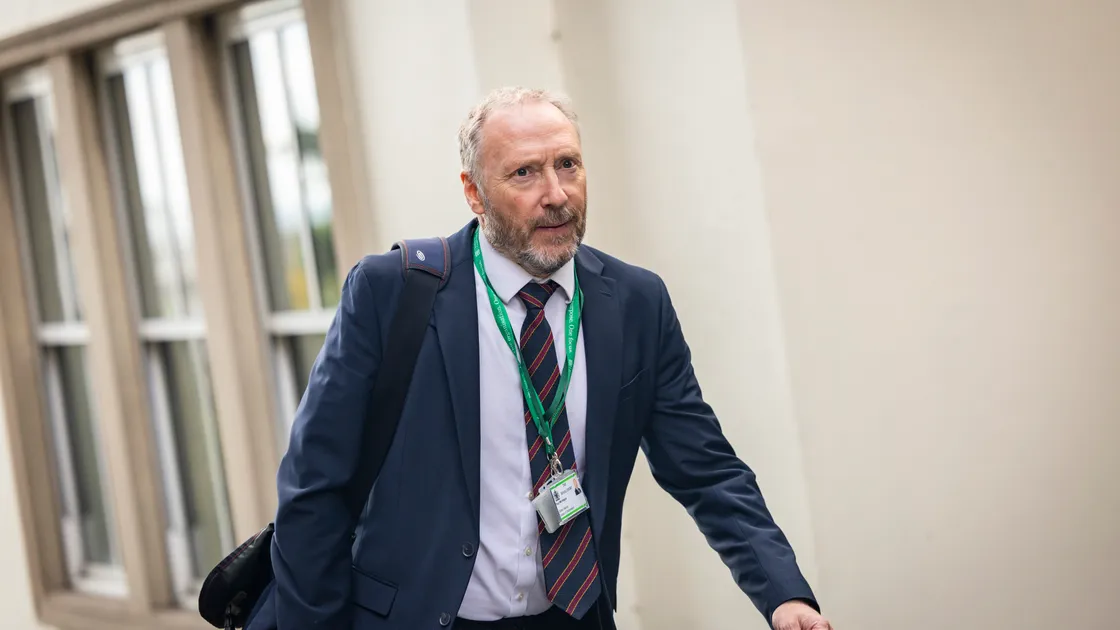
Deputy Montague joined political representatives from the UK, Irish, Welsh, Scottish, Northern Irish, Jersey and Isle of Man governments for an hour-long discussion on how best to help and support young children with additional needs.
The Welsh government, which hosted the event, also gave a presentation on speech, language and communication in early years.
Deputy Montague said he found his first experience of a British-Irish Council meeting beneficial and useful to hear about how other jurisdictions were dealing with common issues within early years education.
‘As a politician on a small island, it’s so good to be able to talk to other people, and I found it quite interesting,’ he said.
He said a number of representatives emphasised the importance of financial investment into education for very young children, and how this could save money further down the line.
‘It’s always awkward talking about saving money when you’re dealing with young people because fundamentally you want them to thrive and have satisfying lives, but I’ve seen through my own experience in education that when we don’t address youngsters’ learning needs and difficulties early enough, they become harder and harder to solve later on.
‘It’s about early diagnosis, and having professionals able to do that kind of diagnosis.’
He added he was in the process of having meetings with States Early Years head Ruth Sharp about current screening practices.
‘When we’re young, our brains are able to respond to different kinds of teaching, so that’s why early diagnosis is really important.’
On screen time, Deputy Montague said, while there seemed to be a focus on what secondary schools could do to solve problems arising from excessive mobile phone use, the wider community had a role to play, and that the early years were especially important.
‘If we have youngsters who are brought up facing screens, and they’re not even interacting with them, it really is damaging, and their brains are attuned to that,’ he said.
‘It’s about getting people to speak directly with young people, being physically there with them so they can see your face and hands.’
He found a document, produced by the Welsh government, listing 10 tips for parents on how to communicate with their children to be particularly useful.
Previously a secondary school teacher, Deputy Montague said he was less aware of what was being done in early years education, but recognised, as all local teachers did, that important things happened early on.
As a result, he had found the BIC conversation ‘fascinating’.
‘There’s a strong desire among all the Education Committee to really start looking at early years,’ he said.
‘It’s a long-term thing and it’ll take a while before you see the benefits, but if you get the modest investment out there it’s absolutely the right thing to do, especially when you’ve got youngsters coming into secondary school with incredibly low reading ages and really disrupted learning.
‘The Early Years team is a reasonably small team, but they’re doing a great job with both us and Health & Social Care, and we as a committee are really keen to support them and see if we can make some progress in that area.’

You need to be logged in to comment.