

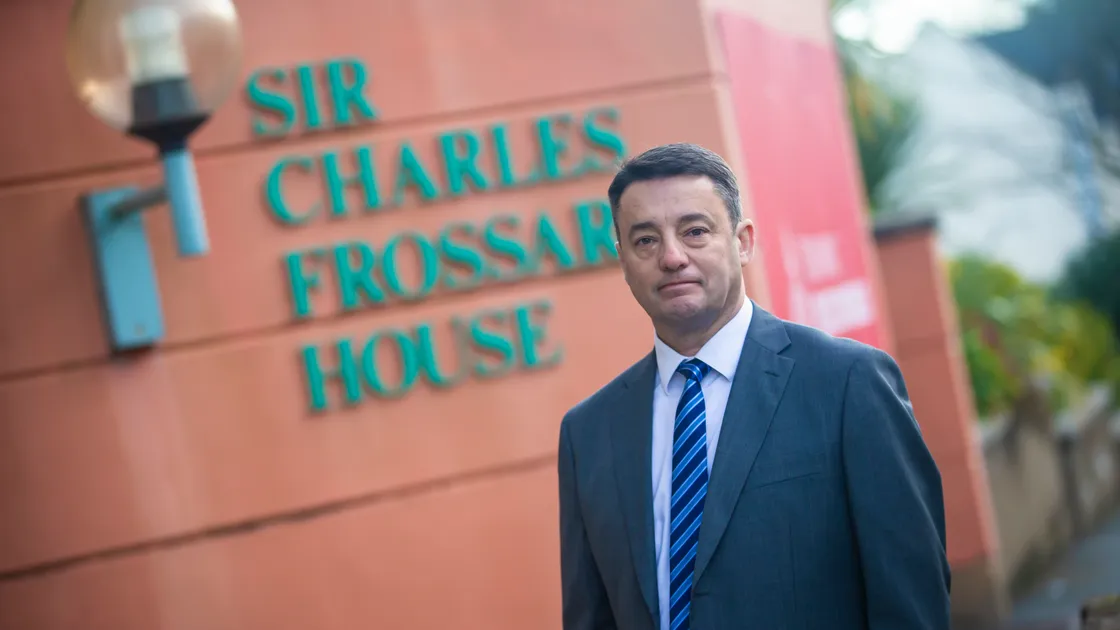
Policy & Resources has pledged to uncover what went wrong with a new £24m. IT system at the Revenue Service and an £18m. scheme known as MyGov which was meant to centralise customer services.
States chief executive Boley Smillie, who is leading an investigation into the failures, told the Guernsey Press he could not be certain of finding no wrongdoing or misconduct in the way the MyGov project in particular was handled.
Watch: Matt Fallaize spoke to States chief executive Boley Smillie
‘I have seen no evidence to support that, but at this stage it would be foolish to rule anything out,’ he said.
‘It is that stark – we have spent £18m. on that project and from my perspective there is literally nothing to show from it.
‘There are a lot of people who were subjected to reorganisation and potentially redundancy to be replaced by systems and processes that have never existed. We have to get to the bottom of exactly where the money has gone.’
Mr Smillie joined the States earlier this year. Conversations with frontline staff quickly revealed that the organisation was struggling with change projects which had been badly managed.
‘The MyGov project stands out to me as being the worst example of waste in the public service,’ he said.
Mr Smillie said he had been impressed by much of the work carried out by the States day to day. He was keen to exclude ‘frontline staff’ from criticism.
‘They do a brilliant job, they offer excellent services, they are very committed to the island, and it is unfair on them. In a lot of cases, they’re doing so with one arm tied behind their back,’ he said.
But he believed that large change projects in the States rarely delivered the benefits intended. And he could not rule out that some of the failures identified in the two major IT projects would not also be found in large non-IT projects which he was yet to examine in as much detail.
P&R assured the States yesterday that those responsible for the major projects’ failures would be held accountable.
Mr Smillie said he could guarantee that ‘there will be outcomes’ but, having briefed P&R about the extent of the problems only this month, he could not say at this stage whether any staff departures would follow.
He had not yet decided who to appoint to a troubleshooting team he would lead to get to the bottom of the project failures, he said, but he would be working on that immediately.




You need to be logged in to comment.