

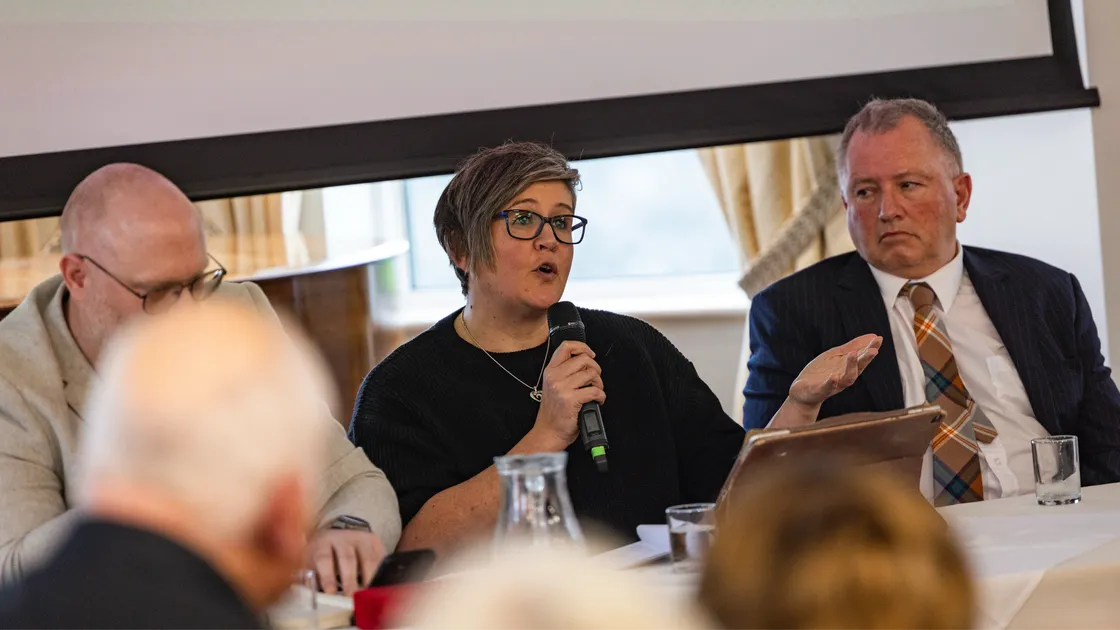
A consultation is taking place on options which include territorial tax, under which companies would pay up to 15% on profits from business carried out in Guernsey. The estimated effect on tax income ranges from losing £5m. a year to gaining £18m. a year.
But Haley Camp and Mark Helyar believe that discussions about territorial tax are harming business confidence and have submitted an amendment which would force Policy & Resources to rule it out immediately.
‘The inclusion of territorial tax in this corporate tax review was, in my view, politically reckless from the outset,’ said Deputy Camp.
‘It has been directed unilaterally by P&R and that is where the unsatisfactory policy-making began. I am seeking merely to end the uncertainty around this element of this corporate tax review, which is the element doing the most harm.’
P&R’s consultation sets out four other options on company tax, all of which would be untouched by the amendment. They include turning zero-10 into zero-15, expanding the types of profit taxed in line with Jersey, and a flat fee of a few hundred pounds a year on each business.
The most lucrative of those changes could generate additional tax of £16m. a year, although most are thought to be worth much less.
The deputies behind the amendment, which will be laid against a tax debate led by P&R at tomorrow’s States meeting, believe that the potential tax revenue of a territorial system is dwarfed by the risk of making the island less attractive to the financial services industry.
‘Many senior industry participants have identified, including to government, that the inclusion of territorial tax within this policy piece is resulting in the island already losing business or decisions being delayed to bring business here due to the uncertainty it’s creating,’ said Deputy Camp.
‘The longer we leave that uncertainty out there, the greater the risk is that we simply don’t recover our position, never forgetting that Guernsey’s finance industry relies on the stability of our tax environment.
‘I believe it is the time to act now and seek to remove the worst option from the table, ending this uncertainty.’
P&R was not expecting the amendment and will discuss it at a committee meeting today.
Territorial tax has been consistently championed by Deputy Charles Parkinson, but was repeatedly knocked back by the previous States.
Deputy Camp said that initial work carried out by a P&R sub-committee set up last summer had already proved that territorial tax could not be a solution to a deficit in public finances estimated at tens of millions of pounds a year, and indicated that it may even make the ‘black hole’ larger.
She also feared that territorial tax could result in Guernsey falling foul of European Union tax rules which govern access to some key markets and were a major reason for the use of the zero-10 regime for the past nearly 20 years.
‘The risk of grey-listing and potentially black-listing looks like an unnecessary risk when there are corporate tax models that could bring in more certain or less contentious revenue without the attached risk,’ she said.
The Guernsey Press recently reported warnings from Deputy Helyar that business was being lost by politicians openly considering territorial tax.
He said yesterday that it would ‘not turn the dial’ on tax revenue and was already ‘creating substantial risk’ to the largest sector of the island’s economy.
‘It is wasting valuable resources and should be consigned to history,’ he said.



You need to be logged in to comment.