
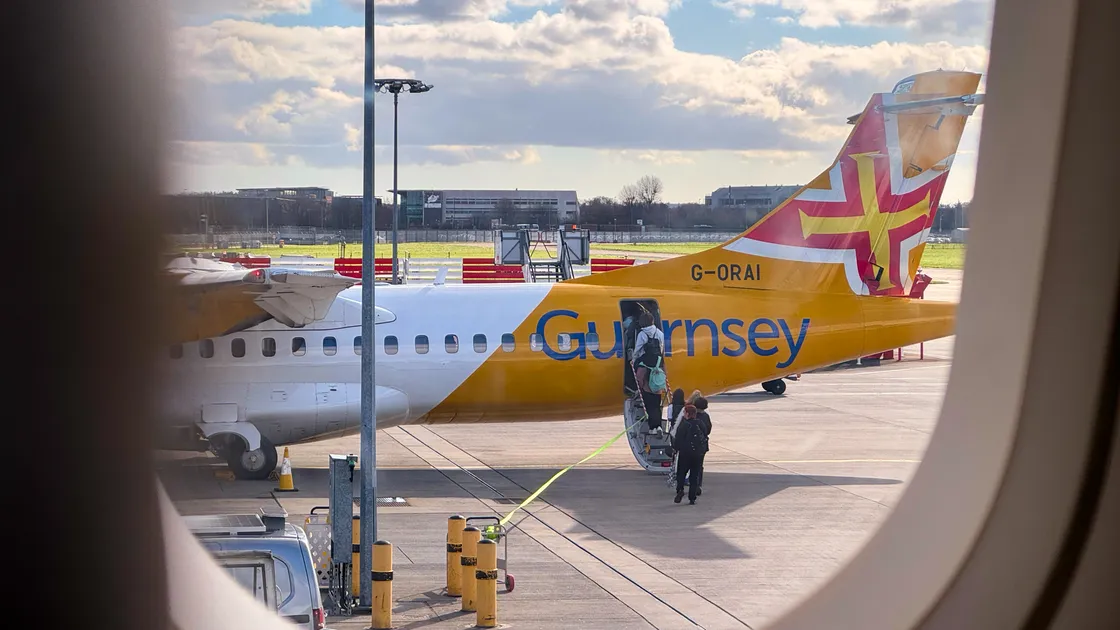
Chief executive Nico Bezuidenhout appeared on BBC Radio 4’s Today programme yesterday morning to offer the local airline’s view on the crisis after The Independent made headlines about the airline’s decision to cut flights in an article on Thursday.
He said there were no short-term concerns about fuel supply.
‘For the next four to six weeks, there’s supply certainty both on the Guernsey side as well as on the UK side,’ he said.
‘We’ve had assurances from multiple suppliers and airports and we’ll have to continue to monitor it.’
Aurigny partner airline Skybus also made headlines after abruptly cancelling its Newquay to London flights after this week, blaming the rising price of fuel. The service, delivered with a council subsidy, was due to stop at the end of May.
Managing director Jonathan Hinkles, previously an adviser at Blue Islands and before that the boss of Loganair, blamed a ‘huge rise in the cost of fuel following the war in the Gulf’ and a significant drop in passenger bookings.
Ryanair chief executive Michael O’Leary has expressed concerns about security of supply and has said that the UK is the most exposed country in Europe for jet fuel shortages, though no shortages have been reported so far.
More flight cancellations are now being expected into the summer as costs soar and demand falls. The Middle East supplies half of the UK’s jet fuel.
Mr Bezuidenhout told Radio 4 that the increase in fuel costs on a flight operated by a standard narrow-bodied aircraft would range from about $600 to £2,100.
‘Oil pricing and jet fuel pricing has had material effect on cost structures. We took the productive step of reducing approximately 12% of our flight capacity between April and May this year.
Not due to concerns in terms of jet fuel supply, but rather to ensure we get higher load factors and that way try to reduce the impact of soaring prices on consumers, more people in seats brings down the overall price.
‘We are taking three types of measures to try to mitigate the impact. One is about watching where we fly, being more efficient and more effective and filling our seats more effectively.
‘The second approach is fuel hedging – approximately 20-50% of our fuel volumes are hedged out at fixed pricing, that mitigates some of the effect, and then there’s a residual impact on the consumer, that gets passed through in the form of either fares or fuel levies and the like.
‘In our case we’ve had to institute a temporary measure of £2 per passenger for next two to three months, depending on how long this crisis lasts.’

You need to be logged in to comment.