

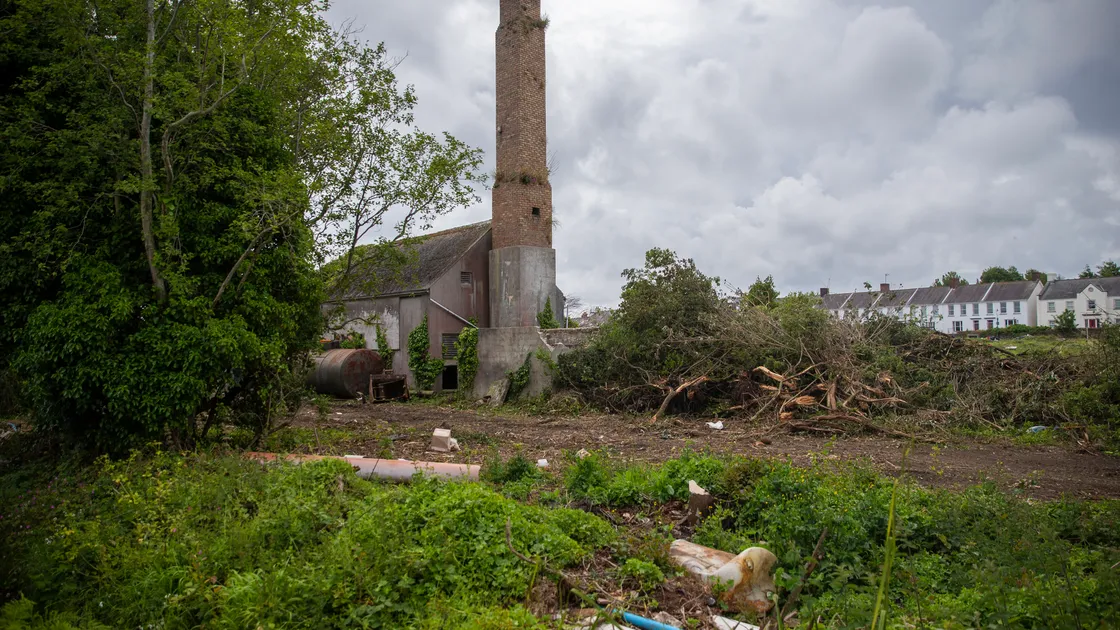
Environment & Infrastructure president Adrian Gabriel told the States earlier this year that work was taking place to look at so-called contaminated sites where it could be possible for some form of development to take place. This was being carried out by Environmental Health.
Ultimately, he said, a register of such land could be created which would identify areas that might be suitable for market gardening, and others for agricultural use or for houses.
One developer said that contaminated land was one of the biggest issues it faced.
Eleanor Saunders is CEO of Walter Property, which is currently building new homes at La Gibauderie.
She said that any location that was a brownfield site could have contamination.
‘Particularly glass houses – you get things like lead contaminants and build- up of gases underneath concrete. We found that with Gibauderie, and we’ve had to do gas monitoring.'
Then comes the cost of dealing with any contamination found, she said.
‘The cost of disposal of any of the contaminated waste is just disproportionate to the build cost,’ she said.
‘It’s crazy, the contaminants can be what kills the viability of a site.’
Mrs Saunders said a register, such as that suggested by Deputy Gabriel, would be welcomed.
‘The lack of a contaminants register is a huge issue.’
Housing Committee president Steve Williams said that it has held meetings over the last few months with key landowners and developers to understand why some larger sites have not progressed, and what might be done by the States to ‘unlock’ these areas for housing.
‘Through these meetings, landowners and developers have consistently told us that, among other things, the cost of dealing with contaminated land can be a significant factor affecting viability and preventing sites from being brought forward for housing,’ he said.
Housing has worked with Guernsey Water to clarify the various types of waste and the correct means of disposing of them, and this had led to guidance being issued which means that some types of waste can be dealt with at a lower cost.
‘The next, and more complex, step is to work with the Office of Environmental Health and Pollution Regulation and the Planning Service to understand whether we can make the process for dealing with contaminated waste even more efficient and proportionate for Guernsey, while ensuring that the appropriate human health and environmental protections remain in place,’ he said.
‘Discussions will be taking place on this very soon.’




You need to be logged in to comment.