

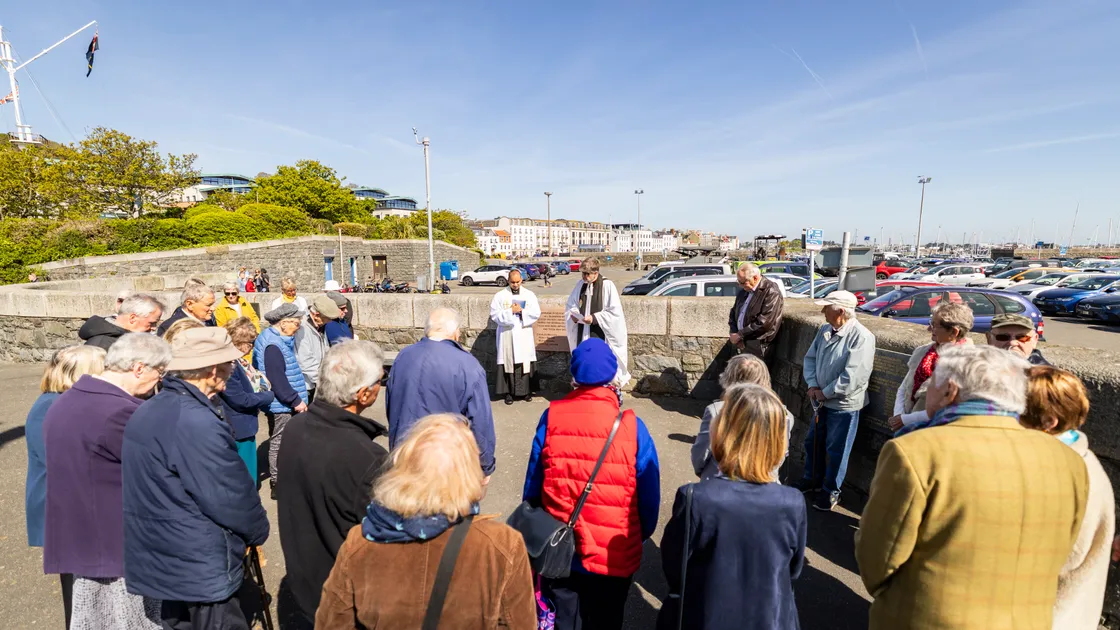
The occasion marked the 81st anniversary of the liberation of Camp Lindele near the southern German town of Biberach in 1945, to which hundreds of people had been illegally deported from Guernsey and Sark in 1942 and 1943 on Adolf Hitler’s direct orders, along with a similar number who were taken from Jersey.
Along with the St Peter Port gathering, another ceremony in Biberach was being attended by Bailiff Sir Richard McMahon, Biberach mayor Norbert Zeidler and external relations lead Deputy Steve Falla, where a Framework of Friendship agreement – first signed in Guernsey last year – was to be counter-signed.
The GDA in Guernsey was sent a message from Helga Reiser, of the Biberach Friends of Guernsey, which was read by the association’s secretary Alan Chubb. It stressed the significance of future relations.
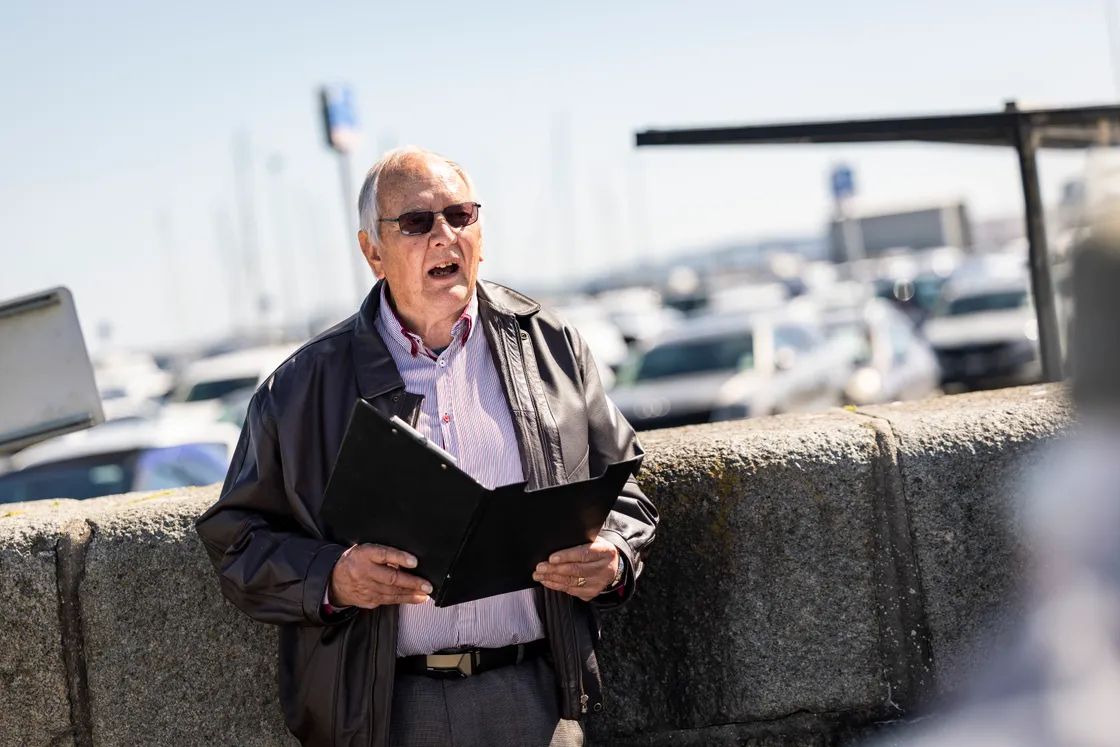
‘We are committed to ensure that this friendship is passed on to our children and grandchildren and brought to life by the young people of Guernsey and Biberach,’ the message said.
Sir Richard had left Guernsey with a reciprocal message from the GDA, which welcomed ‘our increasing bonds of friendship with the people of Biberach that these signings bring’ and looked forward to ‘further initiatives of friendship and reconciliation’.
Dean of Guernsey the Very Rev. Tim Barker addressed attendees, revealing that through his contact with deportees over his tenure here, he had learned a great deal about the resilience of the people of Guernsey.
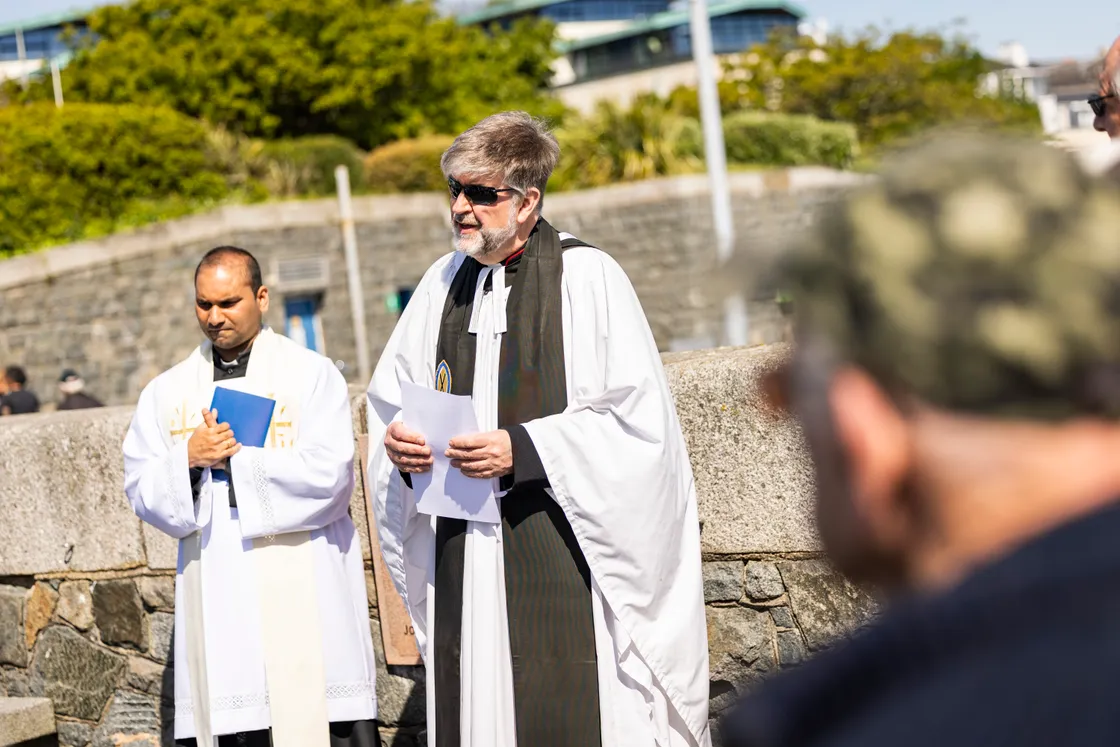
He and Father Inna of the Roman Catholic Church in Guernsey then proceeded to offer thoughts of thanksgiving for those who had returned, remembrance of those who had died – some of whom are named on the plaque where the ceremony took place – and prayers for peace, in which they were joined by the 33 people who had congregated.
Among them was Jim Remfrey, who was deported at the age of seven, along with his parents Tom Sr and Florence, his brothers Tom and Michael and his sister Anne.
‘We were given two days’ notice,’ Mr Remfrey said.
‘We had to report to the Gaumont Cinema to be processed and then we were brought down here to the White Rock and put on a boat. We were taken to a camp called Dorsten in the Ruhr district – which was a horrific place. And then we took a two-day train journey to Biberach.
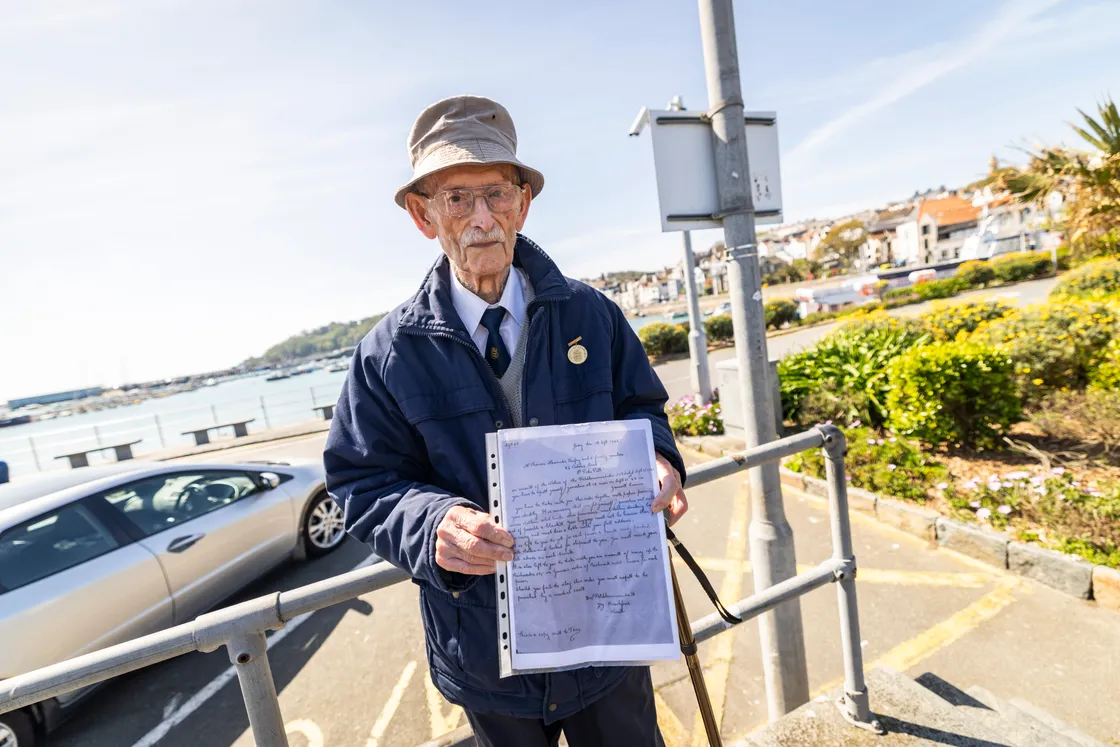
‘The walk from the station to the camp was similar to the walk from the States Offices [the former Tourist Information Centre] to the top of the Val de Terres and we were already six weeks without food, so we were a bit of a mess.’
His entire family were among those who were interned at Camp Lindele, where he was joined in 1944 by a baby brother, Harold.
Another attendee at yesterday’s ceremony, Maisie Le Page (nee Lanyon), was not deported herself, but had clear memories of the deportation order being carried out in Sark.
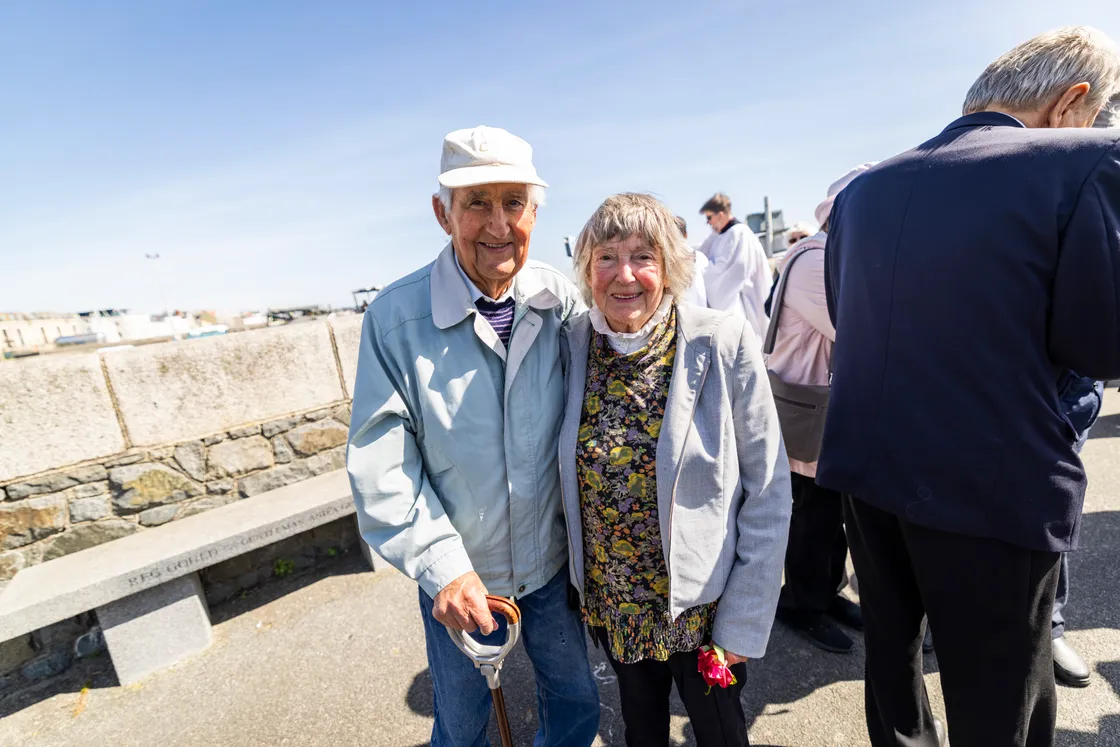
‘I remember going down to the harbour with everybody else from Sark to see the boats go off with the people who were being deported, and the boat was waiting for ages for two people who were due to come,’ she said.
‘It turned out they’d tried to commit suicide. The husband died but the wife survived and was badly injured.’
Mrs Le Page’s great aunt and uncle George and Agnes Sharp were among those being deported.
‘They never spoke about it. Before the war, they had a lovely little bungalow hotel in Little Sark and when they came back, there was nothing left – not a knife, not a fork, not a plate. Nothing.’
Mr Le Page said he was evacuated aged eight and had no direct connection to any deportees. Nevertheless, he said he never missed the GDA’s ceremony, as he wanted to remember those who were illegally taken from the island.
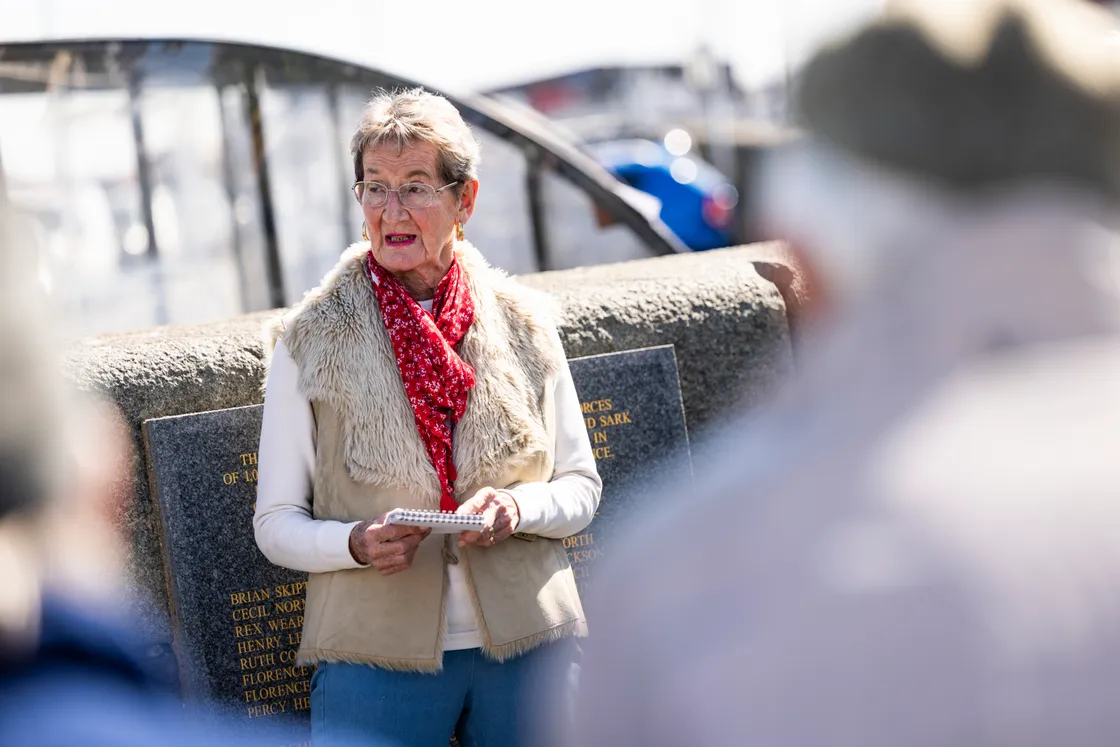
GDA chairwoman Jill Chubb said she was keen that ‘young people should know about what we went through as deportees – along with what people suffered by being occupied or evacuated’.
‘All people suffer in wars and I think war is a terrible thing, and it breeds hatred,’ she said.
‘By contrast, reconciliation – if you can do it – is beyond belief. I had a beautiful message from Helga in Biberach. She’s a friend. I never thought I’d be friends with anyone like that, but then I realised that you can’t carry hatred all your life.’