


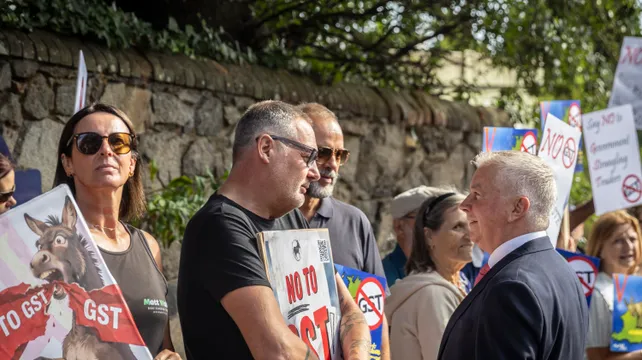
Why is P&R proposing a GST, when most of its members were against one in the previous States?
Well we didn’t support that particular package, and we are supporting this one, which is different in a number of key respects.
We were never going to pull the previous option off the table without there being an alternative we were prepared to propose. That would not have been a responsible way to proceed. Actually this package is a blend of different measures. There are a lot more elements to it than the one agreed in 2024.
Why 3%? Won’t that cost as much to administer as a GST at 5% but bring in less revenue?
That’s a fair point but we had a number of concerns around the original package, and those were partly around that 5% rate, and its inflationary impact. Let’s not forget that the financial position in 2025 was better than we expect it to be, so we have got a little more headroom and wanted to take a softer, more iterative approach.
But as a result you have had to scale down the mitigations, such as the 15% tax band and the new social security contribution allowance?
It is fair to say that the benefit will be less for those lower down the income scale and the cost less for those further up it. So we have softened it at either end of the spectrum but the overall shape of the impacts is still the same. So if you take the example of an employed person earning median income – around £42,600 – they will actually be better off in terms of take-home pay by around £1,250.
Why have you decided to retain the system where employed people only pay social security on their earnings and not the rest of their income?
That’s as a result of our many months of engagement with industry groups. They were worried about the potential impact of taking into account unearned income on the private rental sector.
Some landlords would experience a significant jump in their contributions and the private rental market is already under considerable stress.
But if the landlord is passed state pension age they are automatically deemed to be non-employed and they do pay contributions on that rental income so is that fair?
You’re exactly right and about two thirds of landlords would not be impacted, but about a third would, and we didn’t want to risk them saying ‘Do you know what, it isn’t worth the hassle’ and putting those homes on the market, meaning they would leave the private rental sector.
Why are you proposing a motor tax, combined with fuel duty reduction, which will benefit those who use their cars a lot and penalise those who don’t use them so much?
The problem with the current system is that we have all of our economic eggs in one basket. And if you have a hybrid or an EV then you pay very little or nothing in fuel duty and so are not contributing much or anything to the public purse. That is just brazenly unfair.
Plus petrol, and diesel vehicles are becoming more and more fuel efficient so an increasing proportion of the burden is falling on those who can’t afford to buy new cars.
How will people’s level of motor tax be calculated?
It will be on the combined factors of weight and emissions. So if you have a tiny little car which barely emits anything then you will be paying something very, very low on an annual basis.
What about this new luxury tax on the first registration of private vehicles worth more than £50,000? What’s that all about?
This only applies to private vehicles and only on those that are £50,000 or more. So I think it is fair to describe them as high-end vehicles. It is a one-off charge and there will be exemptions in areas like vehicles adapted for disability.
How confident are you of getting these proposals through the States? We know at least two States members have said they will be proposing alternative packages.
Well I haven’t seen those alternative proposals in any detail. I am sure they will be given proper consideration. What I can say is that we have been really, really thorough in turning over every stone, looking at all the various options. We have explored every viable avenue we can think of, and have set out much of that work in the policy letter.
What if nothing is accepted?
We have been living with a looming funding gap ever since zero-10 was adopted in 2006. The original idea was that we would run a deficit for three to five years and then a more balanced package of measures would be introduced.
I’m pleased to say that 20 years later we are proposing just that. Better late than never.



You need to be logged in to comment.