


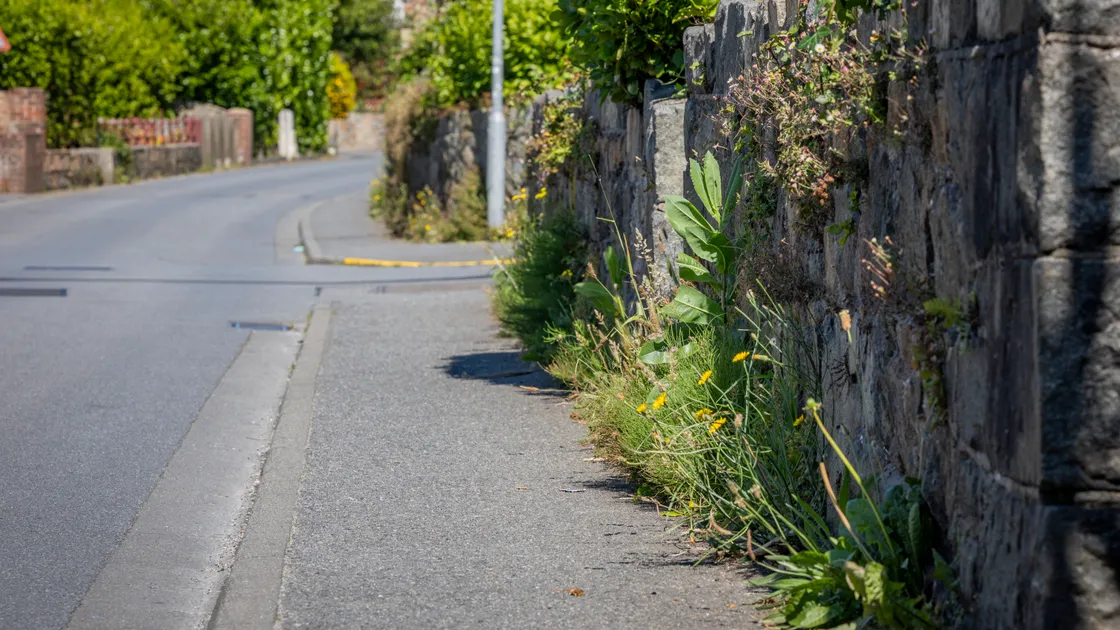
A voluntary in-house ban on the general sale and amateur use of glyphosate, the active ingredient in weedkillers such as Roundup and Weedol Pathclear, was adopted in 2022.
Environment & Infrastructure Committee president Adrian Gabriel defended the decision last October on pollution grounds, based on the cost of removing glyphosate from water systems.
However, in a recent Guernsey Press Politics Podcast, he admitted that it has not worked and the island is looking ‘slightly scruffy’.
‘People say it’s never been so bad. It’s partly a storm of our own making, glyphosate not available when you hear reports of the hottest May on record or the driest April,’ said Deputy Gabriel.
‘I admit that it hasn’t worked. We do need to do something better.’
Although States Works carries out the work, it does so under contract to E&I. Glyphosate is effective at removing weeds because it kills the root, not just the leaves. The alternative which is now being used is manual removal such as strimming or pulling, which takes off the top of the weeds but leaves the roots.
Parish officials are facing the consequences, with complaints that the parishes look untidy.
St Peter Port junior constable Ken Acott said that Deputy Gabriel had attended two meetings in the space of a week to discuss roadside weeds.
‘There is a general concern about the state of the roads with weeds growing almost out of control. They are regrowing very, very quickly,’ he said.
‘We asked whether there was a compromise, or if we could use weed killer in areas where the run off is unlikely to go into the water system, such as central St Peter Port where it runs into the sea.’
He said that douzaine volunteers cleared some steps in the parish just a couple of weeks ago and weeds have already covered them again.
‘We are very concerned, we get lots of complaints about the appearance and it’s simply getting worse,’ said Mr Acott.
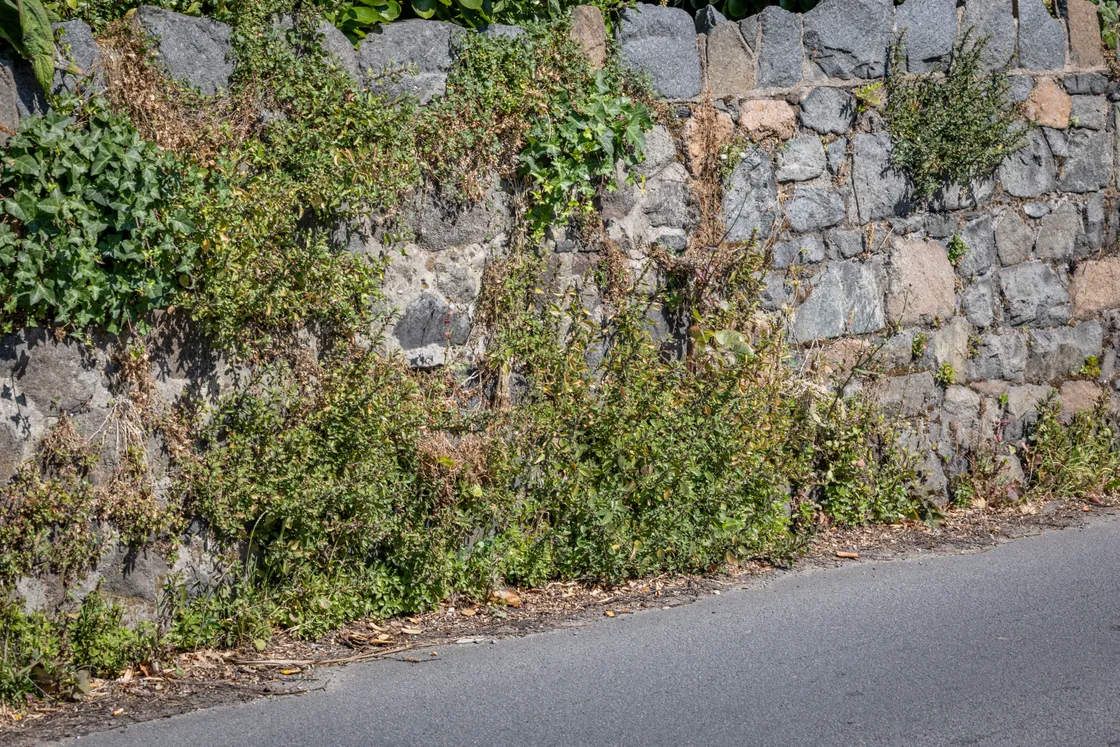
‘We’re fighting a losing battle. If we don’t use some form of weed killer, I don’t know what other solution there is.
‘If we had unlimited labour then they would probably need to do it every three weeks or so.’
He added that there are a number of areas outside of central St Peter Port where weeds become more established, then litter gets caught in the weeds. They occasionally get cut down by States works but then are not cleared away.
The debris gradually creeps away from the edge, reducing space on the pavements and roads.
St Sampson’s senior constable Joe Abbotts shared the same view, that the quick regrowth of weeds was making the parish look untidy.
‘We are definitely not happy with the state of the roads and the weeds that are there.
‘You can burn the weeds off, you can try and pull the weeds, but the roots are still there.
‘We think that the actual banning of glyphosate was probably a mistake.’
Mr Abbotts said he could understand the effect of glyphosate usage on the main water quality, but some areas do not have a water course or any form of water collection.
He suggested the chemical could be used in those areas to get on top of the weeds so there could be a more manual focus on the areas with a water course.
‘We’re in the process of doing our hedge inspections and I don’t really think we can be too harsh on parishioners about their hedges if the roads are in a state,’ said Mr Abbotts.
‘We can see where parishioners have cut their hedges, but the roads haven’t been touched, or the weeds are now growing through some of the debris that has been left.’
In 2024, Brighton & Hove City Council reversed its five-year ban on glyphosate-based weedkillers to tackle rampant weed growth on public footpaths.
The council reintroduced it using a targeted droplet application method, focusing on spot-treating weeds while preserving local biodiversity.
Deputy Gabriel said that focusing more resources on the problem could help the situation, but there would be a downside to that.
‘One answer is to spend more money, and put more men on the contract, and probably another sweeper. But that would mean having to divert money from somewhere else because all States departments are charged with making 1% savings in their budgets,’ he said.