

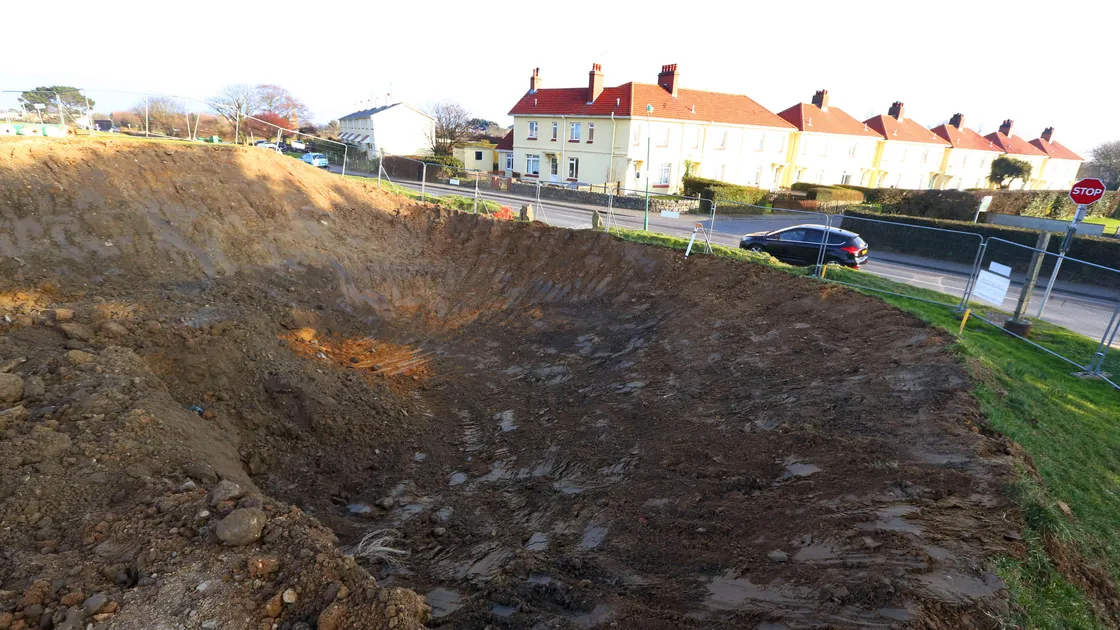
The soil, from two different sites, one on the airport and one on the site of a fatal air crash in Forest Road in January 1999, has been contaminated with PFAS from historic firefighting foam, which has been identified as a problem since 2007.
Approximately 14,000 tons of heavily contaminated soil was excavated from four hot spots and placed into a temporary containment bund. A second cell was added in 2014 following excavation at the Forest Road crash site.
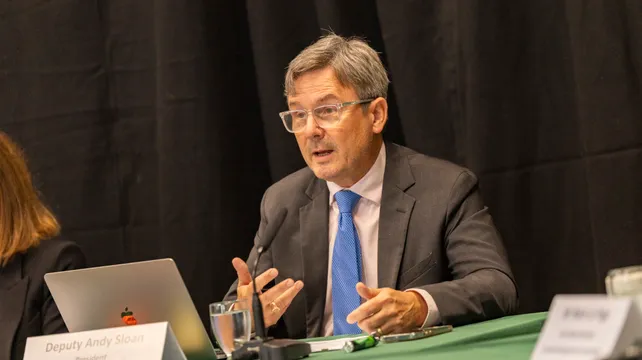
But, States Trading Supervisory Board president Mark Helyar told the States that containment measures were now failing, the bund had reached its end of life, and the risk of pollution into the water supply was becoming real enough to concern the pollution regulator.
An estimated 8,500 cubic metres of soil will be excavated, taken by road to St Peter Port Harbour, shipped to a UK facility where it will be washed to remove the PFAS, and the residual material treated appropriately.
The sand and gravel will be cleaned and used, and the States’ liability will end permanently, said Deputy Helyar.
States reaches ‘end of the line’ on PFAS-contaminated soil
Concerns about the cost of treating PFAS-contaminated soil being stored at the airport dominated debate in the States.
The work, regarded as urgent and essential, given the risk of water pollution, comes with a £16.5m. price tag, and Deputy Haley Camp was among deputies concerned at the prioritisation process to agree to fund the project.
‘It seems to me that if you’re first on the list you might get some money and I worry about what we might be sacrificing down the line.
‘We can say things are urgent, but if we’re constantly told things are urgent, how are we possibly going to meet all our obligations this term? I want to understand how this fits into a prioritised action plan of government when money is not abundant.’
Consultants, whose findings were well scrutinised by STSB, its president Mark Helyar said, had recommended the solution being followed but STSB admitted that it too was concerned about the costs, although it accepted the plan to be the most cost-effective solution.
‘I’m afraid we’ve reached the end of the line on this particular problem, as we will in due course on many others, which the States has been putting off,’ said Deputy Helyar.
‘In normal circumstances we would deal with these things as programmed, in sequence, one after the other in order of priority. Because we’ve done nothing, everything is now a priority.
‘Doing nothing is not an option, and while this proposal is not the only solution, all the other options are either just as more or more expensive, represent significant risk, or simply delay dealing with the issue and kick another can down another more expensive road into a future which we currently cannot afford.’
Deputies approved the proposal unanimously with just Neil Inder and Bruno Kay-Mouat abstaining.


You need to be logged in to comment.