
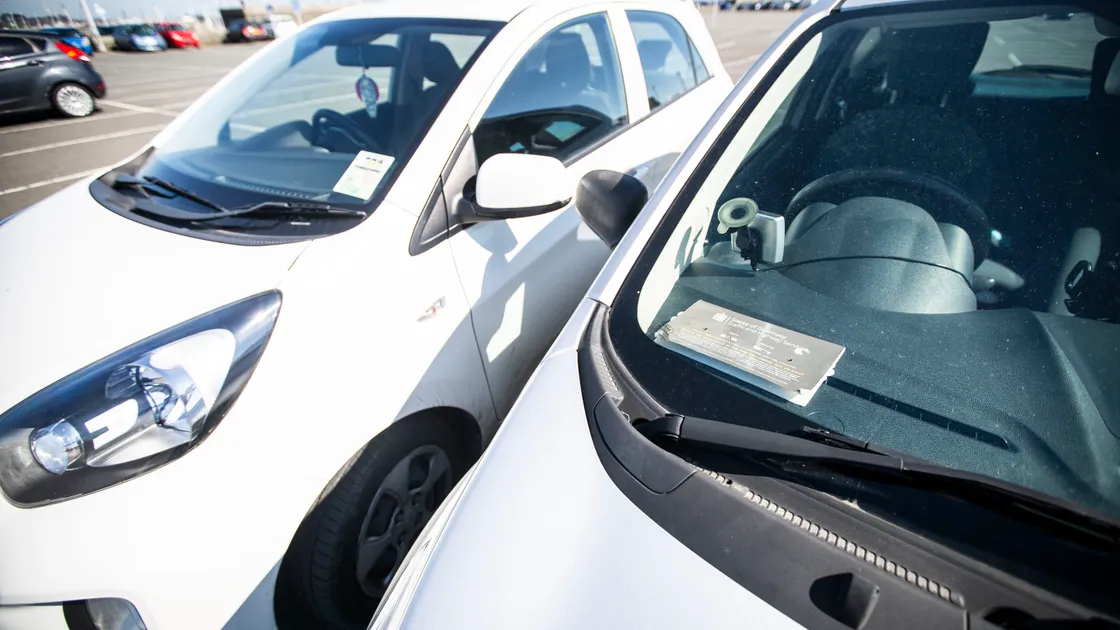
Deputy Ross Le Brun asked formal written questions, saying he had received plenty of public feedback about spaces feeling ‘tight’ for modern vehicles.
The committee said that the standard bay size of 4.8m long by 2.4m wide dated back to UK design guidance ‘widely adopted during the 1970s and subsequent decades’. There had been no recent review of the dimensions, even though most cars are about 10-15cms wider than decades ago.
On the Crown Pier, spaces were believed to have been marked ‘marginally shy’ of the 4.8m by 2.4m standard when the layout was changed by 2001.
Deputy Le Brun proposed an urgent review, and for any improvements to be made ‘without unnecessary delay’. The committee declined, saying a standalone review of all public parking space dimensions would not be ‘the most proportionate or effective approach at this time’.
Any changes would instead be ‘evidence-led’ and made when maintenance, resurfacing or wider projects created the opportunity, it said.
The four car parks covered by the questions – La Salerie, North Beach, Crown Pier and Albert Pier – provide more than 1,000 car spaces between them, ranging from 555 at North Beach to 146 at Crown Pier.
Deputy Le Brun said that parking policy should not be judged solely on ‘how many spaces can be squeezed into a car park’.
‘It should also be judged on whether people can get in and out of their vehicles safely, comfortably and with dignity. Slightly fewer but larger and more usable spaces could improve accessibility and the overall user experience.
‘A lack of complaints shouldn’t automatically be taken as evidence that existing parking provision is working well for everyone.
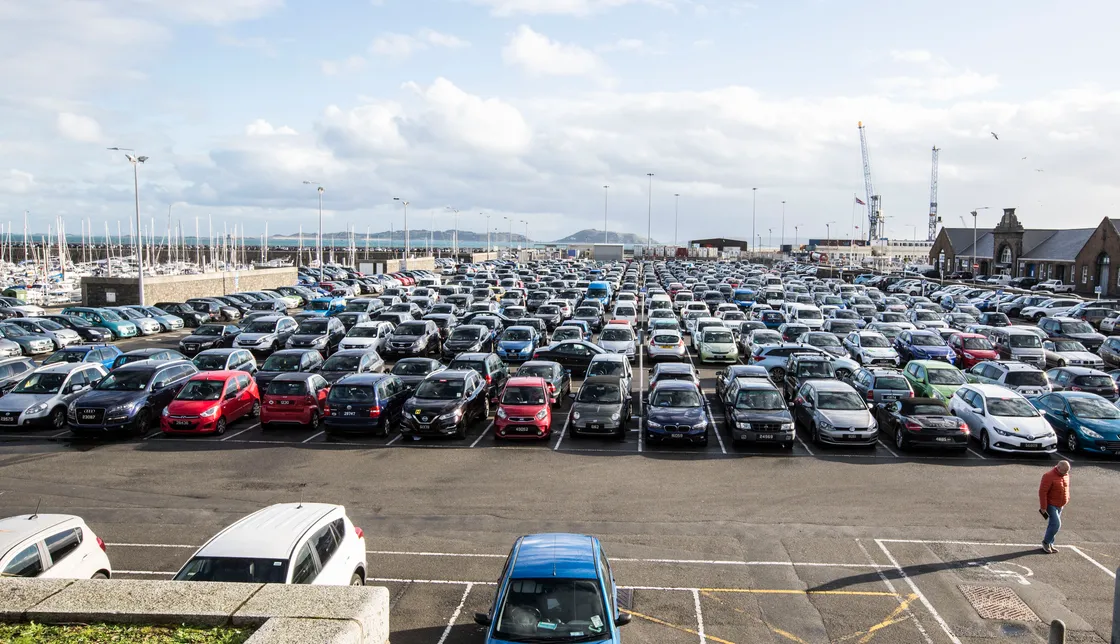
‘More engagement with disabled islanders, older people, parents and carers could provide useful real-world feedback on parking usability.
‘Encouraging smaller cars may improve space efficiency, but it does not necessarily reduce congestion or parking demand.’
The reply also showed how few of those spaces are set aside for disabled drivers. There are just two Blue Badge bays at the Salerie, seven at North Beach, three at Crown Pier and four at Albert Pier.
Some accessible bays at North Beach and Crown Pier have no hatching – the marked area beside a vehicle that lets a wheelchair user or someone using a ramp get in and out – though the committee said that has been agreed with the States disability officer rather than cut the number of spaces. An additional accessible space with hatching on both sides was added by the toilets at Crown Pier last year.
The committee also confirmed there were no designated parent-and-child spaces at any of the four car parks, while accepting that parents travelling with child seats, pushchairs and other equipment could benefit from extra room. Introducing them would be ‘best considered as part of wider strategic work on parking and transport’, it said.
Layouts of the four town car parks have not changed significantly in recent years – the Crown Pier was the last to be altered in any major way back in 2001.
The committee said that its Integrated Transport Strategy, which encourages a shift towards ‘smaller and more space-efficient vehicles’, was a way of making better use of limited parking and road space.
It added that the success of a car park should not be judged on the number of spaces alone, but on ‘whether people can access and leave their vehicles safely and independently’.
The RAC accepts that parking spaces for modern-day cars can be challenging, but acknowledges that the sizes are set out by the Institution of Structural Engineers and Chartered Institution of Highways and Transportation and have been maintained consistently over the years.



You need to be logged in to comment.