

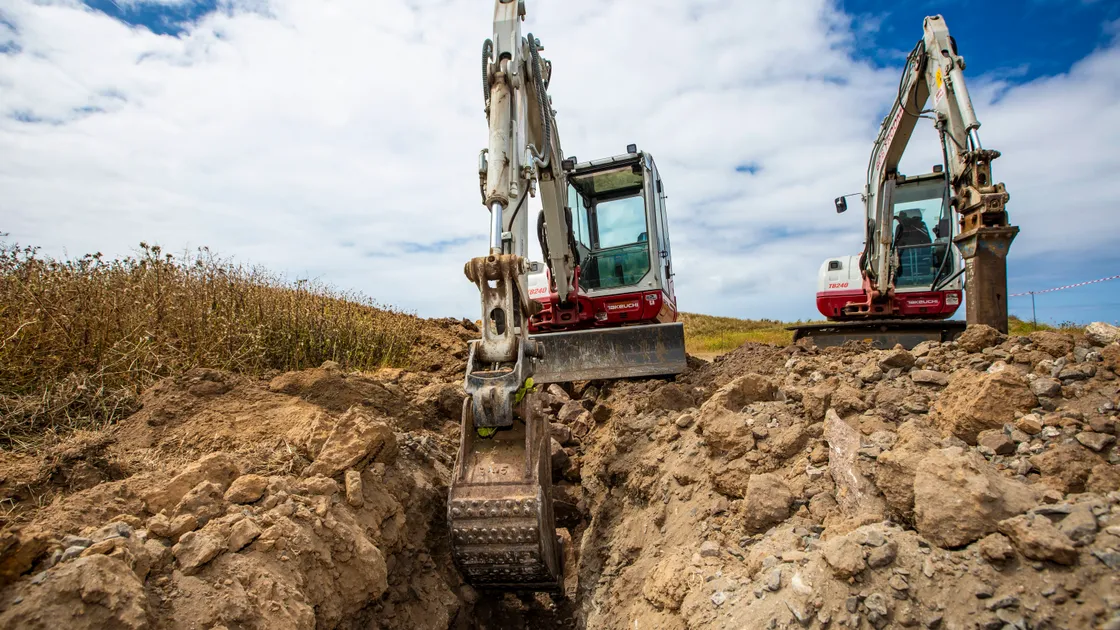
In most cases, contaminated material must be excavated and safely disposed of before any building work can begin, and there are concerns that this requirement is making many brownfield sites so expensive to develop that they become unviable for uses such as housing.
Environment & Infrastructure is now examining an alternative approach where the existence of the contaminated soil would be recorded and registered but allowed to remain in place in locations where it poses no risk to the public provided it is not disturbed.
E&I president Adrian Gabriel hoped the initiative could boost the island’s sluggish rate of housebuilding and help tackle the housing crisis.
‘We know we’ve got contaminated sites which should be developed for housing, but clearance is a real barrier because if you are removing contaminated soil it has to go somewhere,’ he said.
‘It can’t be used in normal aggregate or anything like that. It has to go into a special bonded area in a landfill site.
‘That makes such sites prohibitively expensive for developers, so we are trying to design an alternative approach which allows such sites to be developed.’
E&I is working with Environmental Health officials to design the new scheme. The committee said it was tackling it as a priority in the current States term.
In its work plan, which was published recently, E&I undertook to propose legal changes to introduce ‘a proportionate contaminated land regime’ and to improve how information on contaminated land is recorded and accessed.
It wants to shift from a regime with blanket excavation requirements to one under which risks can be identified earlier and managed proportionately.
‘We are still designing what it would look like, but if a contaminated area is identified on a development site it could remain, and the area could be used for something like car parking or hard standing,’ said Deputy Gabriel.
‘Householders will not be exposed to the contaminant because it won’t be under a lawn or an allotment or anything like that.’
The intention is that such areas of contaminated land would be logged on a permanent central register, which it is believed would allow use of the land to continue to be controlled in the future.