

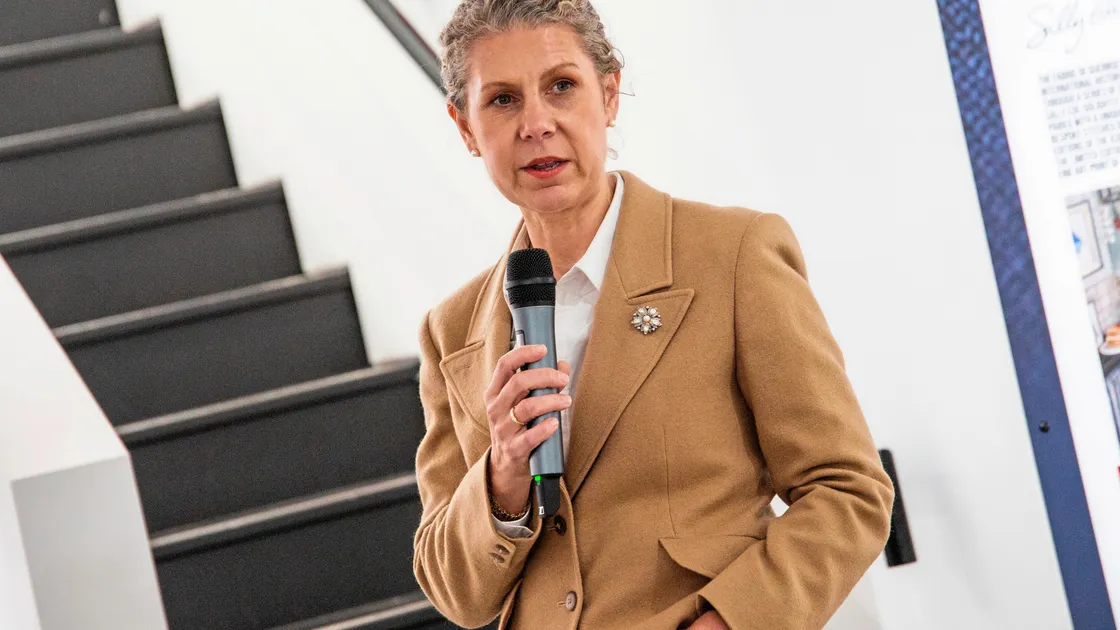
Tracey Rear, executive officer of local charity Independence, believes greater cooperation between health professionals and clearer treatment pathways could improve support for islanders with complex needs.
After speaking at Health & Social Care’s Health & Wellbeing conference on Wednesday, she highlighted an opportunity for stronger collaboration between the island’s health services.
‘It’s not a criticism of anyone working in the space,’ she said.
‘We’ve got a really good opportunity here today.
‘Let’s work together. Let’s look at what we’ve got, and clear up what pathways there are – who’s doing what and when. Let’s have a bit more of a flexible system and let’s make it work.’
Mrs Rear is a BACP-accredited cognitive behavioural therapist with more than 25 years’ experience working with people affected by alcohol, drugs and gambling, alongside associated mental health difficulties.
She has led Independence since 2001. Her presentation at the conference focused on the impact of relying on labels such as ‘alcoholic’ and ‘addict’.
She warned that such labels could obscure the experiences behind someone’s behaviour, preventing professionals from fully understanding what was driving it – something, she said, that was crucial to providing appropriate treatment.
‘Any good psychological therapy needs to understand the process and needs to understand people’s experiences,’ she said.
‘It’s about listening, understanding and then planning treatment based on that understanding, rather than just using shortcuts like “alcoholic”.
What does that mean? “Addict” – what does that mean?”
She said professionals needed to look at the bigger picture, including whether someone had experienced adversity or trauma during childhood, when deciding what support they required.
Mrs Rear also highlighted research from the UK suggesting that people with more complex mental health needs, including those affected by childhood trauma, can struggle to access appropriate psychological therapy.
‘Only 2% of the UK population receive therapy for that,’ she said.
‘And it’s not because the therapies don’t work – it’s because the people who are providing therapy aren’t confident in working with that group.’
She stressed the importance of early intervention, warning that without appropriate support, the effects could extend to families and future generations.