

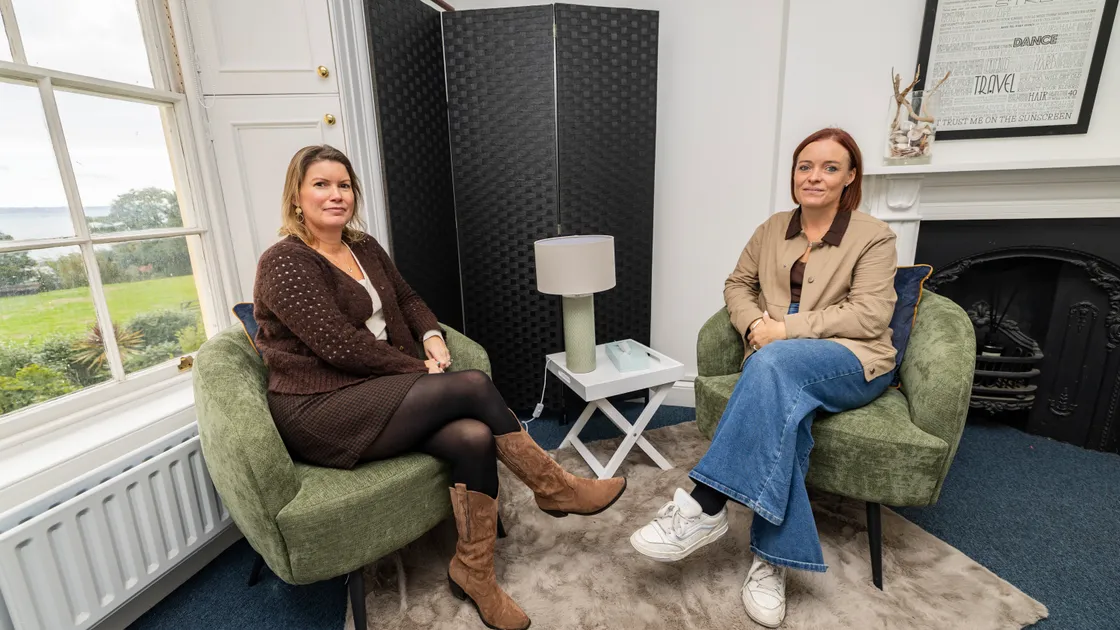
Safer said the strategy will bring together years of work and show where more action is needed.
Last week, the Committee for Home Affairs launched a consultation on the VAWG strategy, which will build on the 2022-2025 Domestic Abuse and Sexual Violence Strategy.
Safer CEO Naomi Wright said there had been many developments over the last few years, including new legislation and the sexual assault referral centre at Willow House.
‘There are things that have happened and we have a domestic abuse and sexual violence strategy, and there were always plans to expand into a VAWG strategy, which is the stage it’s at now,’ she said.
‘It’s not that nothing was ever happening, it was just in different areas, and this will bring it together and bring focus to what is needed for the island.’
Ms Wright said the strategy would pull together existing data, identify the gaps and keep developing over time.
She said the focus could prompt questions about men and boys, whom Safer also supports.
‘It can create some tensions with people asking what about boys and men,’ she said.
‘No one is saying that at all, our service supports males as well, but the reality is the statistics show that women and girls are the sector of the community that get the worst and most significant long-standing harm, and in the worst cases, lose their lives, and you can’t get away from that.
‘It’s a national focus for a reason.’
Home Affairs VAWG lead Deputy Munazza Malik made the same point when launching the consultation.
Ms Wright said community support and input would be vital to the success of the strategy.
‘The strategy only works if you have the buy-in of the community and everyone around it,’ she said.
‘We’re trying to involve workplaces, community spaces, professionals and survivors alongside the education that we do at Safer.’
The charity’s age-appropriate education programme previously ran from Year 6 to Year 13 and now includes Year 5.
Safer spaces and training officer Toni Dutot said that workplaces play an important part in supporting victims.
A survey which has received more than 110 responses so far found that among those affected by domestic abuse, 94% reported feeling distracted and overwhelmed at work, 88% had difficulty concentrating and 64% reported reduced confidence.
The respondents were primarily women, with only a few men having taken part.
More than half of respondents reported reduced productivity, 30% stated that changes in performance were noticed by managers or colleagues and 18% had difficulty meeting deadlines.
More than half reported that the abuse continued while they were at work, with 49% reporting ongoing contact, including phone calls or messages, 16% reported unexpected visits at or near the workplace from their abuser, 8% had to leave work to manage abuse-related crises during working hours and 5% felt unsafe at work and had concerns about the safety of themselves and others.
‘It’s all confidential and will help with the VAWG strategy, so workplaces can be prepared to help people and know what they can do if people are experiencing that,’ said Ms Dutot.
‘We’re not talking about people being given months of paid time off work, it’s tiny changes that can make a big difference, such as time off in the day to go and speak to someone such as an advocate or the police.’
Safer is aiming to increase awareness of domestic abuse in the community and public spaces.
Ms Dutot said the new domestic abuse laws have given victims many more options.
‘Before, if someone was in a controlling relationship which is domestic abuse, there was nothing they could do from a legal point of view,’ she said.
‘A lot of people who don’t have experience of domestic abuse still think it’s about black eyes and bruises, but most of the time, it will be more of the detrimental things like control, which has an impact on everything.’
The survey is still open to islanders at https://tinyurl.com/5bnv3n85.



You need to be logged in to comment.