
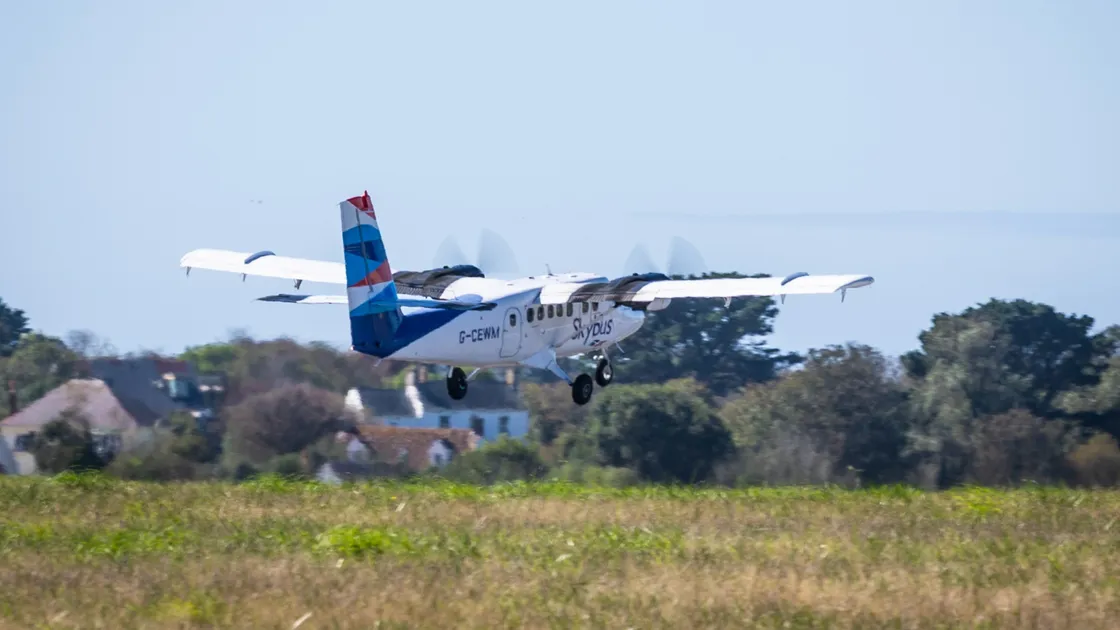
Of 3,822 flights scheduled in the 11 months between November 2025 and the end of September this year, 498 were cancelled and just 87% operated. More than a quarter of those that did fly left more than 15 minutes late.
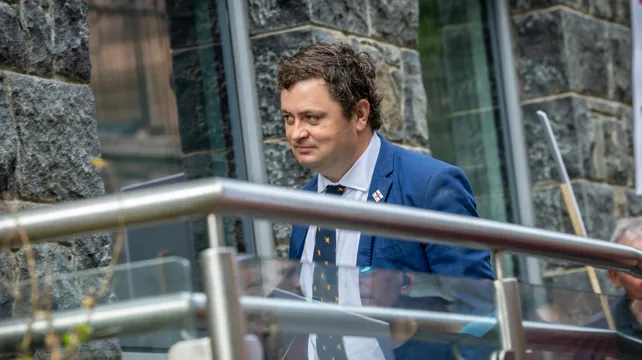
The figures were published in response to Rule 14 questions from Alderney representative Alex Snowdon, who pressed the committee on reliability, aircraft, crewing and cost.
Weather was the biggest single cause of cancellations at 8% of all scheduled flights, but crew shortages through sickness, fatigue or training accounted for a growing share, rising to 3.4% of flights in the final quarter.
The committee acknowledged that Skybus still had ‘further work’ to recruit and train enough pilots, particularly captains, to deliver the timetable reliably.
Both dedicated Twin Otters promised for the island have been late into service. The first, G-NETS, was held up by a near six-month UK certification process and did not begin Alderney flights until July. The second, G-DOYL, is now expected to enter service in the coming days, with other Skybus aircraft covering in the meantime.
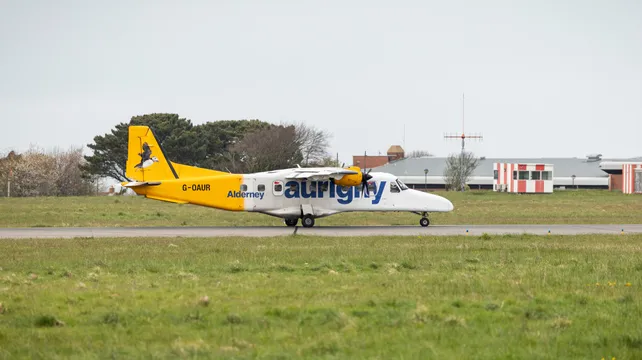
The figures also revealed that there were more cancellations over the same 11-month period from November 2024 when Aurigny was operating Dornier aircraft but the vast majority of these were weather-related.
More than 600 passengers had their journeys impacted by medevac calls on the aircraft, fewer than over the previous period.
In relation to staffing, the committee told Mr Snowdon that Aurigny was not managing Skybus’s rosters or crew, but had offered access to its crew rostering system. It was accepted that Skybus needed to do more work in employing and training pilots and this was being ‘progressed with importance and urgency’.
The two airlines had ‘daily dialogue’ at a senior level and weekly engagement between its engineering teams.
P&R also revealed that the States and Aurigny meet regularly, with an Alderney States officer in attendance.
Mr Snowdon also asked about financial remedies for failing to meet the PSO contract. P&R said that there were no sanctions or damages within the contract, given it is not a ‘for profit’ service.
Between the two airlines there is a fixed charge for aircraft, payable monthly, and charges are reduced where crew or aircraft have not been provided in full.
The Alderney States member also asked if the committee was satisfied that the arrangement offered value for money.
The procurement exercise demonstrated value for money when it was last completed in 2020, P&R said.
‘Through the arrangement with Skybus we have since been able to reduce the overall costs of the service relative to the previous Dornier operation, while maintaining the schedule and providing additional resilience.
‘While the service has experienced transitional problems relating to crew resilience and delays in bringing aircraft into service, the solution now in place offers better value for money when compared to the previous operating model.
'It is accepted, however, that further work is required to improve the reliability of the service.’
The service is subsidised at a targeted £1.5m. a year, capped at £2m., and is forecast to need close to the cap in 2026.

You need to be logged in to comment.