

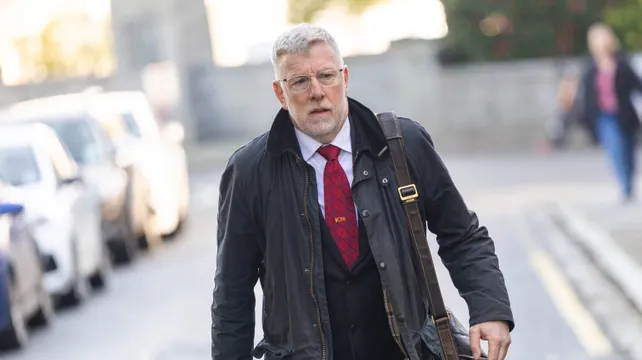
Cyber security professional Dougie Grant said that AI’s rise has made it much easier for hackers to find and exploit vulnerabilities in IT systems.
Mr Grant was in Guernsey to take part in an exercise being run by crisis support organisation
Soteria, which has more exercises coming up aimed at local firms being run in conjunction with the Guernsey Cyber Security Centre.
Mr Grant is a chartered cyber security professional and managing director of Nihon Cyber Defence. He is a member of the National Cyber Security Centre’s Industry 100 scheme, which brings in industry experts on part-time secondments to share their knowledge.
He said the industry has been aware of hacks such as phishing emails, password attacks and vulnerabilities in business software and those have continued to develop.
‘The problem we have now is AI, and AI is fantastic when we use it for the good things we want to do, but unfortunately AI is also being used to detect those vulnerabilities, to craft those phishing emails, to facilitate attacks,’ he said.
‘Nothing is changed in the type of attacks, it’s just much faster and much more professional now. It’s really hard for us to detect those phishing emails.’
He cited an example of the scale of the problem as being the monthly software patches released by Microsoft for its products. Last month those patches addressed 1,400 vulnerabilities across email, Teams, OneDrive and other software – needed because AI can find these vulnerabilities much more effectively.
The answer is not only to put patches in place but for a computer user to be aware of everything they are doing, he said, and stopping and thinking before opening links in emails that they receive.
Previously it was often easy to tell a phishing email from a normal one due to spelling mistakes, but AI has made it easier for hackers to create emails that look much more legitimate.
During his visit he had looked at critical national infrastructure and what to do if there was an attack. ‘How do we protect our customers? How do we protect our data? But not just that, how do we prevent the impacts we’ll see in a community if one of these attacks is successful? Because it’s not just a digital impact, it’s a much wider impact on society.’
The message that cyber security professionals like Mr Grant want to get out is that these attacks will happen, but those who are prepared will be better able to deal with them.
‘It’s having the readiness in place that you know how you’re going to respond, not just from the technical teams, but right up to the executive and board level.
‘We see again and again that where organisations prepare in advance, the impact is reduced, the recovery time is reduced, the financial and reputational damage is reduced. Organisations that have that readiness in place, and I don’t just mean having a plan; I mean actually rehearsing it, testing it, simulating it. They’re the ones that will recover much quicker.’
Soteria is running two events on Wednesday 2 December, one for the finance sector and one for all sectors, at which people will be able to experience a simulated cyber security incident. For further information and to sign up go to https://bit.ly/4BCwdUi (finance sector); https://bit.ly/4yNAW2y (all sectors).



You need to be logged in to comment.