
I’M WRITING this week’s column listening to the sound of seagulls outside my bedroom window but I’m not at home, I’m over there. It took me less time to fly here than it takes me to drive into Town and the air smells different, yet familiar.
I’ve only been here a few hours but already I have heard much more French spoken in St Helier than I hear in St Peter Port and it feels great. There is an immediate sense of being closer to our French heritage and another way of life and it feels exciting, intriguing and even, to use an old-fashioned term that I love, continental. This might just be the effect of leaving home for a few days but I definitely don’t feel this when I head to the UK – the magic is missing, the noises too loud, the air too polluted.
It got me thinking, is this how wonderful it feels when those from Jersey visit us? I am certain it is. Our little islands share so much in terms of character and charm yet differ greatly in terms of landscape, architecture and culture. We have more in common than we might want to accept in terms of politics, housing, recruitment and transport, yet we also have differences which each island should highlight. It is not a contest, rather a celebration of equals.
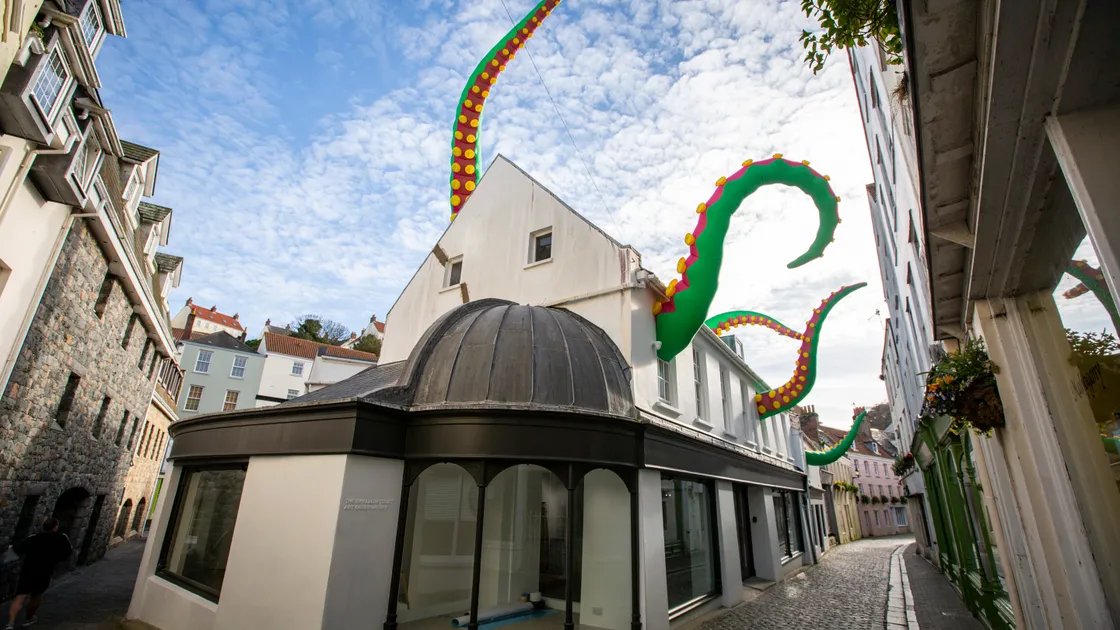
Hearing French so soon after arrival also took my thoughts back to Guernsey and to one of our more famous immigrants, Victor Hugo; a huge influence in the Bailiwick. This man said our beautiful island was ‘hard to reach and difficult to leave again’ (and he wasn’t talking about the ferry timetable). Hugo embraced Guernsey and its people as well as our native language Guernesiais, which features in a number of his works. It is also speculated that he used Sercquiais (native language of Sark) in his novel Les Travailleurs De La Mer (Toilers Of The Sea) with the word for Octopus – ‘Pieuvre’. He was apparently fascinated by the dialect spoken on Sark.
This work not only illustrates his detailed knowledge and love for the island of Guernsey (he found it to be welcoming and free) but also the understanding he had of those who lived here. As an author, his literature has inspired generations, and most recently artists Daniel Hosego and Oleg Mikhailov in their artworks created for the Renaissance Of Victor Hugo exhibition at Art for Guernsey’s fantastic new gallery in the Old Quarter in St Peter Port.
It is such a colourful, stimulating and inventive collection of pieces based on and inspired by Hugo’s work and is a delight to behold. Appreciating our past by reimagining it for the present like this is how we will attract our own flocks of French and other tourists to the island again and how we will fuel and revive our own sense of identity and culture.
We rarely boast about our talents or our island’s gentle yet majestic beauty while other islands sing loudly about theirs. Fostering a strong sense of local culture is not just critical for attracting visitors, it encourages our children to want to build their lives here, it encourages businesses to set up here and makes people proud to call Guernsey home as Hugo once did.
Back to those French tourists for a second, this also led me to consider just how beautiful Guernsey must have sounded when Guernesiais was in common use across the island, how new words would have been created as we went along to reflect our way of life, and how connected we felt to one another as a result. If you knew, you knew. If you didn’t, you wanted to know. Just as the sound of French on the streets here in Jersey delights my ears, the sound of Guernesiais on our streets once again would surely delight tourists, visitors and locals alike.
It is not always easy in this huge world we are part of, to stand out and to feel a sense of belonging. Imagine if we really started to use our native language again, helping to continue and add to the great work Art for Guernsey has begun in celebrating our history and culture and reimagining it for the next generation. What pride we would feel in distinguishing ourselves from other places with our own heritage. What if we once again created new words to reflect modern life on the island, as we do in English all the time? Our younger generations are usually at the forefront of such creativity with the goal of excluding the old and out of touch from their private conversations – how much fun they could have building their own special language that truly belongs to them.
The sound of a new old Guernsey in the streets, like music on a summer’s evening, would lighten our spirits and remind us who we are and why we choose to live here. Victor Hugo chose Guernsey as his place of refuge and, like many artists, was greatly inspired by the landscape and culture to write masterpieces of fiction. By bringing our true selves back to life, who knows what we might inspire as a result.
I think many communities accept that they made a mistake discouraging the use of native languages some years ago but they did it in good faith. Globalisation was on the rise and I suspect they felt that to compete, we needed to be sure we communicated in English like everyone else did. This is naturally a sensitive topic for many native Guernesiais speakers and there were many issues at play at the time. The future will be all about how we differentiate ourselves rather than how we prove we are just like everyone else.
It is not just a question of keeping people here and attracting visitors and immigrants to the island – but it is about how we plan for the future as a community and how we get better at making hard choices. Being immersed in culture, thinking of the Guernsey Hugo saw and loved and appreciating the language, poetry, art, literature, music and industry that our island produces helps us to see ourselves as part of a whole, as a team, working with each other rather than against each other. Reigniting this spirit will be what drives selfless decision-making to ensure those in need have what they need and those who have plenty do their bit to make life easier for others.
Hugo was inspired by an island more reminiscent of a large extended family, ensuring the best outcomes for everyone even if that meant sacrificing something of their own.
No matter what Guernsey was like in the past, it can be what we want it to be in the future. We can regenerate our language (Jersey is ahead of us here), let art and culture drive our community spirit, and work together to solve the problems we now have to face. So many of our challenges can be solved ourselves, with a change of mindset. There is enough wealth and talent on this island to ensure no one goes without and enough heart and soul to move mountains. On the way there, let’s show our soon-to-arrive Island Games’ competitors our true colours and infuse the island with our creativity and uniqueness.
A betao.


You need to be logged in to comment. If you had an account on our previous site, you can migrate your old account and comment profile to this site by visiting this page and entering the email address for your old account. We'll then send you an email with a link to follow to complete the process.