
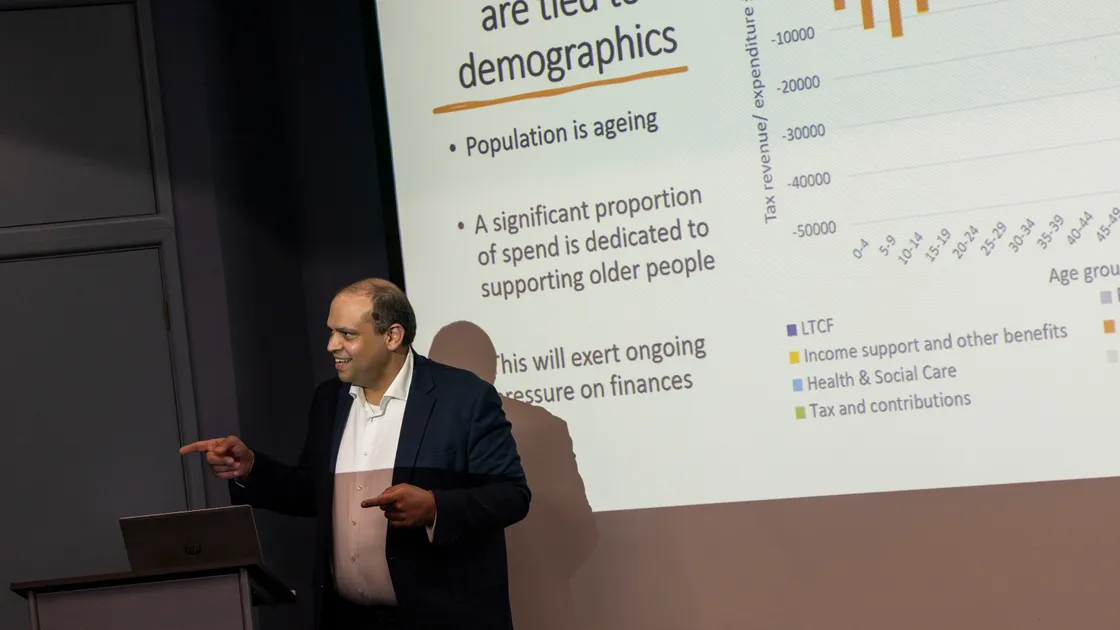
On 13 March the population of Guernsey were granted access to our expensive external advice from the Fiscal Policy Panel. The advice asked for was on ‘the management of capital expenditure and investments within its fiscal rules’.
You might think that long-term financial stability of Guernsey is largely a matter of cash income and cash spending with a discussion about how much is kept in cash and investments for a safety buffer and the wisdom or otherwise in raising debt.
You would be correct.
But the panel goes much wider – it picks a need for 3% of GDP (just over £100m.) for long-term annual capital expenditure out of a clear blue sky. The origin is a previous generation of this number for previous pieces of advice, but it is literally without any foundation. Gpeg does not offer a target level for investment – it depends on the opportunities that are out there. If we have capital spends that we believe will have substantial financial and/or welfare benefits to add to essential spends, then spends of 5% or more would be fine. If the opportunity set does not justify much investment, then essential annual spends of nearer 1% of GDP will be all we should do.
The virtue of capital investments is supported by the board using a statistic from the UK Office of Budget Responsibility: ‘The OBR assessment of the value of public investment is that it generates significant returns – with an average of 2.4% added to GDP for every 1% of investment over a 10-year period.’ So they say, but actually the OBR quotes that 2.4% over a 50-year horizon. It’s much lower at 10 years (approximately 0.6%). Oops!
You might wonder how the OBR estimates the effect of increasing capital spending by adding 1% of GDP over 50 years. How would you ever know what might have been?
It is quite a remarkable number – the compound GDP growth rate of the whole UK economy over the last 50 years is factually only 2% pa so you might question the output of the model. And how did the OBR get to its number? It’s not from history but from heaving in a very complex heap of assumptions into an econometric model of unproven reliability. Rubbish in, rubbish out.
The unreality of the report is reflected in a recommendation that we need something like a two billion pound reserve fund to absorb shocks. Dream on.
The reality is that if the proposed tax (GST, etc) package goes through we will still be spending more quickly than tax revenue into the future. The panel just about says that, with resources running out in seven years or so with a 2% pa capital spend.
A GST in the teens, possibly high teens, of percentages will be needed for a reasonable level of capital spend for the long term absent any decrease in public spending, for example on panel reports like this.
Investment should be focused where there is a return, whether financial or welfare – not some arbitrary number plucked out of the firmament at considerable expense with doubtless considerable assistance from the civil service that we also pay for.
We don’t need reports like this.



You need to be logged in to comment.