
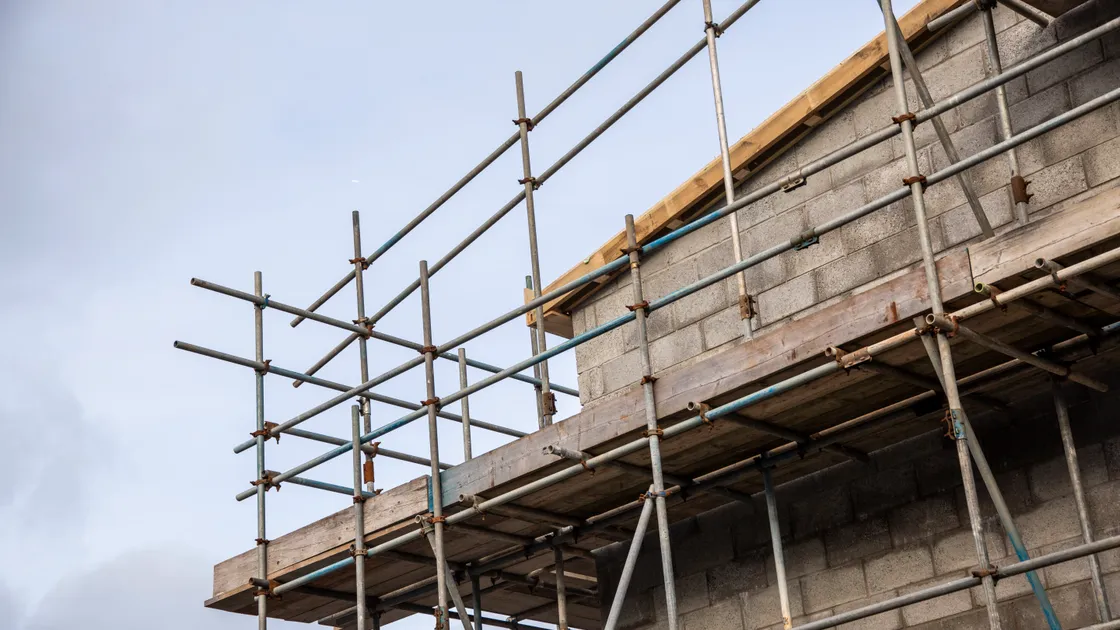
Housing will feature prominently in manifestos for the upcoming election, and rightly so: it’s an issue that affects so many people’s lives and ultimately the economy, so it must continue to be a top priority in the next political term.
It’s a more complex web of problems than many people appreciate, though, and while there aren’t any quick-fix solutions there is a lot of work already completed or under way to tackle the issues the island faces. That work includes the new affordable housing now coming forward, bespoke site-by-site support to unlock more housing development, our work with charitable organisations on homelessness, the downsizing review, the room-to-let initiative, the analysis of modern methods of construction, the new legislation around open market inscriptions, and the modernisation of standards in the rental sector, to name just a few.
That’s why, as a voter, I’ll be looking beyond the snappy soundbites for the candidates who have given the matter some serious thought – especially those who have read the Guernsey Housing Plan, which evidences the full range of problems and prioritises the actions needed to address them.
Most people naturally understand the housing situation best through their own experiences, but the candidates I’m keen to find are those who understand the situation in the round and can see things from other people’s perspectives.
They might be a homeowner who’s aware of renters’ concerns, such as the real difficulties finding somewhere suitable and affordable to live, or a renter who understands the essential role that landlords play and the pressures they face, such as the tax barriers and the lack of effective options if they’re unfortunate enough to have a nightmare tenant.
They might be a young person who understands not just difficulties for first-time buyers but also the challenges to downsizing that older people face.
I’d love to see candidates with ideas to make housing more affordable in ways that don’t devalue the homes that others have worked hard to afford in the first place.
I want to vote for candidates who value social housing, and who understand the drivers of homelessness as well as the importance of the open market and the challenges facing developers and the construction sector, and all the many other issues and factors we’ve been focused on.
I certainly wouldn’t expect candidates (at least not those standing for the first time) to be able to speak fluently on all these topics, but those who have taken the time to research the Guernsey Housing Plan – which was based on detailed evidence and developed with input from a wide range of local experts – will be well on their way to earning my vote.
The Guernsey Housing Plan, which was first published in 2023 and further updated last year, focuses on six priority areas:
Affordable housing delivery, which is geared around the provision of more social rental housing, partial ownership, extra care accommodation, etc;
Private market supply, which is all about better enabling and accelerating the delivery of new housing for the general market;
The private rental sector, aiming to make it a quality tenure of choice that works better both for people letting out property and those living in it;
Market niches, looking at specific areas such as homelessness, downsizing, first-time buyers and key worker accommodation;
Quality and energy efficiency, the aim of which is to reduce energy bills for householders and help upgrade housing over time to improve residents’ health and comfort; and
Data and evidence, to help policymakers make good decisions with a detailed understanding of the community’s housing needs.
Housebuilding is the cornerstone of a healthy housing market in a growing population like ours, but the sector has built fewer homes than the island needs pretty much every year so far this century. It’s clear that, without the States’ help, it will continue to struggle, so we’ve identified a range of ways hopefully to stimulate more housebuilding more quickly.
Our focus is a very practical one. We’re having discussions with landowners, architects and developers to understand the issues literally site by site on all the plots that could support 10 or more homes to figure out exactly why housebuilding isn’t moving forward, what the specific barriers are, and what could help to overcome them.
This has led, for example, to the review of the policy around contaminated land, so that it can be more cost-effectively redeveloped without compromising on safety, and conversations with financiers to improve access to development funding.
We’re also working with institutional investors to support new or emerging forms of housing in the island, like build to rent, affordable private rent, and retirement developments. These will make a real difference to the choice of homes available to people in our community.
We’re working closely with property professionals of all stripes and planners to make planning applications more streamlined and efficient.
Government has a direct role to play to deliver what’s known as affordable housing. It’s taken much longer than I’d like, as we had to start from scratch in this political term thanks to a lack of pipeline supply of land to develop for social rental homes, partial ownership, key worker accommodation, extra care etc. But these kind of homes are at last being built again.
Meanwhile, we’ve scoured every scrap of States-owned land and every States-owned property to find sites that can be developed or re-purposed for housing, whether permanently or even temporarily.
We work hand-in-hand with charitable organisations which are best placed to help people most at risk of homelessness, such as ex-offenders, victims of domestic abuse and people struggling with addiction, and which can provide not just emergency housing but also that wrap-around support that is so important to helping people stay or get back on track.
We’ve done a lot of work to test the suitability of different types of modular housing and other modern methods of construction for use in Guernsey, whether that’s 2D, 3D, volumetric, or even digitally printed homes, down to the suitability of different types of technology on individual sites.
We’ve introduced a new policy for open market inscriptions that will protect its stability whilst helping it to modernise and better match supply with demand, and we’ve also introduced housing standards for the rental sector that will help to address unsafe accommodation where that is a problem.
We’ve carried out a downsizing review to help us better support those looking to move somewhere they feel is more suitable for them, freeing up larger homes for other families in the process.
We’ve developed a key worker housing strategy that will help us accommodate people working in vital roles recruited from off-island without inflating prices for locals to the extent that we are experiencing currently.
And we’re working on measures to help householders reduce their energy bills and live more comfortably in better quality, more energy-efficient homes.
This is just a brief snapshot of some of what’s currently going on: there’s more besides.
I hope other voters will, like me, be on the lookout for candidates that are committed to delivering the Guernsey Housing Plan’s aim – that ‘all people living in Guernsey will have access to a range of good quality housing that is affordable, secure, energy efficient and adequate for their needs’.
There is a lot of work still to do, so supporting candidates committed to that cause is a positive step that all of us can take.




You need to be logged in to comment.