

A number of prominent businessmen and other concerned citizens have written public letters calling for improved governance through a more executive style of government. It is right to consider these things and it benefits us all when thoughtful suggestions are expressed.
I don’t plan to get into the executive/ministerial v consensus/committees debate here. There are good arguments either way for a small Assembly such as ours. What is incontrovertible, however, is that, whatever the system of government, good decision making will not happen without more deputies capable of making good decisions.
Our deputies serve two roles, first as a legislature, and second as the executive running day-to-day business, currently through multiple committees. These committees are responsible for vital governance and spending decisions supported by the professional civil service. Committee members and, in particular, committee presidents must have the analytical skills to consider advice and all the options and make the most cost-effective decisions for the benefit of our people whilst, at the same time, working with the grain of what Guernsey citizens want and expect.
It’s not easy.
We have to prioritise capital expenditure and try to ensure competent procurement. When that goes wrong, considerable funds can be wasted, for example, in respect of the IT contracts signed up during the previous States term – now, I think, under control... famous last words.
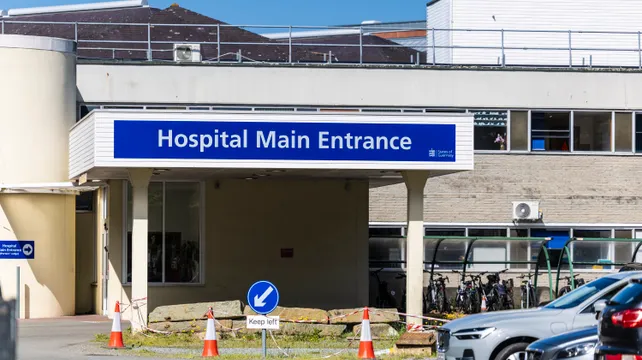
We need to ensure that our considerable reserves, comprising general reserves, social insurance and pension funds, which are approaching £4bn, are properly invested and applied where economically beneficial to capital projects, such as housing, airport runways, hospitals, schools and The Guernsey Institute.
We have to consider energy strategy, water strategy, housing, immigration, health, education, travel, airlines, tourism, fishing, agriculture and last, but certainly not least, our finance sector, which all require decision making and analysis both on a standalone basis and how they affect each other. For example, air connectivity affects both tourism and finance, as well as the general quality of life. Housing must be built in a way that minimises its impact on the environment.
We need to listen to our civil servants and consultants but have the capacity to disagree with them on some occasions. This is vital. During the course of this term, I have seen some truly terrible consultancy advice, sometimes, it would seem, skewed by political considerations. I won’t give examples here as that would detract from my main point, namely the need for competent decision makers capable of thinking things through and arguing their point of view.
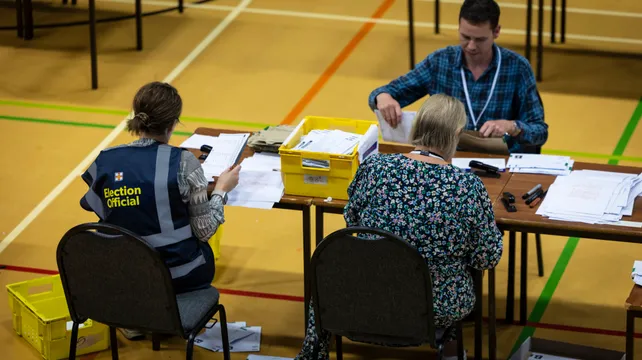
I have received many communications during the course of this term, almost all polite and informative from concerned Guernsey people in all walks of life. Intelligent people who could make a contribution to our governance. We need your correspondence, but not nearly as much as we need you to stand for election and to participate in our government. It’s challenging but worthwhile.
There are concerns that I think may be holding some back from putting their names forward which I would like to deal with.
First, I have seen suggestions that the atmosphere in the Assembly is ‘toxic’. It really isn’t. There are occasionally sharp views expressed and I have been at the receiving end once or twice, but one shrugs it off as over-enthusiasm. By and large, debate is polite and we mostly get on pretty well with each other. I enjoy the discussion and the interaction. One can easily find oneself having a drink in the evening with deputies one has been arguing with through the afternoon. This issue may unduly worry prospective female candidates. It really shouldn’t.
Then there is the suggestion that it’s pointless because you can never get anything done. Not so. You will get things done if you are persistent. Hard work and engagement with other deputies usually pays off.
In terms of workload, there are roughly 14 or so Assembly meetings in a year, usually lasting two or three days, so that’s around 42 days to set aside. In addition, the papers need to be studied, which will involve setting aside a day or so working from home ahead of each meeting. On top of that will be committee meetings which are typically held monthly or fortnightly. They are more frequent for the committees with the greatest responsibilities, for example Health & Social Care, Education, Sport & Culture, and Policy & Resources. Deputies vary in the precise amount of committee work they take on.
The workload does not preclude other business work. Indeed, our current and previous P&R presidents held the role while active in law or finance, albeit at a much reduced level. Continuing to manage a smaller business part time remains feasible with appropriate organisation.
Another issue that inevitably will worry potential female candidates is childcare. What I would say about that is that the fixed Assembly and committee meetings requiring personal attendance are limited in number. A lot of the documentation and drafting work can be attended to from home – and indeed will have to be, as the States does not provide personal office space. I would give the example of Deputy Victoria Oliver, a professional surveyor who does sterling work as president of the very challenging Development & Planning Authority while still coping with family life and small children.
Right now, Guernsey is in a moderately good position financially, but there are clearly fiscal challenges on the horizon stemming from limited growth in the private sector and ceaseless growth in the public sector, not helped by an ageing population. On the bright side, we have no net debt for now and have largely, but not entirely, avoided many of the social problems which plague the UK. The island is beautiful and people are nice. We need to keep it that way, which means we need the right people to make the right decisions.
So if you feel able to help keep us on the right track, please consider contributing to our society by standing for election.
You are welcome to contact me to discuss this and I’m sure that any other deputy would also be happy to advise.



You need to be logged in to comment. If you had an account on our previous site, you can migrate your old account and comment profile to this site by visiting this page and entering the email address for your old account. We'll then send you an email with a link to follow to complete the process.