

Many people would have you believe that future decisions regarding our system of taxation are simple – to GST or not to GST. That, many would say, is the question.
By profession I’m an accountant and so, naturally, the ability to fund the vital projects and services Guernsey needs is never far from the forefront of my mind. GST-plus has become the centre of the fiscal debate, when in fact we at Future Guernsey believe that the conversation should be much wider than that. Taxing islanders’ spending can only be one element. As a group, Future Guernsey is calling for wholesale tax reform, based on the foundations of simplicity, fairness, competitiveness, sustainability, distortion and certainty.
Any tax reform must produce a fairer system and protect lower- and middle-income households. It sounds like a utopian vision but, having consulted with industry in recent months to help shape our tax policy, we believe that it can be achieved. That’s why our manifesto commits to putting a new tax package before the States for approval before March next year.
That package will be rooted in six steps:
Step 1: A focus on growth. As an entrepreneur, I believe it is essential that any jurisdiction takes a proactive role in creating the economic conditions that encourage both established and new enterprises to flourish. Guernsey seems to have lost its positive, ‘can do’ spirit, and we need to regain it to encourage and facilitate new ideas, approaches and industries.
Step 2: A commitment to a 1% reduction in baseline public spending each year from 2026. That amounts to £6.5m. a year, rising to £25m. in savings every year by 2029. We’re well aware of public debate about the size of Guernsey’s civil service and – quite honestly – we don’t believe that there are hundreds of idle public servants. However, our experience in the private sector tells us that any organisation of the size of the States can find modest efficiency savings.
Step 3: Prioritise our capital programme, so funding is focused where it is most needed. When we identified our six policy priority areas via research, we also identified that there was a need to look at how the plans could be delivered. That led to us setting up a ‘delivery’ working group, dedicated to looking at how policies can be translated into meaningful action by the next States Assembly. Working together, we have suggested in our manifesto that this commitment to prioritising our capital spend could be delivered by the new States Assembly within three months. It is only after completing this piece of work that we will truly know how much cash we need.
Step 4: Fix our tax administration. For starters, let’s remove the need for Paye employees to file income tax returns. And are we certain we are collecting all the tax we should be? Islanders need to be fully confident of this fact before our government asks us to pay a penny more.
Step 5. Improve the fairness of our corporate tax system. Our manifesto sets out a plan to move to a zero-15 tax system, in step with Jersey, and agrees with Jersey’s system of taxing businesses rather than profit streams. For starters, that would have avoided the recent £45m.-plus tax hole resulting from one bank’s error in how it allocated its profits.
As part of step five, we’ve included in our manifesto plans to fairly tax personal investment-holding companies. These arrangements are entirely legal and may even help attract high net worth individuals to move to Guernsey. It’s fine for them to benefit from our inheritance and capital gains tax-free status, but income should be fairly taxed.
Step 6: Construct a new, fairer, broader low-tax system. Instead of tinkering with what we already have, our manifesto calls for us to go back to the drawing board and consider the tax system as a whole. There is a distinct opportunity to build a stronger, future-proofed system where every business and individual that benefits from public services pays for them and, in doing so, broadening Guernsey’s tax base.
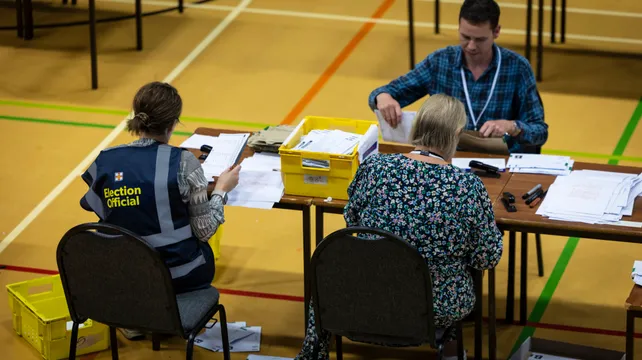
The election is growing ever closer, and we need candidates with well researched and thought-out policies for the long term, not one term. There’s a danger the election will be decided on one or two polarising topics, when in fact the issues we have are much more complex and interlinked than that. In reaching out to industry, we have sought to make headway in giving candidates a plan, a blueprint that they can apply as soon as the new States Assembly is formed.
Now that plan is in the public domain, it is for candidates – and by proxy – voters to adopt it, should they wish. When candidates come knocking, be sure to ask them about more than just GST-plus. Of course, it’s important, but it’s just one element of the plan our new States Assembly will need to enact to build a more sustainable and prosperous Guernsey for all.



You need to be logged in to comment. If you had an account on our previous site, you can migrate your old account and comment profile to this site by visiting this page and entering the email address for your old account. We'll then send you an email with a link to follow to complete the process.